Remember that Back to the Future Part II scene where Doc fuels the DeLorean with banana peels and leftover pizza? Wild, right? Well, buckle up, because reality had its own version of a genius tinkerer, minus the time machine but with just as much vision.
Meet Rudolf Diesel—a man who didn’t just tweak engines; he reimagined them. His life’s work wasn’t about speed or horsepower; it was about efficiency and possibility. Diesel’s revolutionary engine wasn’t content guzzling fossil fuels like a hungry teenager. Oh no. He had a bold idea: what if engines could run on something… different? Something groundbreaking? (Spoiler: it wasn’t banana peels, but you’re getting warmer.)
Welcome to 1000Whats, where we dig up the untold stories behind world-changing inventions. Today, we’re diving into Diesel’s tale—a story of grit, ingenuity, and a surprising twist that might just blow your gasket. Hold on tight—this ride’s going to be anything but ordinary.
Who was Rudolf Diesel?
Born in Paris in 1858 to Bavarian immigrants, Rudolf Diesel’s childhood wasn’t exactly a highlight reel. Forget luxury—he spent his early years helping in his father’s leather goods shop, hauling wares around town in a barrow. But young Rudolf wasn’t just schlepping leather; he was quietly dazzling in school, even snagging a bronze medal at age 12. That shiny little medal sparked a lifelong love for technology.
Engineer in the making
At 15, Diesel enrolled at the Industrial School of Augsburg, then scored a scholarship to the prestigious Royal Bavarian Polytechnic in Munich. His parents? They weren’t thrilled. They wanted him to ditch school and start earning cash. But Diesel had other plans—big ones.
Even typhoid fever couldn’t stop him. After recovering, he graduated in 1880 at the top of his class. And this wasn’t just book smarts—he also gained hands-on experience working at a Swiss machine works. By now, Diesel wasn’t just a kid with dreams; he was a full-fledged engineer ready to take on the world.
Cool ideas and family life
After graduation, Diesel joined forces with Carl von Linde, the refrigeration genius, to modernize cooling systems in Paris. He didn’t stop there. In 1883, Diesel married Martha Flash, and the couple had three kids: Rudolf Jr., Heddy, and Eugene. Did marriage slow him down? Not a chance. If anything, it gave him more fuel for his visions.
Diesel became an invention machine, racking up patents in both France and Germany like a collector grabbing limited-edition vinyls. From barrow-pusher to visionary engineer, Rudolf Diesel was proving that grit, smarts, and a touch of feverish ambition could rewrite the rules of innovation.
And trust me, Diesel was just getting started.
The times of invention
Before we rev up Rudolf Diesel’s extraordinary story, let’s take a pit stop to understand the era he thrived in: the late 19th century. This wasn’t a time of cozy brainstorming over pumpkin spice lattes. Nope, these were the steam-filled, oil-streaked, blister-inducing days of the industrial revolution. Inventors weren’t just thinkers—they were warriors, fighting inefficiency, ignorance, and occasionally gravity itself.
Inventors back then didn’t sip lattes. They gulped sweat and risk, one wrench turn at a time.
These pioneers weren’t afraid to get their hands (and faces) dirty. They knew every bolt, gear, and piston like their own kids. Their work wasn’t just a career; it was their obsession, and they bet everything on it—their money, health, and sometimes even their lives.
A different breed of innovators
This was the Wild West of invention. Miscalculations didn’t just cost a day’s work; they could blow up your workshop or knock you out of commission for months. Safety gear? A pipe dream. Health insurance? Don’t make me laugh. And yet, these inventors charged forward, fueled by one thing: the belief that their ideas could reshape the world.
Today’s inventors delete bad ideas. Back then, bad ideas deleted them.
Their sparks of creativity weren’t just for show. Those sparks built railroads, powered factories, and transformed cities into steel giants. These inventors weren’t just engineers—they were the lifeblood of the industrial revolution.
True revolutionaries
But they weren’t your typical revolutionaries. They didn’t rally crowds or wave flags; they toiled in workshops, armed with grit, grease, and an unhealthy disregard for sleep. Fame didn’t matter. Likes weren’t a thing. It was all about results, no matter how many singed fingers or sleepless nights it took.
Rudolf Diesel was one of these relentless pioneers, and his story embodies this era’s raw spirit. So buckle up as we dive back into his life with a new appreciation for the rugged, relentless world he called home—a time when inventors were more warrior than dreamer.
Revolution isn’t always loud. Sometimes, it’s the steady hum of an engine that changes everything.
The drive for efficiency
Steam engines of the late 1800s were about as efficient as using a bonfire to toast a marshmallow. Up to 90% of fuel energy went up in smoke—literally. Imagine burning ten loaves of bread just to toast one slice. Enter Rudolf Diesel, a man who looked at this fiery disaster and thought, “We can do better.”
If you’re wasting 90% of fuel energy, you’re basically setting money on fire and calling it innovation.
Diesel’s vision? Build an engine so efficient it could almost match the perfection of the Carnot cycle, the holy grail of thermodynamics. Bold? Yes. A little crazy? Absolutely. But history rewards those who look inefficiency in the eye and say, “Hold my wrench.”
Early experiments (and explosions)
Diesel’s path to efficiency wasn’t exactly smooth sailing. His experiments with steam and ammonia engines were, let’s say, explosive. One particularly fiery mishap landed him in the hospital for months. Lesser inventors might have quit after that. Not Diesel.
Trial and error is fine—until the error blows up in your face.
Every setback became a stepping stone. For every kaboom, he likely thought, “Well, now I know what not to do.” That relentless optimism is how breakthroughs happen—or, at the very least, how you survive as an inventor in the 19th century.
The breakthrough
Good things come to those who persist—and don’t blow up too many workshops.
By 1893, after years of tinkering, Diesel finally cracked it. He designed a more efficient engine, filed patents, and kept at it for another four years. In 1897, his hard work paid off: the first working diesel engine roared to life.
This wasn’t just a personal victory for Diesel—it was a win for science, industry, and anyone who preferred their eyebrows unscorched. His engine didn’t just function; it transformed entire industries, powering everything from factories to ships.
Rudolf Diesel’s story isn’t just one of invention; it’s a testament to grit, resilience, and the belief that a better way is always worth pursuing—even if it involves the occasional explosion.
1900 World’s Fair: Diesel’s big moment
Rudolf Diesel didn’t just pour his time into his engine—he probably burned through a lot of late-night snacks, too. And when it was done, what a machine it was: compact, efficient, and tough as nails. Unlike the temperamental steam engines of the day, Diesel’s engine didn’t need flames or sparks. Just good old-fashioned compression to ignite the fuel. Simple, powerful, and ahead of its time.
Then came the big debut: the 1900 World’s Fair in Paris. Diesel didn’t just show up with a polished machine; he pulled out a surprise move—running the engine on pure peanut oil. The crowd? Absolutely floored.
And there, in the City of Light, surrounded by wonder and applause, Diesel must’ve stood tall, feeling every bit the genius he was. After all, he hadn’t just revolutionized engines—he’d planted the seeds of an idea that still powers dreams today.

Peanuts to power
“Wait, did you just say peanut oil?”
Yep, you caught that! 1000whats readers always have an eye for the fascinating. It sounds nuts (pun fully intended), but it’s true: the first diesel engine didn’t just run—it ran on peanut oil.
Let that sink in next time you’re filling up with fossil fuels. It’s a twist so wild it almost feels like a prank. After all, the name Diesel is practically tattooed onto the forehead of fossil fuels. But history loves to mess with expectations.
While the world back then was chugging coal and coughing up soot, Rudolf Diesel had a radical idea. He envisioned a future where energy wasn’t extracted from the earth but grown in fields. Imagine farmers fueling their tractors with sunflower oil harvested from their own land. Diesel dreamed of a decentralized, sustainable energy system, where fuel was renewable and clean.
His vision was simple: farmers could grow their own fuel, breaking free from the grip of coal and petroleum.
It’s wild to think that Diesel, whose name is now practically a synonym for fossil fuels, was actually one of the earliest champions of green energy.
Long before sustainability was a buzzword, he planted the seeds of a cleaner future—literally.
So, the next time you hear someone say, “Go green? That’s impossible,” just remind them: a guy in the 1900s literally ran an engine on snack food. And it worked.
“Oh, so Diesel was an advocate for renewables?”
Well… sort of. But not in the way we think of it today.
Climate change wasn’t on anyone’s radar back then—mainly because the oil industry was just a toddler learning to walk. No one could yet see the geopolitical or environmental baggage fossil fuels would lug along in the coming decades. But Rudolf Diesel, ever the visionary, did recognize something crucial: biofuels could empower people.
Diesel saw locally sourced vegetable oils, like peanut oil, as more than just fuel—they were a chance for farmers to achieve energy independence. He imagined a world where communities didn’t rely on imported coal or petroleum. Instead, they could grow their own energy and keep the economic benefits close to home.
Peanut power at the World’s Fair
Diesel put this idea on full display at the 1900 Paris World’s Fair, where he famously ran his engine on peanut oil. While today we see this as an eco-friendly statement, Diesel wasn’t waving a green flag. His goal was to show off the diesel engine’s versatility. It could run on just about anything, from plant-based oils to whatever fuel was available in remote or resource-limited regions.
He even noted that vegetable oils could be a game-changer for agrarian economies and colonial territories. This wasn’t about saving the planet but about creating options—an early nod to decentralized energy systems long before the term existed.
His goal? Flexibility. His result? A prototype for sustainability.
The rise of fossil fuels
Not long after Diesel introduced his groundbreaking engine, the oil industry took off like wildfire. Petroleum-based fuels, such as diesel oil, became the go-to choice. Why? They were cheaper to produce and easier to distribute, thanks to a rapidly growing network of refineries and pipelines.
Peanut oil, though renewable, couldn’t compete. Processing it was more complex, and it lacked the industrial-scale backing that fossil fuels enjoyed.
Then there was the economics. Diesel engines found their first fans among big industries—shipping companies, railroads, and factories. For them, cost and convenience mattered far more than renewable ideals. As a result, fossil fuels quickly stole the spotlight, becoming the default fuel for Diesel’s invention.
In the race for dominance, petroleum was fast, cheap, and well-funded. Poor peanut oil never stood a chance.
Fossil fuels: The sign of the times
Let’s be clear: Diesel’s name doesn’t deserve to be glued to fossil fuels. Sure, petroleum became the engine’s go-to fuel, but only because it was cheap and abundant at the time. No one back then could predict the environmental costs—it was a shiny new toy that seemed too good to be true (and it kind of was).
A renewable legacy
Diesel’s motivations were likely a mix of practicality, innovation, and a dash of idealism. But whether intentional or not, his work laid the groundwork for modern biodiesel. Today, fuels made from vegetable oils and animal fats are considered a step toward weaning us off fossil fuels.
So, while Diesel may not have been a green energy crusader in the modern sense, his vision of fuel flexibility planted a seed. One that grew into a key pillar of today’s renewable energy movement.
Sometimes, revolution starts with practicality. Diesel didn’t just invent an engine—he unlocked possibilities.
The mysterious end of Rudolf Diesel
Rudolf Diesel’s life was full of brilliance, but his end remains shrouded in mystery.
On September 29, 1913, Diesel boarded the SS Dresden en route from Belgium to England for a business meeting. It was an ordinary trip—until it wasn’t. By morning, Diesel had vanished.
His cabin was untouched, save for his neatly folded coat and a few personal items. Days later, a body matching Diesel’s description was found floating in the North Sea. Was it him? Most assumed so, but no definitive identification was made.
And so the theories began.
Accident, suicide, or something darker?
One explanation is that Diesel, plagued by financial struggles, took his own life. He’d faced mounting debts, and his patent royalties were dwindling. But those close to him described him as optimistic and determined, making this theory feel out of character.
Others suggest an accident—a misstep on a dark ship deck. Simple, plausible, but unsatisfying for a man whose life was anything but ordinary.
Then there’s the darker angle: sabotage. Diesel’s engine, adaptable to renewable fuels, was seen as a potential threat to the growing petroleum industry. Could rival industrialists have silenced him to protect their empire? It’s a theory straight out of a thriller, but one that lingers in whispers.
Legacy amid the mystery
Whatever the truth, Diesel’s disappearance only adds to the legend of the man who reshaped the industrial world. His engine became synonymous with power and innovation, even as his end remains an unsolved puzzle.
Rudolf Diesel gave the world an engine for the future—but his own story took a turn no one could predict.
What if Big Peanut ruled the world?
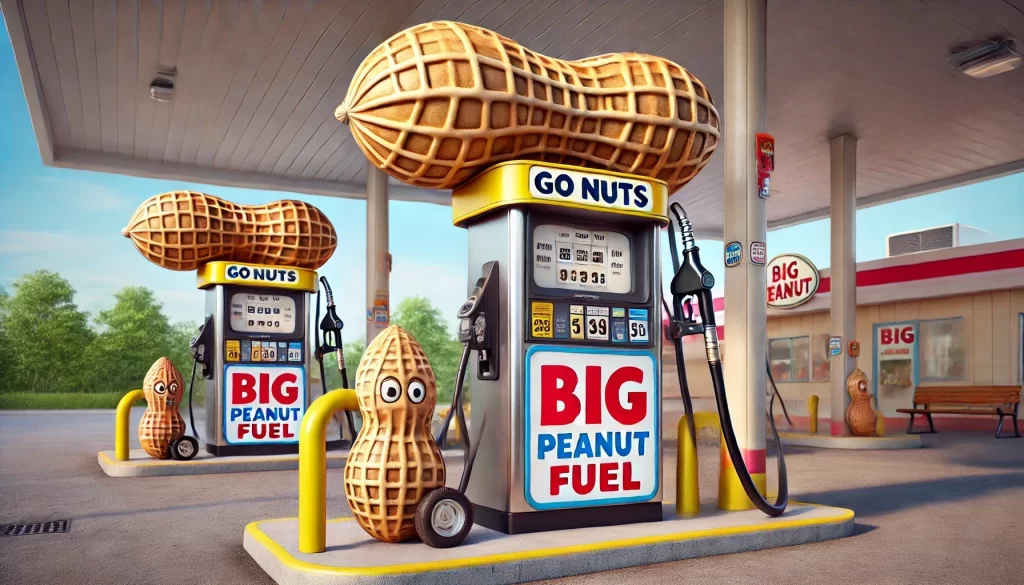
Imagine an alternate history: instead of Exxon and Shell, we’d have Big Peanut calling the shots. Farmers could’ve been energy tycoons, engines might roar through fields in peanut butter commercials, and pipelines? Nah, just rows of peanut plants stretching to the horizon.
But, alas, the peanut-powered revolution never took off. Rudolf Diesel’s visionary idea of green, farm-grown energy was smothered by the rise of crude oil. His dream of sustainability ended up shelved—right next to a pile of oil barrels.
Imagine a world where oil tycoons were farmers, and pipelines were replaced with peanut butter ads featuring roaring engines.
Fast-Forward to Today: Diesel’s Dream Resurfaces
Funny thing, though. More than a century later, Rudolf Diesel’s peanut-oil vision feels eerily relevant. As the 21st century scrambles to tackle climate change and cut greenhouse gas emissions, plant-based fuels are finally stepping into the spotlight.
Enter biodiesel—a renewable, modern-day answer to Diesel’s original dream. Made from vegetable oils, animal fats, and even recycled cooking grease, biodiesel runs like a charm in diesel engines, including those built back in Diesel’s time.
Biodiesel is essentially the grown-up, global version of Diesel’s peanut oil experiment.
Here’s how today’s biodiesel echoes his century-old vision:
- Renewable resources: Just like peanut oil, biodiesel comes from crops and waste products that are easily replenished.
- Local accessibility: Biodiesel can be made right in your community, cutting ties with centralized oil industries.
- Cleaner emissions: It burns way cleaner than petroleum diesel, slashing pollutants like CO₂, sulfur, and particulate matter.
Full circle
Diesel’s vision of a sustainable, renewable energy future was ahead of its time, but it’s finally coming into focus. The question is, will we seize this chance to honor his legacy and fully embrace biodiesel?
Diesel’s dream of sustainable energy might just come full circle, over a century after it was imagined.
Final thoughts
Here’s the thing: history may have sidelined Diesel’s dream, but it didn’t kill it. Today, his vision of renewable energy feels like it’s dusting itself off and stepping back into the ring. Biodiesel, recycled cooking oil, and other plant-based fuels are the comeback kids of the energy world. And honestly? Diesel would probably be fist-pumping in his workshop right now if he saw it happening.
Next time you spot a diesel engine at work, think about the legacy it carries—not just the name, but the idea of a sustainable future that started with a few peanuts.
So, what’s next?
Diesel handed us the blueprint over a century ago. Now, it’s up to us to finish the job. How? By championing innovation, choosing greener energy solutions, and never underestimating the power of bold ideas—especially the ones that smell a little like peanut butter.
Now, let’s get the conversation rolling:
- Did you know Diesel’s original engine ran on renewable fuels?
- What other renewable energy sources might we be ignoring today?
- How can modern tech finally bring Diesel’s vision full circle?
- And seriously—could sustainable fuels like biodiesel take over petroleum’s throne?
Drop your thoughts in the comments. Who knows? Maybe the next big energy breakthrough will come from a peanut-powered dreamer just like Diesel.
Until then, stay curious, stay green, and remember: even the tiniest seeds can grow the boldest ideas.
Discover more from 1000whats
Subscribe to get the latest posts sent to your email.