Energy is complex.
I make it click.
Latest explainers
-
What is a marginal emissions factor? The grid’s carbon receipt has two totals
Your power grid has two carbon receipts. One tells you the average emissions from all electricity generated. The other asks what changes when you switch on one more machine. Those totals can disagree spectacularly. Follow a late dinner order, a solar-soaked afternoon, and a battery with an inconvenient appetite to see why timing changes the carbon math.
-
What is the N-1 criterion? The grid’s dress rehearsal for disaster
At 3:06 p.m., a transmission line disappears. No storm, no sparks, just an engineer clicking a button in a computer model. The grid survives, but another line starts carrying more than it should. Welcome to N-1 planning, the art of rehearsing a failure before the real one gets a chance to ruin everyone’s afternoon.
-
What is a load duration curve? The power grid fires its calendar
An electricity system can spend thousands of hours behaving nicely and a handful demanding everything at once. A load duration curve sorts those hours by demand, exposing the costly peak, the energy underneath, and the capacity that barely gets used. But it forgets when anything happened, which is why batteries eventually insist on rehiring the calendar.
-
What is capacity credit? When a megawatt has to show up for work
A 100 MW power plant walks into the grid’s job interview with a magnificent résumé. The interviewer has one question: will you be there when electricity demand gets ugly? Capacity credit turns that awkward conversation into a reliability number, and explains why solar, wind, batteries, and gas plants cannot be hired by nameplate alone.
-
What is pinch analysis? The factory’s most expensive singles night
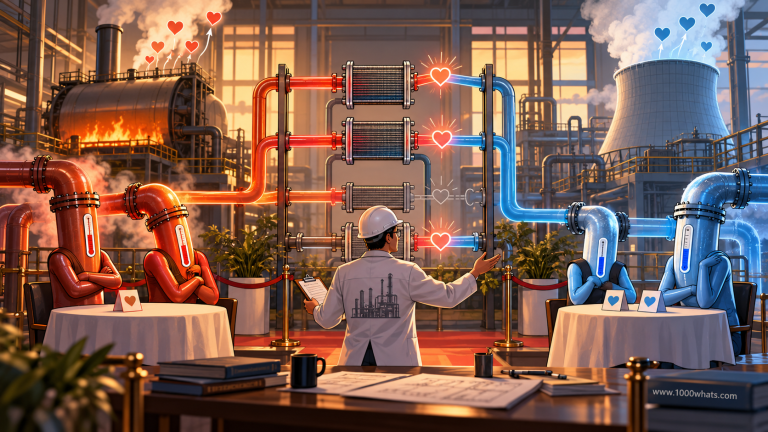
A factory is paying to cool one process while paying again to heat another. The two streams have never met, and the boiler and cooling tower are delighted. Pinch analysis is the engineer’s matchmaking service: it finds which heat can be reused, what temperatures permit, and how much external heating and cooling the plant could avoid. There are rules. Thermodynamics is chaperoning.
-
What is diversity factor? The grid’s greatest scheduling trick
Four neighbors, four separate electricity peaks, and one transformer that refuses to panic. Diversity factor explains why the grid does not need to supply everyone’s personal maximum at once, how engineers calculate that advantage, and why synchronized EV charging or a heat wave can make the scheduling miracle disappear. The secret is not less electricity. It is better timing.
-
What is pumped-storage hydropower? The battery that makes water work two shifts
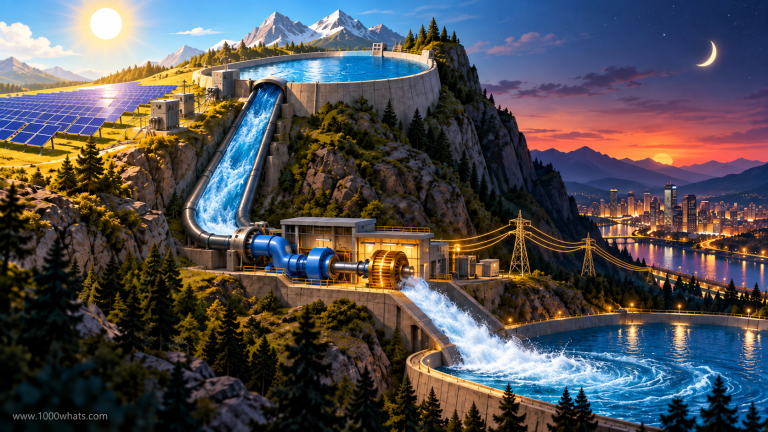
At noon, the grid has more solar electricity than it needs. At dinner, everybody wants power at once. Somewhere in the mountains, a million tons of water have been hired to solve this scheduling problem. They spend the afternoon climbing uphill and the evening falling back down. Nobody calls it elegant. Engineers call it pumped-storage hydropower, and gravity has never missed a shift.
-
What is exergy? Why some joules travel first class
One kilowatt-hour of electricity can run a motor. One kilowatt-hour of lukewarm heat might struggle to run a convincing argument. Both contain the same energy, but not the same ability to do useful work. Meet exergy, thermodynamics’ brutally honest exchange rate, and discover why heat pumps, power plants, and factories should stop treating every joule like a first-class passenger.
-
What is the rebound effect? When energy efficiency gets a raise and goes shopping
A delivery company doubles its fuel efficiency, celebrates the savings, and then starts driving so much that the fuel bill refuses to shrink. Welcome to the rebound effect, where cheaper energy services can tempt us to use more of them. From Jevons and steam engines to LEDs, heating, and AI, here’s why efficiency works, why savings sometimes wander off, and how to bring them home.
-
What is an SPV in renewable energy projects? The tiny company behind a giant power plant
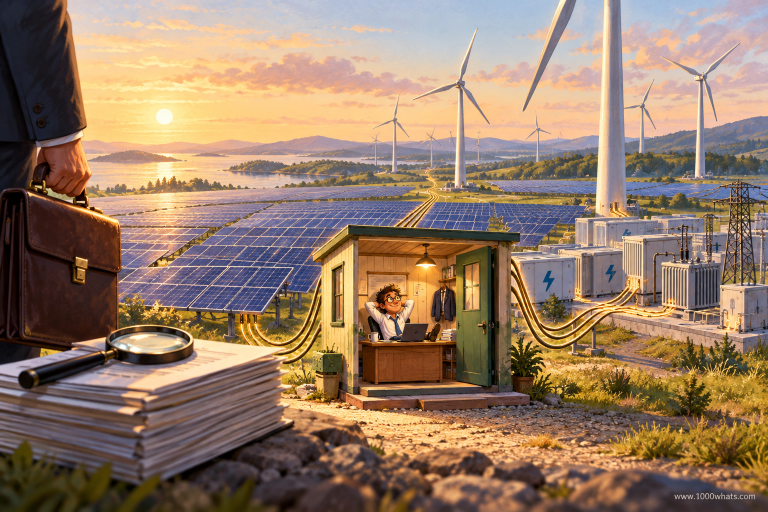
A renewable energy SPV can own an enormous power plant while having fewer employees than your neighborhood bakery. How does that work? And why are banks strangely enthusiastic about it? Let’s follow the equipment, the contracts, and—most importantly—the money.
-
What is a steam turbine? The machine that doesn’t care where the heat came from
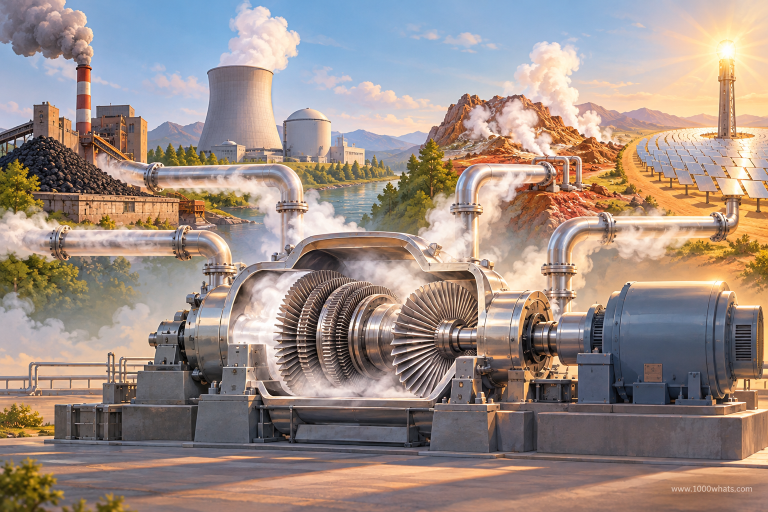
Coal plants burn fuel. Nuclear reactors split atoms. Geothermal plants extract heat from underground. Yet many of them rely on the same machine to produce electricity: a steam turbine. Discover how expanding steam turns heat into mechanical power, why condensers matter almost as much as turbines, and how one remarkably adaptable technology became central to modern electricity generation.
-
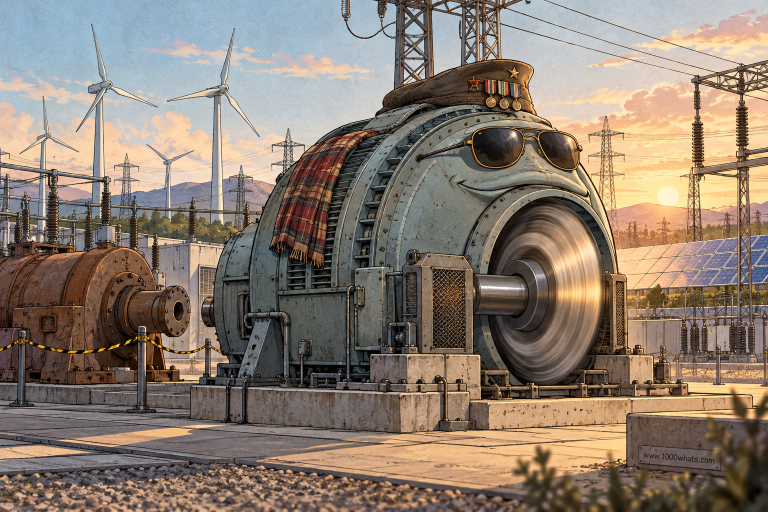
What is a synchronous condenser? The generator that stopped generating
Imagine installing an enormous rotating electrical machine, connecting it to the power grid, and deliberately producing almost no electricity. That is a synchronous condenser. It provides inertia, voltage support and short-circuit strength without burning fuel to generate power. As traditional power stations retire, this old technology is finding a surprisingly important new job.







Need more than an explainer?
Need energy explained to your audience?
I write content
for energy
companies.
White papers & reports
Blog & editorial content
Newsletter ghostwriting
Investor & pitch materials
Dive into a topic
Energy basics
Renewable energy
Energy markets
Sustainability
History of energy
Transportation
Who’s behind 1000whats?