Energy Basics

These are the energy basics—covering the core principles that explain how energy flows, transforms, and powers everything around us. It’s the foundation for understanding the forces that drive our world.

What is electrical resistance? Current’s adversary

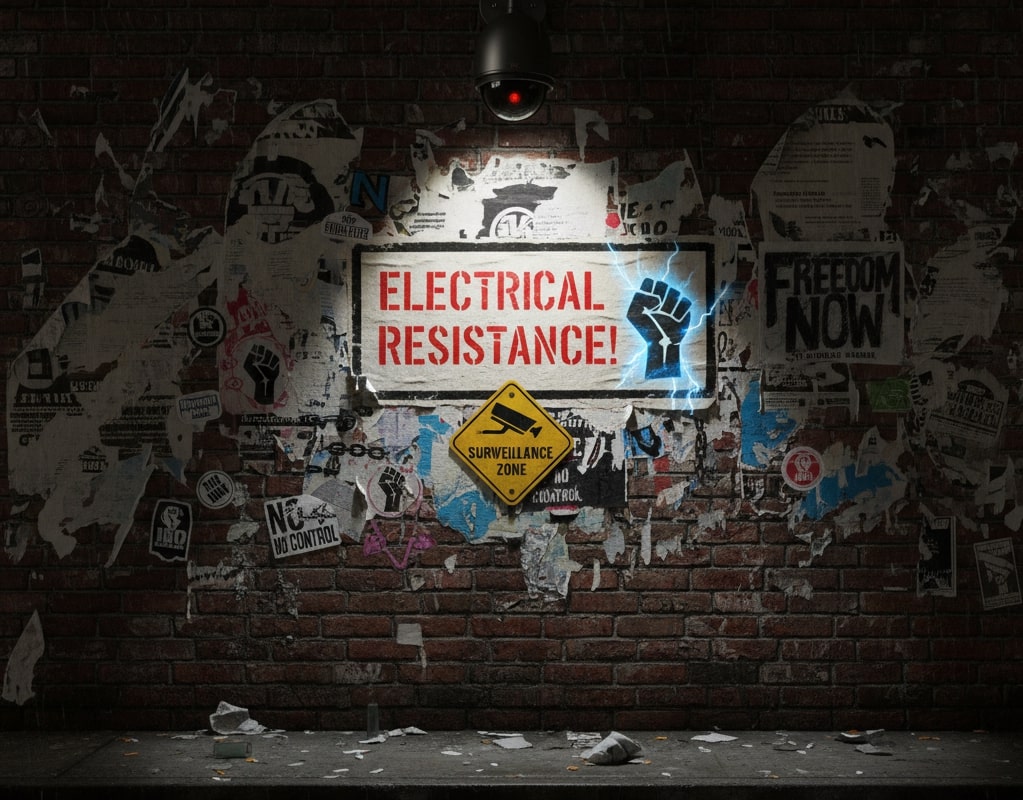
Graffiti wall with the phrase “Electrical Resistance!” in red letters and an electrified blue fist symbol under a surveillance camera, representing the concept of electrical resistance and defiance.

Electrical resistance isn’t just a nuisance—it’s a force that shapes every circuit, every spark, every surge of power. It slows electrons, sure, but it also protects, directs, and transforms. From heating your coffee to lighting entire cities, resistance is the silent architect behind how energy flows. In this post, we explore how resistance works, what factors influence it, and how it quietly balances power and precision in our electrified world.

What is voltage? The persuasive friend

Funny ultra-realistic illustration of a giant hand (Voltage) pushing lazy cartoon electrons off a couch and into a lightbulb, symbolizing electric current.

Voltage is that pushy friend who won’t let electrons sit still. One nudge and—zap!—your phone lights up, your car starts, and lightning throws a tantrum. In this post, we’ll spill the shocking truth about voltage: what it is, why it matters, and how it keeps your world buzzing.

What is electric charge? From balloons to batteries

Children at a birthday party, their hair standing up from static electricity due to electric charge.

Electric charge is one of the fundamental forces shaping our world, influencing everything from the way atoms bond to the power that keeps your devices running. Whether it's the static electricity that makes your hair stand up or the complex movement of electrons fueling technology, electric charge plays a vital role in our everyday lives.