
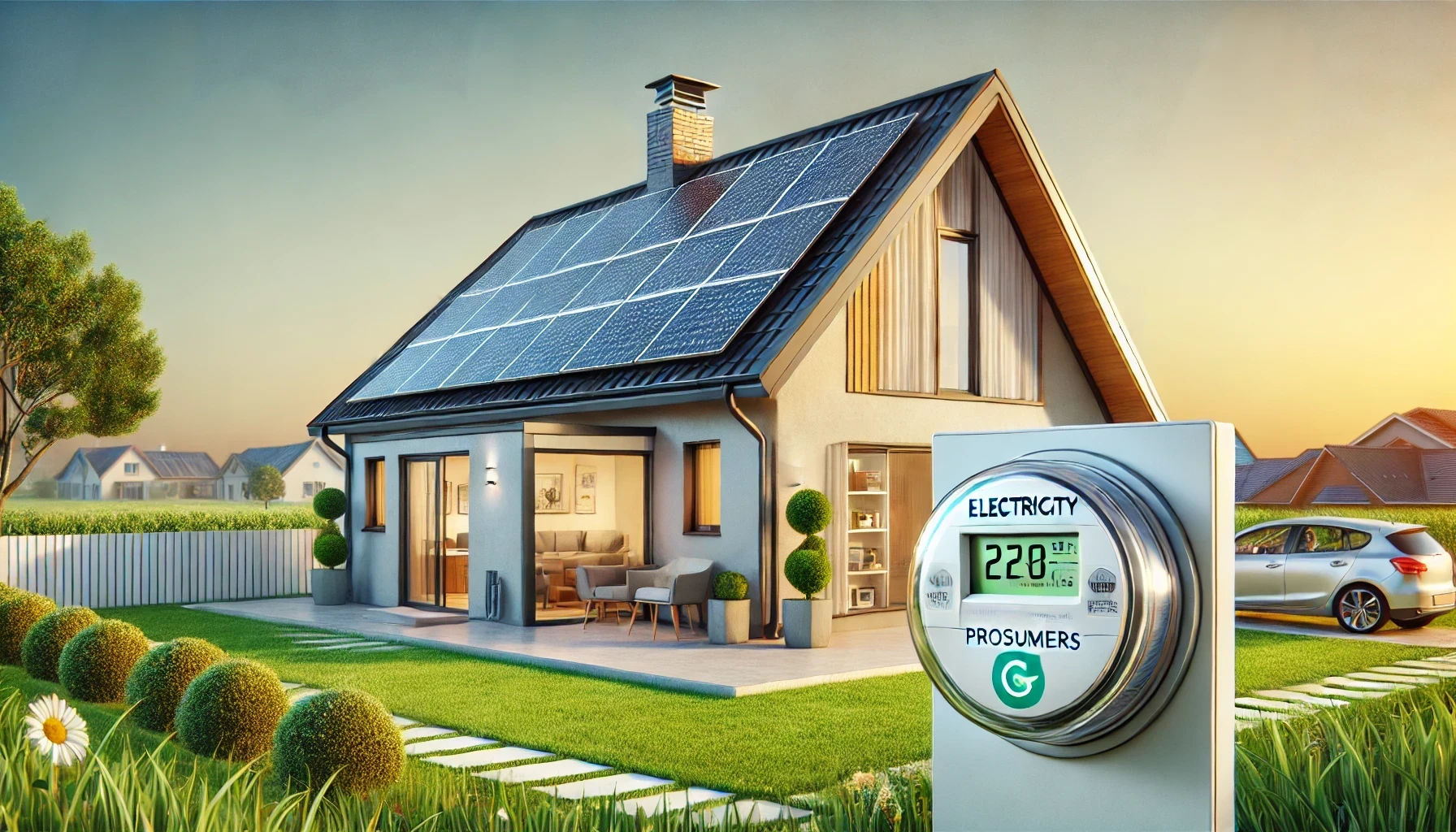
Let me sketch you a lively scene of electricity prosumers. Imagine we’ve spent our whole lives dining out at restaurants for every meal. We sit down, eat, and pay the bill. Then, we walk away without thinking about the food’s preparation. We don’t consider where the ingredients came from. It’s all happening behind the scenes, out of sight. We’re just passive consumers.
But now, picture what happens when someone starts growing their own food. Suddenly, they’re not just customers anymore. They’re the ones planting the seeds. They choose what to grow and decide how to use it. They can eat it fresh, save some for later, or even share with the neighbors if they’ve grown too much. This is what’s happening with energy today.
These home growers are the “electricity prosumers” of the energy world. Instead of harvesting vegetables, they’re collecting sunlight with solar panels. They’re no longer relying entirely on the energy companies; they’re making their own electricity at home. When they produce more than they need, they can “sell” the excess back to the grid. It’s just like selling extra produce at a local market.
And that’s the exciting part about the energy world today. We’re witnessing a transition from passive consumption to active participation. People are becoming more conscious and involved in how they power their lives. Understanding this shift is crucial if we want to grasp the future of energy.
Welcome to the 1000whats. Here, I break down complex energy topics and make them simple. I might even make them a little fun.Thanks for your interest in prosumers and renewable energy! There’s so much more to explore. I’m excited to have you here on this journey toward a brighter, greener future.
Alright, let’s dive right in!
What is an electricity prosumer?
In the age of smartphones, smart homes, and smart everything, it’s no surprise that even electricity is getting a makeover. Enter the electricity prosumer—a savvy, forward-thinking individual or entity who doesn’t just consume power but also creates it. It’s like being your own energy superhero, juggling two roles: producer and consumer.
What exactly is an electricity prosumer?
To break it down, an electricity prosumer is someone who generates part of their own energy right on their own property. It could be a home, a business, or an industrial facility—any place with the right setup can do this.
A prosumer is an electricity consumer who generates a part of their electricity needs on-site at their premises.
The word itself is a fusion of “producer” and “consumer,” and the term “prosumer” fits this dual role perfectly. One minute you’re cooking dinner with electricity from the grid. The next, your solar panels are generating enough power to run your entire household.
A household example: Solar panels and sunshine
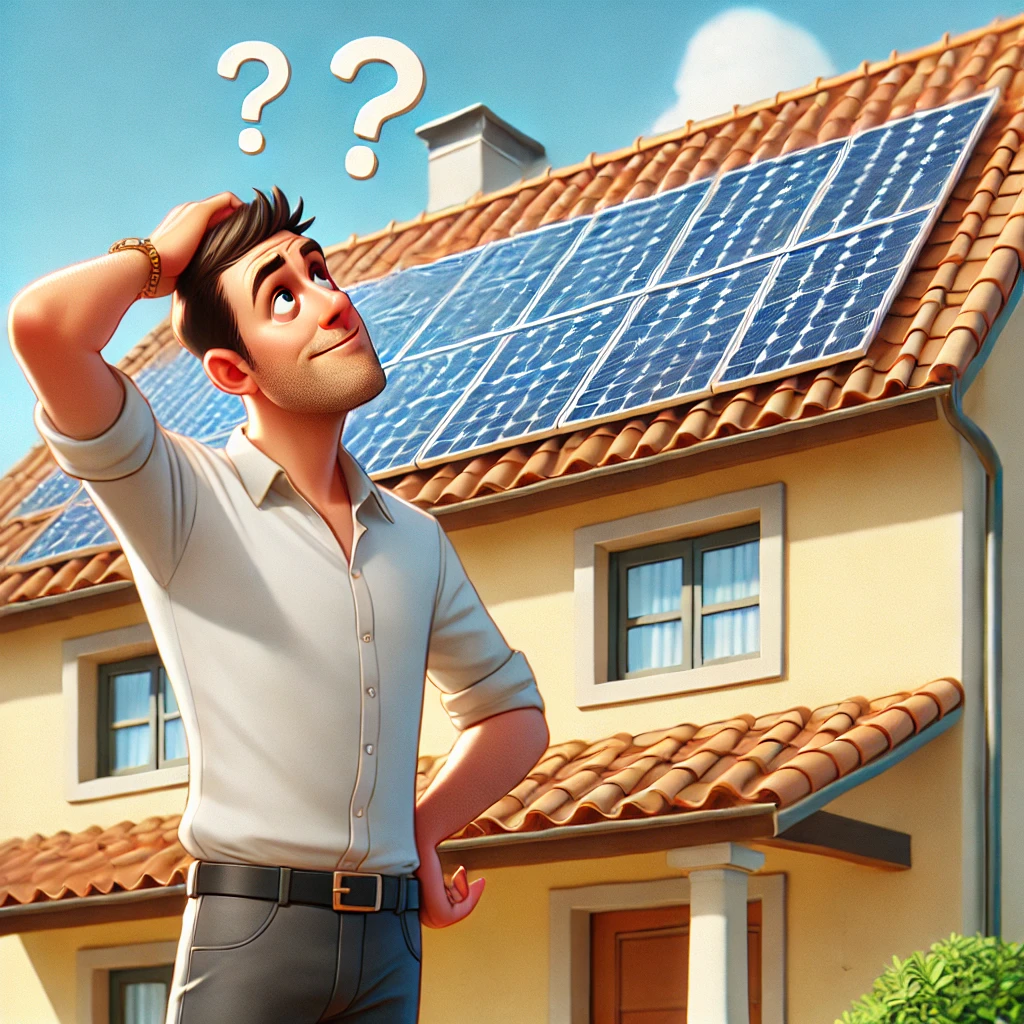
Picture this: a home with solar panels shimmering on the roof, soaking up the sun. On bright, sunny days, these panels crank out electricity, powering everything from your fridge to your lights. In this scenario, the household isn’t just a passive user of electricity. They’re producing it, becoming a mini power station in their own right. Pretty cool, right?
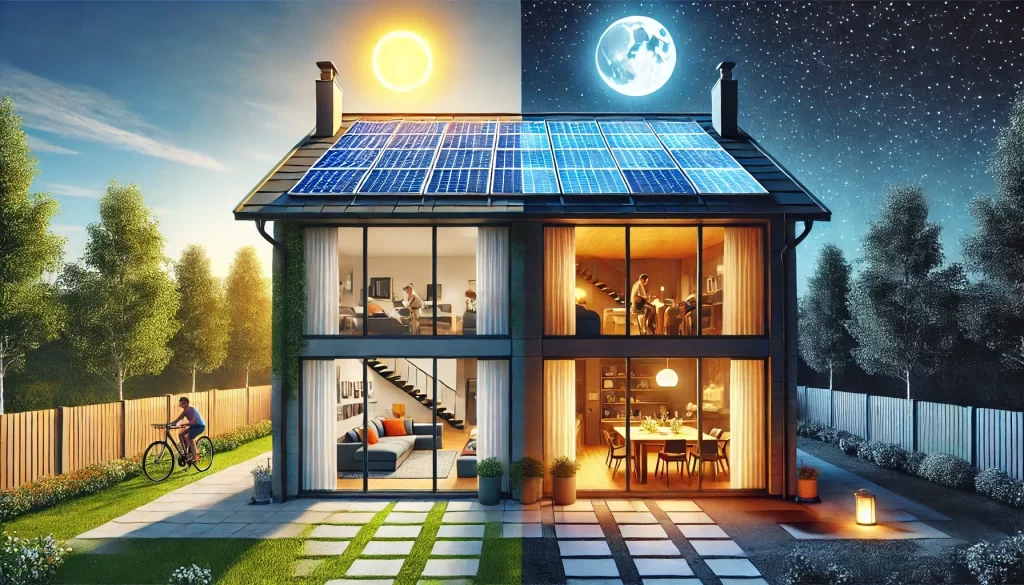
But here’s the twist: when the sun sets or hides behind clouds, those panels aren’t doing much. The household then switches back to the electricity grid. They’re back to consuming, like any other regular household. This dual role, flipping between producer and consumer, is what makes the prosumer concept so fascinating. You’re always wearing two hats: one as a user, the other as a creator.
Beyond homes: Businesses and factories join the game
Electricity prosumers extend beyond just homes with solar panels. Any place that can generate its own electricity, from office buildings to factories, can step into this role. The more decentralized energy production becomes, the more flexible and resilient the entire grid gets. Imagine a world where countless small producers generate energy, instead of a few massive power plants controlling it all.
Alvin Toffler saw it coming: The birth of the prosumer concept
The idea of a prosumer didn’t just spring up in the age of solar panels and smart homes. Futurist Alvin Toffler actually coined the term in his 1980 book, The Third Wave. Toffler was ahead of his time, predicting that people wouldn’t be content with just buying things anymore. Instead, they’d start producing their own goods and services. It could be in their garage or their kitchen. In this case, it was on their rooftops with solar panels. He saw a future where people played a more active role in the economy. They would craft, share, and participate in a system. This system would be more democratic, sustainable, and personal.
Why electricity prosumers?
Ah, so you’re asking why we’re suddenly making customers into mini power plants, right? Why disrupt a system that’s been chugging along smoothly for over a century? To get to that, let’s think about how things have worked up until now.
The traditional energy system: One-way street
Traditionally, electricity flows like a one-way street. Big power plants pump energy into the grid, and we, as consumers, sit back and flick the switch. Nice and easy, right? This centralized model has kept our lights on reliably for decades, so why mess with it? Well, here’s the thing – we’re not dealing with the same world anymore. Energy demand is skyrocketing, and then there’s the ticking clock of climate change looming over us. The status quo won’t hold much longer.
The problem with more power plants
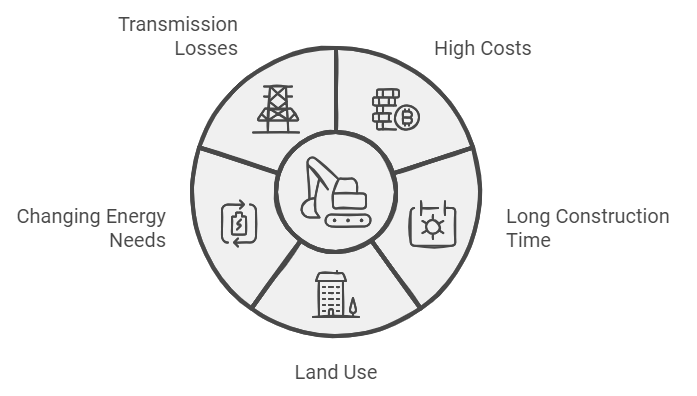
Now, in the old days, if we needed more energy, we’d just build another giant power plant. Problem solved. But wait – that’s like solving traffic congestion by building bigger highways. Sure, it works for a while, but it’s not the most sustainable long-term solution.
New power plants are expensive and take years to build. They also require a significant amount of land. By the time they are operational, energy needs have often changed.
Also, you’ve got the issue of transmission losses. Sending electricity over long distances is tricky. It’s like trying to shout instructions across a crowded room. The further it has to go, the more garbled, or in this case, inefficient, it gets.
Electricity prosumers: Generating power locally
So here’s where prosumers come in. Today, people can generate their own energy. It’s like having a small garden in your backyard instead of relying on the supermarket. You might have solar panels on your roof, a wind turbine in your backyard, or even a small home battery system. Suddenly, you’re not just a consumer. You’re a producer too. You’re part of the energy equation, not just a passive player.
It’s localized, efficient, and much cheaper in the long run. You’re not paying to send energy across miles of power lines. It stays put, right where you generate it – at home.
Why did people make the shift?
Well, it’s kind of like when food prices shoot up, and people start planting tomatoes on their windowsills. Energy costs rise, solar panels start to look like a good idea. People want control. They want sustainability. And who doesn’t like the idea of being a little more independent? You slap a few solar panels on your roof. Suddenly, you’ve got a system that works like a low-maintenance herb garden. You don’t have to do much, but you’re saving money and reducing your carbon footprint. You might even sell extra energy back to the grid.
Win-win.
People want control. They want sustainability.
A response to a changing world
In short, electricity prosumers are a response to a changing world. Energy demands are higher, and sustainability is urgent. The old ways of doing things just aren’t cutting it anymore.
It’s like evolving from hunter-gatherers to gardeners. You take a more active role in sustaining yourself. In doing so, you help the whole system run smoother.
Are electricity prosumers just electricity generators in disguise?
It’s a tempting question. If you’ve got solar panels on your roof, you’re sending extra energy back to the grid and getting paid for it. So, why not just call it what it is—an electricity generator?
If a prosumer has a power plant at home, sends some energy to the grid, and gets paid for it, why not just call it an electricity generator?
You’re not alone if that thought has crossed your mind. In fact, back when I worked at the electric utility, when we introduced the idea of prosumers into our system, I’d get a question that sounded like a variation on this theme: “I’ve got a house sitting empty, thinking about putting up some solar panels. What can I expect to earn each month?”
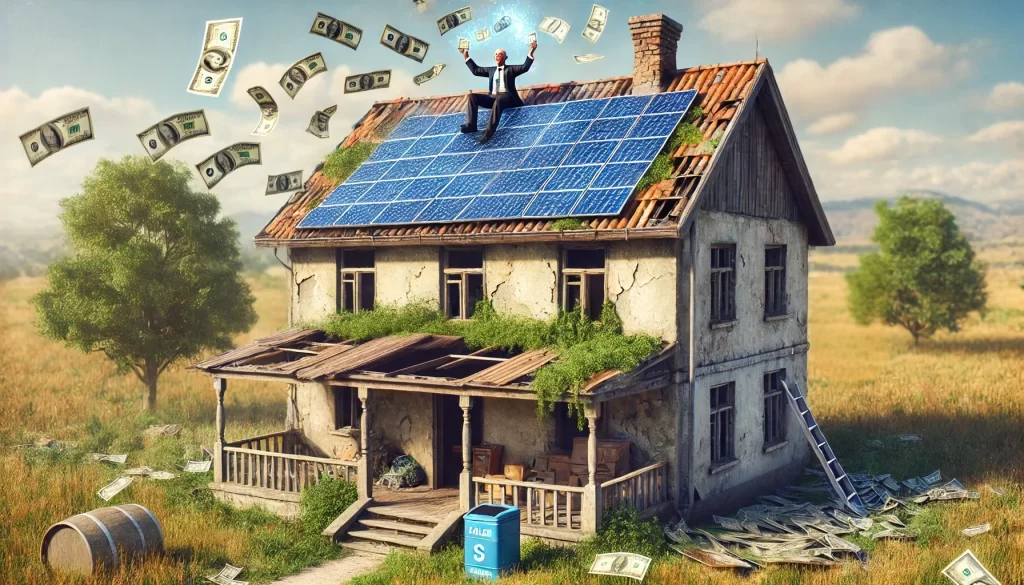
The answer was always the same: “Nothing!”. It’s not because I’m a pessimist, though working in energy utility can make you one 😉. Prosumers don’t operate like typical power plants. Let me explain.
Electricity prosumers vs. generators: What’s the difference?
See, electricity prosumers and electricity generators, while they might both produce electricity, are playing very different games.
Think of a generator as a professional athlete: it’s in the business of producing electricity, selling it to the market, and making a profit. Generators don’t hold onto any of that energy—they send it all off to consumers, like us. They live and die by market prices. They navigate the ups and downs of supply and demand. It’s all about selling, never consuming.
Generators primarily serve as electricity producers, supplying their energy output to the market and operating as recognized entities in the energy marketplace.
Prosumers, on the other hand, are more like hobbyist gardeners.
Sure, they’re growing something—electricity in this case—but the primary goal isn’t to sell to others. It’s to feed themselves, to reduce their dependence on the grid. If they’ve got extra tomatoes (or kilowatt-hours), they might hand them off to the neighbors (or send it to the grid), but that’s not their main focus. In fact, the whole point of prosuming is self-reliance: generating just enough for personal use, with maybe a little leftover.
And that extra energy they send to the grid? It’s more like a form of savings for future use rather than a real business transaction. Think of it as energy storage—just without the batteries.
Prosumers export excess energy to the grid, not because they’re driven by market goals, but because the grid acts as a way to store energy for later use.
Why electricity prosumers don’t earn like generators
That’s why many regulations, particularly in Europe, aim to prevent prosumers from becoming small-scale electricity producers.
In fact, the rules often say that any energy an electricity prosumer sends to the grid can only offset the energy they used in the same month.
So, if your house is sitting empty, with no electricity consumption, you’re out of luck. The solar panels might be cranking out power. But with no energy use on the other end, you’re not earning anything. There’s nothing to offset. It’s like trying to deposit checks in an empty bank account.
Self-consumers
The term “self-consumers,” as used in the European Directive on promoting renewable energy, does a great job of clearing up the distinction between prosumers and traditional generators. It paints a simple, relatable picture. Self-consumers are like gardeners who grow tomatoes in their backyard. They grow them mainly for their own dinner table. They produce energy, but the primary purpose is for personal use, not for profit.
The core concept behind self-consumers (or prosumers) is exactly that: they are consumers first and foremost, but they’ve got the means to generate their own energy, reducing their reliance on external sources like the power grid. It’s all about self-sufficiency, much like having a small garden where you grow what you need. Sure, if they have a surplus, they might share it or send the extra to the grid, but that’s more incidental than intentional. They’re not out to compete in the energy market.
On the flip side, a generator is like a commercial farm. They’re in the business of producing energy, not for themselves but for everyone else. They never consume what they generate because the whole point is to sell it to others. They built their entire operation around market demand, prices, and ensuring the energy reaches consumers.
This distinction is crucial because it shapes everything from regulations to economic incentives.
The directive encourages self-consumers to produce just enough energy to cover their own needs, with maybe a little extra, but the goal is to promote sustainability and cut reliance on the grid—not to turn them into hidden power plants. To keep the emphasis on personal use, it limits how much surplus energy they can sell.
What does “surplus electricity generated by electricity prosumers” mean?
Alright, let’s paint a picture. You’ve got your solar panels doing their thing. They’re quietly turning sunlight into energy. They’re powering your fridge and your lights. Maybe even that nice coffee machine of yours. But here’s the twist: it’s an exceptionally sunny day, and guess what? You’re not home! The fridge is still running, sure. But your lights are off. Your appliances are on standby. You’re not using much electricity.
What happens to excess energy?
Well, think of your house like a sponge soaking up power. On a normal day, it absorbs what it needs and the rest just spills over. When you’re not home, the sponge doesn’t need as much, so the system sends the excess energy straight into the grid.
Surplus electricity: Feeding back to the grid
And here’s the cool part: when your solar panels generate out more electricity than your house needs, that extra juice gets fed back into the grid. This is what we call surplus electricity.
The surplus electricity produced by prosumers represents the amount of electricity they have fed back into the grid.
Understanding surplus energy
Now, this surplus energy you send back to the grid isn’t the whole story of what your panels produce. After all, you’re probably using a bunch of that energy for yourself—powering your fridge, charging your gadgets, and running your air conditioner. Whatever you don’t use? That’s the surplus energy, and it goes straight to the grid for others to use.
Types of surplus energy
In certain regions, surplus electricity may consist of two parts:
- Surplus up to the monthly consumption level: This sets a monthly limit on the surplus, meaning any extra electricity you generate can only offset what you actually use in that month. It helps to think of it like a limit on how much of your surplus can cancel out your electricity bill for that month. To put it simply, if you consumed 300 kWh from the grid, then only 300 kWh of your surplus energy can count toward balancing what you owe. Even if you send 500 kWh back to the grid, only 300 kWh of it can “erase” your bill for the month. The remaining 200 kWh doesn’t disappear—it just doesn’t count toward your bill right now.
- Option to carry forward any remaining surplus: If you still have surplus energy after covering your monthly usage, you can roll it over to future months. This is especially useful in places where electricity demand fluctuates—like when your energy needs spike in colder months or your panels don’t produce as much. This carry-forward option ensures that excess energy doesn’t go to waste and can help out when your solar generation dips.
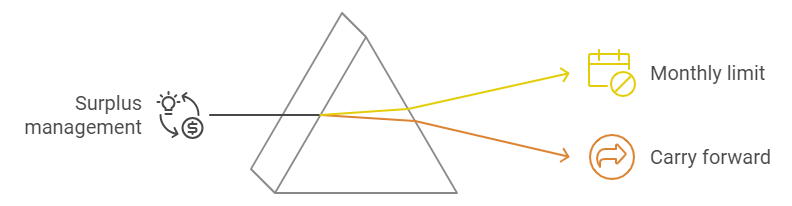
Surplus energy can only offset as much electricity as you’ve actually consumed from the grid that month.
Here’s how it works in practice
Consider a home equipped with solar panels on its roof.
| Description | Energy (kWh) |
| Total energy generated by the panels for the month | 700 |
| Energy used by the home directly | 200 |
| Surplus energy sent back to the grid | 700 – 200 = 500 |
| Energy taken from the grid | 300 |
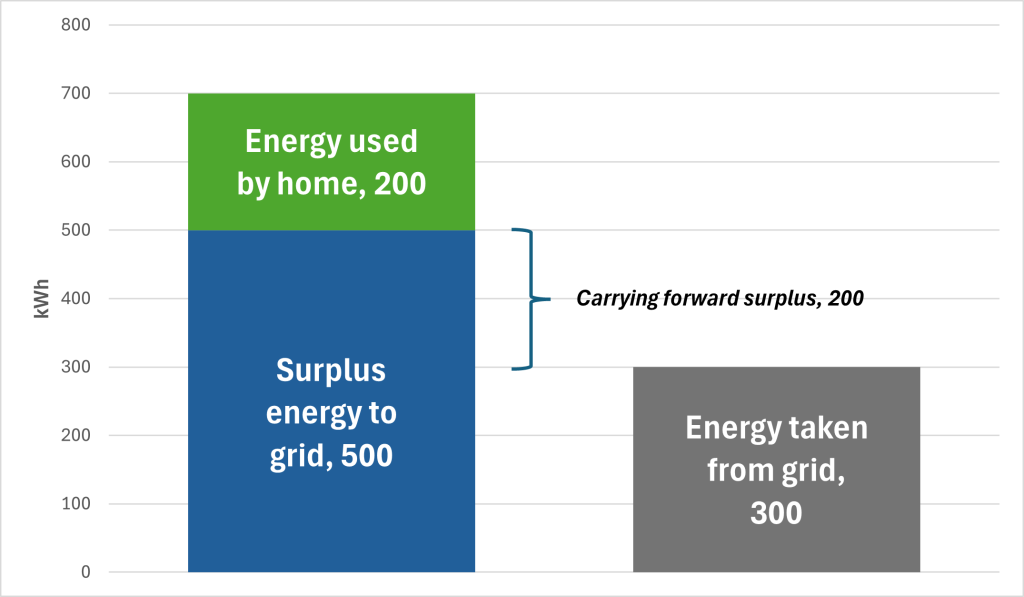
- Surplus up to the monthly consumption level: In this case, the household generated more energy than it consumed from the grid. The system allows you to use your surplus to offset what you used from the grid. Since the grid usage was 300 kWh, that’s the maximum amount of surplus you can apply. This cancels out your 300 kWh grid consumption, leaving you with a zero electricity bill for the month.
- Carrying forward the remaining surplus: But you still have 200 kWh of surplus energy left over (500 kWh generated surplus minus the 300 kWh you used to offset your grid consumption). This extra energy doesn’t go to waste—it gets carried forward to the next month. It will be added to the next month’s surplus and can help offset future grid consumption.
Next month’s scenario
Now, let’s consider the next month:
| Description | Energy (kWh) |
| Total monthly generation | 400 (lower than the previous month) |
| Generation consumed locally | 300 |
| Total surplus (exported to the grid) | 400 – 300 = 100 |
| Monthly consumption from the grid | 350 |
| Surplus from the previous month | 200 |
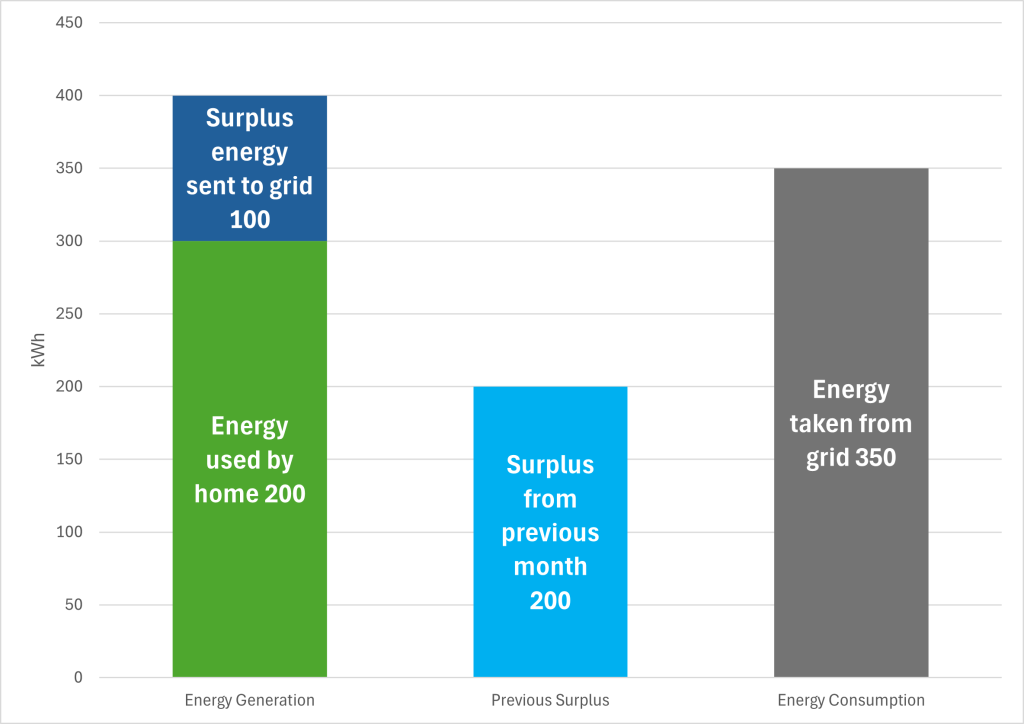
Net consumption from the grid for the month ended up being just 50 kWh. This was 350 kWh used, minus 100 kWh of new surplus, and 200 kWh carried over from the previous month.
In this case, there’s no surplus left to carry forward because all of it was used to offset the energy you pulled from the grid.
This shows how surplus energy can reduce your grid consumption over time. Any leftover surplus is carried forward to help in future months. In this scenario, the surplus wasn’t enough to completely eliminate grid use. However, it still made a big difference, especially in months where solar generation was lower.
Grid as virtual battery
Now, here’s where things get interesting. This is why prosumers—those who generate and consume electricity—are often said to treat the grid like a “virtual battery.” Think about it: when you send surplus energy into the grid, the supplier acts like a battery, keeping track of the extra energy you didn’t use and applying it when you need it later. Pretty smart, right?
But what happens to that extra 200 kWh of surplus? It gets used right away by other consumers plugged into the grid. So, how does the supplier “store” it for you? Well, they don’t physically store the energy. Instead, they mark it down like a credit on your account and apply it to your future bills. It’s more like balancing the books than storing actual electricity.
The value of being a prosumer
The advantage of being a prosumer really shines here. In the second month, your household used a total of 650 kWh (300 kWh from your solar panels and 350 kWh from the grid), but thanks to the surplus system, you only paid for 50 kWh!
How do electricity prosumers create surplus electricity?
Here, we encounter a somewhat perplexing concept: if a prosumer can generate their own electricity, how is it that they still draw energy from the grid? And why wouldn’t they just use all the energy they generate?
The timing puzzle: When energy generation doesn’t match consumption
The key to unraveling this mystery lies in the timing mismatch between when energy is produced and when it’s actually needed.
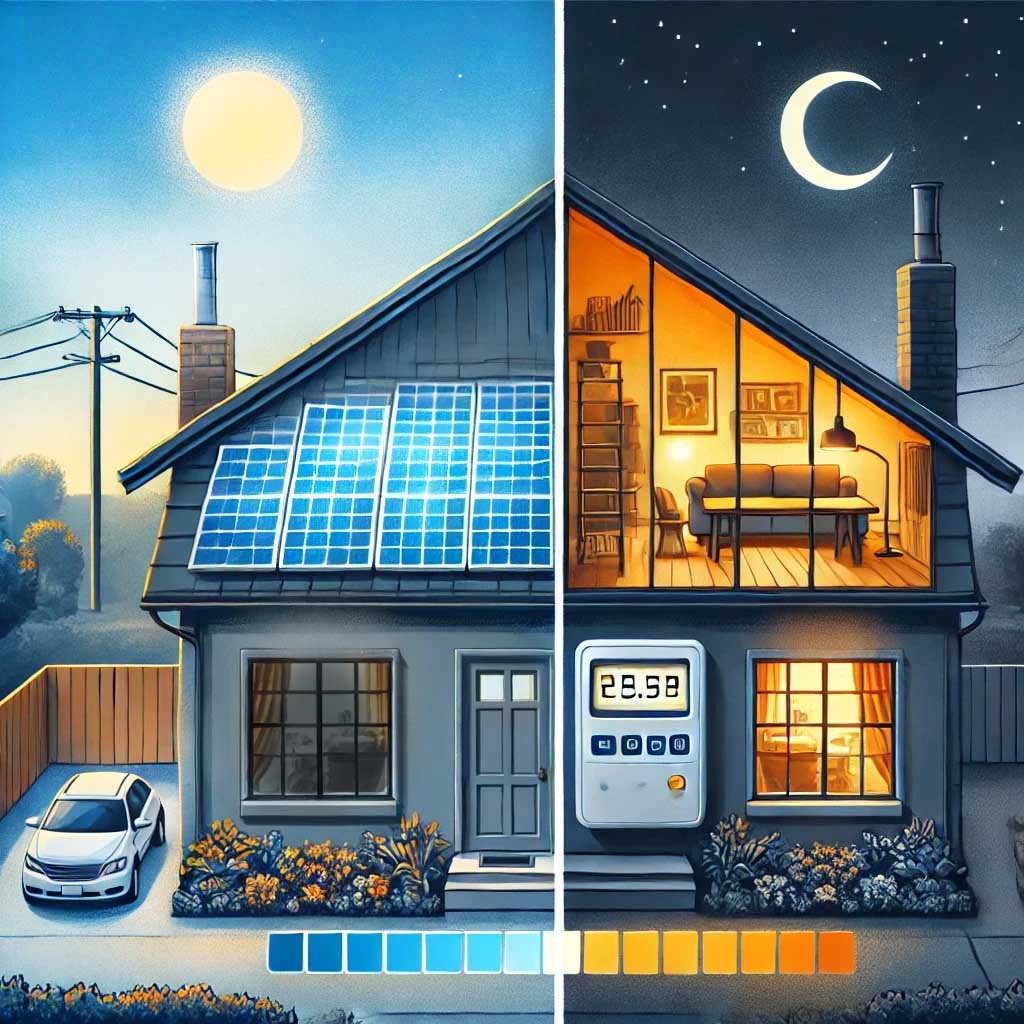
Imagine a household with solar panels on the roof. These panels are most productive during daylight hours, but there’s a catch—this is often when nobody’s home. The family is at work or school, so while the panels are soaking up sunlight and generating electricity, the household’s energy needs are minimal.
The excess electricity that’s not being used right then is exported back to the grid. It registers as surplus on a bidirectional meter.
Nighttime consumption: When the sun sets, the grid steps In
Fast forward to the evening, when the family is home and energy consumption surges.
But by this time, the sun has set, and the solar panels are no longer producing any electricity. The household now needs to draw power from the grid to meet its energy demands.
The bidirectional meter dutifully records this energy import, showing both the electricity that was used and the surplus that was sent out earlier in the day.
Why accurate metering is critical for prosumers and grid operators
A bidirectional meter is essential for prosumers and grid operators alike. This tool helps both sides keep track of the two-way flow of energy—electricity consumed from the grid and electricity exported back to it.
For grid operators, it’s crucial to monitor these flows to maintain the balance and efficiency of the energy distribution system. Accurate metering ensures that the system can handle the fluctuations in supply and demand, especially when dealing with prosumers who play a dual role in the energy market.
In short, prosumers can generate surplus electricity because they aren’t always around to use it when it’s produced. And that’s where the grid comes in—a helpful partner in balancing out the household’s energy needs.
What are net metering and net settlement?
Alright, so we’ve got it: prosumers—those savvy folks who both consume and produce energy—can send their extra power back to the grid. In return, they get a nice little bonus: a reduced electricity bill. Not a bad trade, right?
The two main ways electricity prosumers receive compensation for surplus energy are through net metering and net settlement.
While they share similarities, they have varying effects on prosumers’ electricity bills and incentives.
What is net metering?
Net metering is like having a two-way deal with the power company.
When you produce extra electricity—say from solar panels—you send that surplus back to the grid, and it directly offsets what you pull from the grid later, kWh for kWh. What’s cool is that the value of the electricity you send to the grid is exactly the same as what you pay for the electricity you use from it.
So, if you’re paying a certain rate for energy, the power company “buys” your excess energy at that same rate. Your bill shrinks because the extra power you generated gets subtracted from what you used over a given period.
Net metering is a setup where the surplus electricity a prosumer injects to the grid offsets their grid consumption on a one-to-one basis, kilowatt-hour for kilowatt-hour.
The real kicker? This setup lets you benefit from the retail price of electricity—the price you’d normally pay—rather than the lower wholesale price utilities usually deal with. It’s a pretty sweet deal, but usually only available for residential households. Net metering essentially turns your home into a tiny power plant, helping you make the most out of the energy you produce.
What is net settlement?
Net settlement works like this: when you export power to the grid and import power from it, each of these transactions is valued separately. At the end of the day, your electricity bill is calculated by taking what you owe for the power you used (imports) and subtracting the value of the power you supplied (exports).
Net settlement is a system in which power exports and imports are separately valued.
Here’s the catch: the power you export is usually priced at the wholesale rate, which is lower than the retail price you pay for the electricity you consume. So, while you’re still saving, those savings aren’t as big as what you’d pay for the same amount of power.
Whether net metering or net settlement is used comes down to the specific regulatory framework and market conditions in a given country or region. Different places have their own rules and economic landscapes that shape which system makes more sense. It’s like picking a tool from the energy policy toolbox based on what fits best with the local grid setup, pricing structure, and incentives in play.
Pros and cons of net metering and net settlement
Net metering and net settlement each come with their own pros and cons, both for individual prosumers and society as a whole.
Net metering is a simpler, more attractive option for prosumers because it directly reduces their electricity bills and boosts their income.
By crediting the power they export at retail rates, it’s like getting full-price value for the energy they generate, making the transition to renewable energy more appealing. It also fuels the growth of the prosumer market, encouraging more people to install solar panels or other renewables.
However, the downside is that it puts pressure on energy suppliers, who are forced to buy electricity from prosumers at retail prices, which are higher than wholesale rates. This can squeeze supplier revenues, making it harder for them to invest in energy storage or efficiency measures that would benefit the grid as a whole.
Net settlement, on the other hand, is more complicated and less enticing for prosumers because it results in higher electricity bills and lower income from the energy they sell.
It also slows the spread of renewable energy and stunts the growth of the prosumer market. But the trade-off is that it can actually improve grid stability and management. It’s also more equitable for other grid users, as it ensures everyone shares the costs and benefits of grid maintenance more fairly.
From the utilities’ perspective, net settlement increases their revenue and competitiveness. It creates space for innovation and promotes investments in energy storage and efficiency. These investments ultimately benefit the entire system.
Comparison of net metering vs. net settlement
Here is a comparative table summarizing the key points between net metering and net settlement:
| Feature | Net Metering | Net Settlement |
| Valuation of surplus | Surplus electricity is valued at the same rate as grid consumption (retail price). | Surplus electricity is valued at the wholesale price (lower than retail). |
| Electricity bill | The bill is reduced by subtracting the surplus generated from total consumption (1:1 offset). | The bill is calculated by subtracting the value of exports from the value of imports. |
| Price advantage | Prosumers benefit from the retail price of electricity. | Prosumers are paid at the wholesale price for exports. |
| Applicability | Typically available to residential households. | Not limited to households; applicable to various users. |
| System complexity | Simple, with a one-to-one kWh offset for imports and exports. | More complex, with separate valuations for exports and imports. |
What technology can electricity prosumers use to generate electricity?
Prosumers have various technology options to generate their own power.
The choice of technology depends on factors such as location, budget, energy requirements, and local regulations.
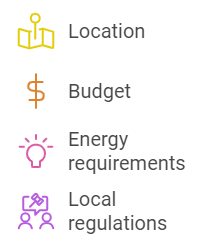
Here are some technologies commonly used by electricity prosumers for electricity generation:
| Energy Source | Description |
| Solar photovoltaic (PV) panels | Solar panels convert sunlight into electricity using photovoltaic cells. Prosumers can install rooftop or ground-mounted systems to generate electricity and sell excess power. |
| Wind turbines | Small-scale wind turbines harness wind energy and are suitable for areas with consistent wind. They can be grid-tied to use or sell electricity to the grid. |
| Hydroelectric systems | Micro-hydro systems use the kinetic energy of moving water to turn turbines and generate electricity if the property has access to flowing water. |
| Biomass and biogas systems | Biomass, like organic waste or wood, is used for electricity generation through combustion or gasification, while biogas from organic materials can fuel generators. |
For prosumers, it’s crucial to carefully evaluate their specific energy needs, the local energy landscape, and any regulatory requirements before committing to a particular power generation technology. A thoughtful assessment helps ensure the chosen solution not only works efficiently but also aligns with local policies and incentives.
Beyond just generating power, prosumers can enhance their energy strategy by adopting energy efficiency measures and smart energy management systems. These tools help optimize energy use, ensuring prosumers get the most out of their setup. They also reduce costs by minimizing waste and improving energy consumption timing.
What are the benefits of becoming an electricity prosumer?
There are many reasons why people choose to become prosumers.
Some of the main benefits are:
| Benefit | Description |
| Saving money | Prosumers can significantly cut down on their energy bills by generating their own electricity, sidestepping the costs tied to transmission and distribution. They can also earn money by selling surplus energy or participating in demand response programs for additional income. |
| Increasing energy security | By generating and storing their own electricity, prosumers enhance the resilience and reliability of their energy supply. They reduce dependence on fossil fuels and imported energy, becoming less vulnerable to price swings, supply disruptions, or geopolitical tensions. |
| Reducing environmental impact | Prosumers using clean, renewable energy sources help lower greenhouse gas emissions and contribute to a greener grid. Their participation in renewable generation and flexibility adds stability to the energy system, aiding the integration of variable renewable sources. |
| Empowering consumers | Prosumers gain control over their energy production and consumption, influencing pricing and policies. They contribute to social value by sharing energy, fostering local job creation, and strengthening community ties, turning energy production into both a personal and collective benefit. |
What are the challenges and barriers that electricity prosumers face?
Despite the many advantages of prosumers, there are also some challenges and barriers that prevent their widespread adoption and development.
Some of the main ones are:
| Challenges | Description |
| Technical challenges | Prosumers need reliable and affordable access to technologies like solar panels, wind turbines, batteries, smart meters, and inverters. But that’s just the start. Their connection to the grid must also be rock-solid and compatible with bidirectional power flows, allowing them to send power back while managing the variability of renewable energy. The grid needs to be flexible enough to handle this dynamic flow without causing instability. |
| Economic challenges | Financially, prosumers need fair and effective incentives, like feed-in tariffs, net metering, peer-to-peer energy trading, or even innovative platforms like blockchain. Access to affordable financing options—be it loans, grants, or crowdfunding—can make or break their ability to cover the hefty upfront and ongoing costs of their systems. Transparent market rules ensuring fair compensation for energy production and consumption are also necessary. |
| Regulatory challenges | Prosumers depend on supportive legal frameworks that recognize their dual role as consumers and producers. This includes clear standards and codes that ensure safety, quality, and compatibility of their systems with the grid. Fair taxation and fees that don’t penalize prosumers are crucial, so they aren’t discouraged from adopting renewable energy. |
| Social challenges | Prosumers need proper education and awareness about the benefits and challenges of adopting renewable energy. They require reliable advice for choosing, installing, and operating their systems. Participation and representation in the decision-making processes that affect them are also vital to ensure their concerns and interests are addressed. |
How to become an electricity prosumer?
Here’s a streamlined look at the typical steps involved in becoming a prosumer. While this provides a general guide, anyone interested in joining the prosumer movement should take caution. They should carefully check the regulations and requirements specific to their region.
| Step | Description |
| Obtaining consumer status and grid connection | The first step is to establish yourself as an electricity consumer. This involves securing the necessary permits and approvals to connect your home or facility to the distribution grid. If you’re already connected, proceed to the next steps. |
| Installation of electricity generation systems | After establishing consumer status and grid connection, install your electricity generation systems like solar panels, wind turbines, or other renewable technologies based on your needs and resources. |
| Obtaining prosumer status | In some regions, you may need to register as a prosumer to acknowledge your dual role as a consumer and producer. This can come with rights and responsibilities or be handled automatically by your system operator. |
| Signing a new contract with an electricity supplier | After gaining prosumer status, choose an electricity supplier that fits your needs. Consider terms for renewable energy, net metering, or competitive pricing. The contract should include billing and compensation for surplus energy. |
| Meter replacement by the distribution grid operator | The distribution grid operator installs a bi-directional meter to measure both your electricity consumption from the grid and your generation, ensuring accurate billing. |
| Generation of electricity | Once your system is operational, it will start producing electricity. |
| Consumption of self-generated electricity | The electricity generated by your systems will be used to power your home or business, reducing your reliance on the grid. |
| Consuming electricity from the grid | When your generation doesn’t meet your energy needs, you’ll use electricity from the grid. |
| Energy storage (optional) | Some prosumers install energy storage systems like batteries to store excess energy for later use, providing backup power when renewable sources aren’t generating. |
| Exporting surplus to the grid (optional) | If your system generates more electricity than needed, the surplus can be exported to the grid. You may receive compensation for the electricity you contribute. |
| Billing | Your electricity supplier will send bills accounting for the energy consumed from the grid and any surplus sent back. |
Prospective prosumers should consult with local authorities, utility companies, and regulatory bodies to ensure full compliance with specific regional requirements. This overview gives a good sense of the overall process, but the details will vary depending on where you live.
Final thouhgts
Prosumers aren’t just some passing fad or a quirky niche group—they’re a full-blown energy revolution. Think of prosumers as the DIY-ers of the energy world. Except, instead of making artisanal candles, they’re reshaping the entire power grid. Prosumers are flipping the script, generating their own electricity, and reshaping the entire power grid. By cutting back on their carbon footprint, they’re making a positive environmental impact. The whole energy system is becoming a two-way street, thanks to this shift. Prosumers aren’t just the future—they’re already making waves, and guess what? You can jump in and ride this wave too.
I hope you’ve had as much fun reading this as I had writing it. Maybe you even picked up a few new insights along the way! Got questions, burning thoughts, or just want to drop a comment? I’m all ears (or eyes, really). Let’s keep the energy flowing!
And if your brain’s still buzzing, here are a few questions to keep the curiosity spark alive:
- How do electricity prosumers affect the grid stability and reliability?
- What are some of the barriers and enablers of electricity prosumers in your country or region?
- How do electricity prosumers affect the energy prices and costs?
- What are some of the skills and competencies that electricity prosumers need to have or develop?
- How do electricity prosumers affect the energy policies and regulations?
- How do electricity prosumers affect the energy culture and behavior?
- What are some of the projects or initiatives that electricity prosumers can join or start in your community or area?
Feel free to dive into the comments and share your thoughts. We’re all in this together, learning, growing, and maybe even powering up the world—one rooftop at a time.
Until next time, stay curious and keep those solar panels sparkling! 🌞