
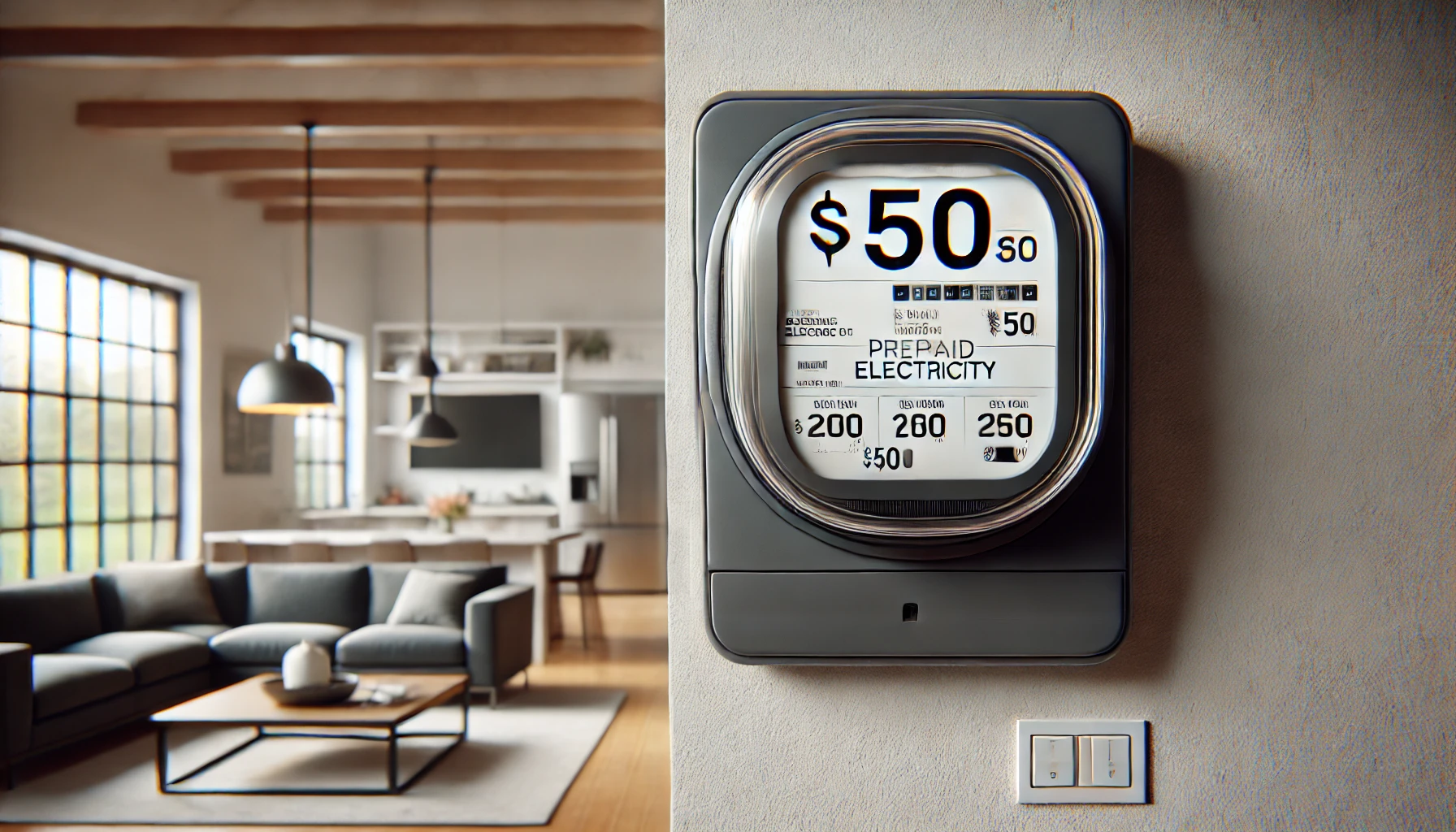
Have you ever opened your electricity bill and felt like you accidentally sponsored a citywide light festival? One minute, you’re just living your life—watching TV, charging your phone, and microwaving leftovers—and the next, BOOM! Your bill looks like you’ve been powering a spaceship.
But what if you could avoid those terrifying surprises? What if you had full control over how much electricity you use and when you pay for it? Well, good news: prepaid electricity exists, and it might just save your wallet from a heart attack.
You’ve probably used prepaid plans for your phone—you buy credit, use it, and reload when needed. Prepaid electricity works the same way. You pay upfront, use what you’ve bought, and top up when you’re running low. No more “guess-the-bill” stress or end-of-the-month shocks.
In this post, we’ll break down how prepaid electricity works, why it might be the best thing since LED bulbs, and how it can help you take control of your energy costs.
⚡ Welcome to “1000whats“—where we turn on the lights to smarter energy choices. Let’s plug into the benefits of prepaid electricity!
What is a prepaid electricity?
Imagine walking into a coffee shop. Instead of running a tab and getting a mystery bill at the end of the month, you pay for your coffee upfront. Prepaid electricity works the same way—except instead of caffeine, you’re fueling your home.
With a prepaid plan, you buy electricity credits in advance—just like topping up a prepaid phone. These credits get loaded onto a special meter that keeps track of your energy use. Every time you flip a switch, charge your phone, or blast the AC like you’re cooling a meat locker, your meter deducts the corresponding amount of electricity. No hidden fees. No surprise bills. Just energy when you need it.
Why prepaid electricity is a game changer
The biggest advantage? Control. You know exactly how much power you’re using, so you can adjust your habits before your balance runs out. Ever wanted to see how much that space heater really costs you? With prepaid electricity, you’ll find out in real-time.
Think of it as a power budget. You set the amount you’re willing to spend, and your meter makes sure you stay within your limits. If you’re running low, you simply reload—just like adding data to your phone plan. No more waiting for a bill, no more guessing.
Who can benefit from prepaid electricity?
- Budget-conscious households – If you hate those “How is my bill this high?!” moments, prepaid lets you stay in control.
- Rental properties & roommates – No more splitting a giant bill. Everyone can pay their share upfront.
- Frequent movers – No deposits, no long-term contracts. Just power when you need it.
- Anyone tired of bill shock – If opening your electricity bill feels like reading a horror story, prepaid might be your happy ending.
In short, prepaid electricity puts the power (literally) in your hands. But how exactly does it work? Great question—let’s flip the switch on that in the next chapter!

How prepaid electricity works?
Alright, let’s get into the nuts and volts of it. Prepaid electricity isn’t magic—it’s just smart energy management. Instead of waiting for a bill to drop like a surprise pop quiz, you stay ahead by paying upfront. So, how does it all come together? Let’s break it down into three powerhouse components.
1. Prepaid meters: Your electricity piggy bank
Think of this as a piggy bank, but instead of storing coins, it holds your electricity credits. Every time you use power, the meter deducts the right amount—just like a prepaid phone plan. No more end-of-the-month guesswork or those “How did we use so much?!” moments.
What makes it great?
- Keeps track of your real-time electricity use.
- Alerts you when your balance is running low.
- No surprises—just straightforward usage tracking.
2. Recharge mechanisms: Topping up is easy
Running low? No problem! You can reload your electricity credits as easily as buying coffee. Whether you prefer using an app, visiting a kiosk, paying online, or even sending a quick SMS, it’s fast and flexible.
Ways to recharge:
- Mobile apps (because who has time for long queues?)
- Online banking (a few clicks, and you’re powered up!)
- Physical kiosks (for the old-school crowd)
- Text messages/SMS (the ultimate lazy-day solution)
Basically, no excuses—if you can order pizza online, you can top up your electricity.
3. Consumption monitoring: Know your power, literally
With prepaid electricity, your meter becomes your best friend (or at least, a very honest one). It shows exactly how much power you’ve used and what’s left in your balance. If you’re running low, you’ll know before you’re left in the dark.
Why this is awesome:
- You can spot energy-hungry appliances in real-time.
- Helps you budget and control your electricity use.
- No more unexpected power cuts—unless, of course, you forget to top up!
The bottom line? You’re in control!
No surprise bills. Just electricity when you need it, on your terms. Whether you’re a budgeting pro or just tired of bill shock, prepaid electricity puts the power (literally) in your hands.
But wait—how does the system actually calculate how much power you’re using? 🤔 Great question! In the next chapter, we’ll dive into how prepaid electricity calculations work—so you can really understand where your money (and energy) is going!
How prepaid electricity calculation works: Math you’ll actually use!
Let’s face it—nobody enjoys doing math… unless, of course, it’s saving you money. And that’s exactly what prepaid electricity calculations are all about! Instead of getting a mystery bill at the end of the month, you know exactly what you’re spending, down to the last cent.
But how does the system figure out how much electricity you’ve used and what’s left? Let’s break it down with a simple, real-world example.
Step 1: Buying electricity credits
Let’s say you buy $50 worth of prepaid electricity credits and load them onto your meter. Think of it like a prepaid gift card, but instead of buying coffee or online subscriptions, you’re buying power.
Step 2: Understanding your electricity rate
Electricity is measured in kilowatt-hours (kWh)—which is just a fancy way of saying “the amount of energy you use in an hour.” Let’s assume your electricity provider charges $0.15 per kWh.
Step 3: Using power & seeing the deduction
Now, let’s say you go about your normal routine—turning on lights, running the fridge, charging your phone, and binge-watching TV. Over a month, your appliances use 100 kWh of electricity.
Here’s the math:
🔹 100 kWh (your usage) × $0.15 per kWh (electricity rate) = $15 deducted from your credits
🔹 Starting balance: $50
🔹 After using 100 kWh: $50 – $15 = $35 left

That means you still have $35 worth of power left before needing to top up!
Step 4: What happens when your balance hits zero?
Unlike postpaid plans—where you use electricity first and get billed later—prepaid systems stop supplying power when your balance runs out. If you don’t reload in time, the lights go out! (So maybe set a reminder, just in case.)
The good news? You’re always in control. If your credits are running low, you’ll get alerts so you can recharge before you go full “candlelight dinner” mode.
What’s next? Do you need a special meter? 🤔
Now that you know how prepaid electricity is calculated, you might be wondering: “Can I use it with my current meter, or do I need a special one?”
Great question! In the next chapter, we’ll break down whether you need a specific type of meter for prepaid electricity and how to get one if you do.
Do I need a specific type of meter to use prepaid electricity?
So, you’re thinking about switching to prepaid electricity—great move! But now you’re wondering, “Do I need a fancy new meter for this, or can I use what I already have?” The short answer? It depends on your electricity provider and the system they support.
Want the full story on Electricity retail?
I unpacked it on 1000whats → https://1000whats.com/electricity-retail/
What kind of meters work with prepaid electricity?
Not all meters are created equal, but the good news is that there’s more than one way to make prepaid electricity work. Let’s explore the usual suspects:
1. Prepaid meters: The built-for-the-job option
Some electricity companies offer specialized prepaid meters designed for pay-as-you-go electricity. These meters often come with:
- A keypad or touchscreen where you can enter payment codes.
- A display showing your remaining balance.
- Alerts when you’re running low—so you’re not left in the dark!
🔹 How to use it? Buy prepaid credits from your provider, enter the code into the meter, and you’re good to go!
2. Smart meters: The high-tech upgrade
If you already have a smart meter, you might not need to install anything new! Many modern smart meters can be switched to prepaid mode with the help of your electricity provider.
🔹 Why they’re awesome?
- They let you track usage in real-time from your phone or computer.
- No need for manual top-ups—just recharge through an app or online.
- They can communicate directly with your provider, so everything stays updated.
Think of it as prepaid electricity, but with WiFi!
3. Conventional meters with prepaid systems: The hybrid approach
If you have a traditional meter, don’t worry—you might still be able to go prepaid! Some providers offer external prepaid units that work alongside older meters. These can be:
- A separate prepaid meter box installed in your home.
- A plug-in device that tracks usage and deducts credits.
🔹 The catch? You’ll need your provider to confirm if they support this setup.
4. Card meters: The swipe-and-go model
In some places, card meters are still used for prepaid electricity. These work like a vending machine—you buy a prepaid electricity card or token, insert it into the meter, and load your credits.
🔹 Pros?
✅ No internet or mobile connection needed.
✅ Simple and easy to use.
🔹 Cons?
❌ If you lose your card, you’re out of luck until you get a replacement.
❌ Topping up might require a trip to the store instead of an online payment.
So, do you need a new meter?
- If you already have a smart meter → Your provider might be able to switch it to prepaid mode.
- If your provider offers prepaid meters → You might need a specialized meter installed.
- If you have a traditional meter → You may need an external prepaid system.
- If you live in an area with card meters → You’ll need to purchase tokens or cards to top up.
Bottom line: Check with your electricity provider to see what options they support.

What makes prepaid electricity different from the usual power supply?
Ever feel like your electricity bill is playing a game of hide-and-seek with your wallet? You think you’re doing fine, then BAM!—a shocking bill arrives, and suddenly, you’re questioning every appliance in your house.
That’s where prepaid electricity comes in. Unlike traditional postpaid electricity, where you pay after usage, prepaid lets you buy energy in advance—no surprises, no unexpected fees. But how does it actually compare? Let’s break it down in the simplest way possible!
1. Billing & payment: Pay-as-you-go vs. the monthly surprise
| Feature | Prepaid electricity | Regular electricity (Postpaid) |
| When you pay | Before using electricity | After using electricity (monthly bill) |
| How you pay | Buy credits in advance, use as needed | Receive a bill and pay based on usage |
| Payment type | Flexible—pay what you can afford | Fixed billing cycle (usually monthly) |
| Risk of overuse | Low—you can only use what you’ve paid for | High—may result in a big, unexpected bill |
| Financial surprise? | Nope! You know exactly what you’re spending | Oh yes—if you used more than expected! |
💡 Prepaid is like buying fuel for your car—you only use what you’ve paid for. Postpaid is like eating at a restaurant, then hoping the bill isn’t too high!
2. Payment flexibility: Power on your terms
| Feature | Prepaid electricity | Regular electricity (postpaid) |
| Budget control | High—you decide how much electricity to buy | Lower—you only find out after the bill arrives |
| Top-up options | Online, SMS, kiosks, mobile apps | Payment through bank transfer, online, or office visit |
| Late payment issues? | No—if you don’t top up, power stops, but no extra fees | Yes—late fees, penalties, and possible disconnection |
| Minimum payment? | No—you can buy even small amounts | Yes—you must pay the full bill each month |
💡 If you like to stay in control and avoid financial shocks, prepaid is the way to go!
3. Usage monitoring: Real-time vs. the waiting game
| Feature | Prepaid electricity | Regular electricity (postpaid) |
| Tracking usage | Real-time updates—you see exactly how much power you’re using | Delayed—you only see usage when you receive the bill |
| Helps you save energy? | Yes—you can adjust usage immediately to save costs | Harder—you only know after the billing cycle ends |
| Alerts & warnings? | Yes—your meter warns you when credits are low | No—you may not realize you’re overusing until the bill arrives |
💡 Prepaid lets you keep an eye on your electricity like you do your bank account. Postpaid is like spending money and checking your balance at the end of the month!
4. Disconnection & reconnection: Instant or inconvenient?
| Feature | Prepaid electricity | Regular electricity (postpaid) |
| What happens when you run out? | Power stops immediately, but you can top up anytime | Power stays on until payment deadline—then disconnection happens if unpaid |
| How to restore power? | Instantly—just buy more credits! | Can take hours or days, depending on provider |
| Extra fees? | No reconnection fees | May have to pay reconnection charges |
| Risk of unexpected power cut? | Only if you forget to top up | Yes—if you don’t pay your bill on time |
💡 Prepaid means instant reconnection—just add credits. Postpaid disconnection? That’s a longer process, often with extra fees!
Which one is better?
- Go prepaid if you love control, real-time tracking, and zero surprise bills.
- Stick with postpaid if you prefer using power freely and don’t mind paying later.
If you’re tired of bill shock, prepaid electricity might be your power-saving superhero. But how do you get started with prepaid electricity?

What are the disadvantages of a prepaid electricity?
Prepaid electricity is like having a snack stash—you’re in control, but if you forget to restock, you’re out of luck. One minute you’re watching TV, the next you’re sitting in the dark, questioning your life choices.
The biggest hassle? You have to babysit your electricity balance like it’s a needy houseplant. Forget to top up, and suddenly your fridge is just a warm box of disappointment.
And let’s not forget the fine print. Depending on where you live, you might get stuck with higher rates, fewer supplier options, or sneaky extra charges. So, while prepaid power gives you freedom, it also keeps you on your toes—kind of like a game where the prize is not living in sudden darkness.
How to switch to prepaid electricity: Your step-by-step guide
So, you’re ready to take control of your electricity and say goodbye to surprise bills? Switching to prepaid electricity is easier than you think—but there are a few things to consider first. Availability, pricing, and features can vary depending on your region and electricity provider, so let’s walk through how to make the switch the smart way.
Step 1: Check if prepaid electricity is available in your area
Not all providers offer prepaid plans, so your first step is to contact your local utility company or check online. Some providers might support prepaid electricity but require a special meter (see the previous chapter for details).
✅ How to check:
- Visit your provider’s website and look for “Prepaid plans” or “Pay-as-you-go electricity.”
- Call customer service and ask about prepaid options.
- Read online reviews from people in your area who use prepaid electricity.
Step 2: Compare plans & find the best deal
Not all prepaid electricity plans are created equal! Before you sign up, compare your options like a pro. Here’s what to look at:
- Price per kWh: How much are you paying per unit of electricity? A lower rate means your credits last longer.
- Minimum payment amount: Some plans require a minimum top-up each time you reload—make sure it fits your budget.
- Payment methods: Can you reload through an app, online banking, or only at specific kiosks? Pick what’s most convenient.
- Alerts & notifications: Does the provider send low-balance warnings via SMS or app? You don’t want to wake up in the dark!
- Customer service: Can you easily contact support if you have issues? Live chat, phone, or email options are a plus.
- Contract terms: Is there a setup fee? Can you switch back to postpaid if needed? Read the fine print.
💡 Pro tip: Don’t just go for the cheapest rate—look at the overall value and convenience. A plan with flexible top-ups and good customer service might be worth a few extra cents per kWh.
Step 3: Estimate your monthly usage
Before you switch, figure out how much electricity you actually need so you don’t end up constantly reloading credits.
- Check past bills: Look at your previous postpaid bills to see your average kWh usage per month.
- Use an online calculator: Many electricity providers offer tools to estimate your energy needs.
- Monitor your habits: If you’re new to tracking electricity use, start by turning off unnecessary devices and seeing how it affects your consumption.
💡 Example:
- If you use 500 kWh per month and your provider charges $0.15 per kWh, you’ll need:
500 × 0.15 = $75 worth of prepaid credits per month.- Want to cut costs? Try energy-efficient habits like using LED bulbs, turning off standby devices, and optimizing your thermostat settings.
Step 4: Sign up & get set up
Once you’ve chosen the best plan, it’s time to make it official! Here’s what usually happens:
- If you need a new prepaid meter – Your provider will send a technician to install it. This could be free or may come with a small setup fee.
- If your existing smart meter supports prepaid mode – Your provider may just switch your billing system, and you can start using prepaid right away.
- If you need an external prepaid system – They’ll provide a separate prepaid unit to work with your existing meter.
Once your setup is complete, you’ll load your first credits, get familiar with your balance tracking system, and start using electricity on your terms!
Step 5: Review & adjust your plan as needed
Unlike traditional electricity plans, prepaid electricity gives you flexibility. That means you can:
- Change how much you top up each month depending on your needs.
- Switch plans or providers if you find a better deal.
- Track and optimize your usage to save even more money over time.
💡 Pro tip: Set reminders to check your balance regularly so you never run out of power unexpectedly.

Final thoughts
So, is prepaid electricity the best thing since LED light bulbs, or just another way to stress over numbers? Well, that depends on how well you handle responsibility!
If you love control, budgeting, and never wanting to see another surprise bill in your life, prepaid is your perfect match. But if you’re the type who forgets to charge your phone, fill up your gas tank, or, you know, buy groceries before the fridge is empty… well, prepaid might turn your house into a blackout zone more often than you’d like.
At the end of the day, prepaid electricity is like having a relationship with your power meter—it demands attention, it warns you when things are going downhill, and if you ignore it, it will leave you in the dark. Literally.
So, if you’re ready to take charge (pun intended) and keep your lights on with some simple planning, prepaid electricity might just be your new best friend!
That said, prepaid electricity raises some electrifying questions:
- How can prepaid electricity benefit renters and individuals with fluctuating income?
- How can policymakers and utilities work together to make prepaid electricity more accessible and affordable for all?
- What innovations are on the horizon for prepaid energy systems?
- How has your experience with prepaid electricity been so far, and what tips do you have for others considering this option?
Drop your thoughts below! Let’s keep this conversation buzzing ⚡—your insights might just save someone from a surprise blackout!
Until next time—stay powered, stay savvy, and for the love of electricity, don’t forget to top up!



[…] Prepaid meters: Pay before you play. Load up credit, use electricity, reload when it runs out. Simple and budget-friendly. […]