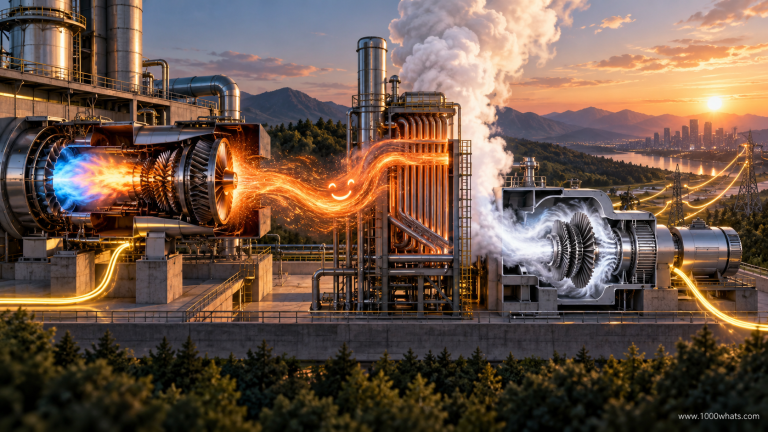
Picture this: you drag one ton of coal into a power plant. That coal contains enough energy to produce around 8,000 kilowatt-hours of heat. That’s enough to binge every season of your favorite show, run your fridge for a year, and still have juice left to toast your morning bagel.
But here’s the ridiculous part: a regular power plant turns only about 3,000 kilowatt-hours of that energy into electricity. The rest—more than half—just evaporates. Vanishes into the air like a magician’s assistant. Poof.
Traditional power plants waste about 60% of the energy they burn.
We burn the whole pizza, eat two slices, and chuck the rest out the window. But with energy? We’ve done this for decades and called it “normal.”
But what if we stopped being so wasteful? What if we used that leftover heat to warm homes, boil water, or keep buildings cozy during winter without cranking up another heater?
That’s cogeneration—or, if you want to sound smart at dinner parties, Combined Heat and Power (CHP).
Cogeneration means using one fuel to create electricity and useful heat—like cooking dinner and heating your house at the same time.
Same ton of coal, but now you get electricity and useful heat. Fewer emissions, lower fuel bills, and no hot air rising into the sky just to spite us.
Cogeneration doesn’t require new laws of physics. Just a little common sense and the revolutionary idea that maybe we should stop throwing away perfectly good energy.
Thanks for swinging by the 1000whats — where we untangle energy topics without melting your brain! I’m really glad you’re here. Let’s make this wild world of energy a little less intimidating and a lot more fun.
What is cogeneration or combined heat and power production (CHP)?
Have you ever slow-cooked a pot of stew or some sauce that takes hours on the stove? You have? Great. If not, just imagine standing by a bubbling pot for so long your forehead starts sweating like it’s training for a marathon.
Now, where did that sweat come from? Not nerves. It’s the heat from the stove. Most of it goes into cooking the food, sure—but the rest? It drifts up, warms the room, and bakes you a little on the side.
Congratulations. You just experienced accidental cogeneration.
Cogeneration
A process that produces electricity and captures the leftover heat for useful purposes, like heating buildings.
Here’s the leap: making electricity isn’t that different from cooking. We don’t throw coal into a blender and hope for the best. No, we burn fuel to boil water, make steam, and spin a turbine. That spinning generates electricity.
Simple, right? But just like in the kitchen, there’s leftover heat. And guess what most power plants do with it? They let it float off uselessly into the air, like hot air balloons filled with regret.
But what if we didn’t waste that heat? What if we piped it into homes to keep people warm—especially now, when heating bills make you cry in three languages?
That’s cogeneration. Or, if you like long names, Combined Heat and Power (CHP).
One flame, two wins: Electricity and heat together
Cogeneration works like this: a single fuel source, such as natural gas or biomass, burns to make steam. The steam spins a turbine to make electricity. Then instead of throwing away the leftover heat, it gets redirected—straight to buildings that need it.
Combined Heat and Power (CHP)
A highly efficient energy system that uses one fuel to generate both electricity and useful thermal energy.
This makes cogeneration way more efficient than traditional power plants. We’re talking up to twice as efficient. And that means fewer emissions, less waste, and more savings.
One fire. Two jobs. Zero nonsense.
How does cogeneration or combined heat and power production (CHP)work?
Cogeneration isn’t rocket science. It’s just regular power generation… but without the part where we waste a small country’s worth of heat. Let’s break it down in five steps.
1. Fuel source – Burn, baby, burn
First, we feed the beast. Natural gas, coal, wood chips, or anything flammable enough to get the job done. The goal? Make heat. Lots of it.
No heat, no party.
2. Prime mover – Spin to win
That heat powers the prime mover. Sounds fancy, but it’s basically a glorified spin machine—like a turbine or an engine. It takes the heat and turns it into motion, and motion turns into electricity.
It’s the hamster wheel of the energy world, just much louder and less adorable.
3. Heat recovery – Wait, don’t let that go!
Now, most power plants would toss the leftover heat out like last week’s lasagna. But cogeneration says, “Hold up—we paid for that heat!” So instead of wasting it, we catch it. Carefully. Like it’s fragile and full of savings.
This step is the energy version of digging leftovers out of the fridge and realizing, “Hey, this is still good!”
4. Usable heat – Give that heat a second job
Once we’ve recovered the heat, we don’t just admire it—we use it. Maybe it warms up a building, heats water, or powers a factory’s industrial process. Either way, that heat gets put to work like it’s got rent due.
Efficiency is giving one flame two paychecks.
5. Electricity – Oh right, the original plan
While all that heat-recycling magic is happening, we still get regular electricity—just like a traditional plant. Lights on, machines running, coffee brewing. But now we’ve doubled our energy use without doubling our fuel.
One fuel. Two results. Zero wastefulness. And nobody had to invent a new law of physics to make it happen.
What is the cogeneration factor?
Let’s say your cogeneration system is cooking up both electricity and heat. The cogeneration factor tells you how much of that delicious energy pie is electricity, and how much is just steamy leftovers.
Here’s how it works:
Take the electricity output, divide it by the total output (that’s electricity plus heat), and boom—you’ve got your cogeneration factor.
For example:
If your system produces 100 kW of electricity and 200 kW of heat, your total output is 300 kW.
So, 100 ÷ 300 = 0.33.
That means only 33% of your output is electricity, and the rest—67%—is heat.
Your system is basically saying, “I’m more radiator than power plant today.”
This number can swing anywhere from 0 to 1:
- A low cogeneration factor (like 0.2) means you’re making way more heat than electricity. Great for heating buildings, not so much for charging EVs.
- A high cogeneration factor (like 0.8) means you’re cranking out more electricity than heat. Ideal if you need lights more than hot baths.
There’s no one-size-fits-all magic number. The optimal cogeneration factor depends on what your building or business actually needs—whether it’s warmth, watts, or both.
What are the different types of cogeneration systems and how are they used?
Not all cogeneration systems are built the same. Some are big and loud, others small and clever. But all of them share one goal: squeeze every last drop of energy out of a fuel source.
Here are the usual suspects, classified by how they work, what they burn, and where they shine.
1. Gas turbine cogeneration – The industrial powerlifter
This one’s a beast. It burns natural gas, compresses air, and explodes the mix in a turbine that spins like it’s late for work. Electricity comes out one end, and hot exhaust from the other—perfect for heating water, buildings, or giant warehouses.
Where it works best: Big factories, district heating networks, airports, or anywhere you can say “megawatts” with a straight face.
2. Reciprocating engine cogeneration – The reliable workhorse
Picture a car engine on a caffeine high. Pistons go up and down, turn a crankshaft, and generate electricity. Meanwhile, the engine’s heat—usually wasted in vehicles—is captured to warm water or buildings.
Fuels: Natural gas, diesel, or biofuels.
Perfect for: Hospitals, schools, farms, office buildings—places that want both power and a hot shower.
3. Steam turbine cogeneration – The old school heavy hitter
Old but gold. You burn fuel (coal, biomass, gas—you name it), boil water, and use the steam to spin a turbine. Electricity flows out, and the leftover steam gets reused for heating.
It’s basically what power plants have done for a century—only smarter now, because we actually use the heat.
Ideal for: Refineries, chemical plants, paper mills, or anywhere that already looks like an evil genius lair.
4. Microturbine cogeneration – The tiny turbine with big ambitions
Think of this as a gas turbine’s cute little cousin. Same basic idea—burn fuel, spin a turbine, generate power—but on a much smaller scale. Also quieter, cleaner, and a lot less needy.
Fuels: Natural gas, biogas, even hydrogen.
Use it in: Small buildings, offices, shops, or anywhere that needs reliable energy but doesn’t want a jet engine in the basement.
5. Fuel cell cogeneration – The futuristic genius
No fire, no moving parts—just pure science. A fuel cell turns hydrogen (or another fuel) into electricity through a chemical reaction, not combustion. It also makes water and heat as byproducts. Super clean. Super efficient. Also sounds way cooler than it looks.
Best for: Smart buildings, eco-conscious homes, remote locations—or anyone who wants to flex their inner sci-fi nerd while cutting emissions.
So, which one’s best?
It depends on what you need—massive power, silent operation, or something in between. But they all share the same principle: don’t waste heat when you can use it.
That’s cogeneration. One fuel. Two outputs. Many happy engineers.
What are the benefits and challenges of cogeneration?
Cogeneration is one of those ideas that makes you wonder, “Wait, why aren’t we doing this everywhere already?” It’s smart, efficient, and environmentally friendly. But like any brilliant idea, it comes with a few speed bumps. Let’s break down the upsides and the “eh, not so fast” parts.
🌟 The big benefits
1. Higher efficiency – Less fuel, more energy
Cogeneration doesn’t just make electricity. It squeezes every last drop of energy out of the fuel by using the leftover heat. That means you get up to 90% efficiency compared to the measly 40-50% you get from a regular power plant.
So instead of burning twice as much fuel, you burn once and get double the output. It’s like buying one movie ticket and getting a massage, popcorn, and a foot rub for free.
2. Lower emissions – More energy, fewer guilt trips
Because cogeneration uses less fuel for the same amount of energy, it also emits less CO₂—up to 30% less. Plus, it skips the energy losses from long-distance power lines. It’s local, efficient, and cleaner. Mother Nature sends a thank-you card.
3. Energy security – When the grid freaks out, you don’t
Since cogeneration systems can run on-site, they don’t care if the grid is having a meltdown. In fact, some systems can switch to island mode—cutting themselves off from the main grid and powering just the local area.
It’s like having your own backup band when the main concert goes silent.
4. Flexibility – Pick your size, pick your fuel
Cogeneration isn’t one-size-fits-all. You can run it on natural gas, biomass, or even hydrogen. You can install it in a skyscraper or on a farm. It also plays nicely with renewables like solar or wind, creating a hybrid energy system that’s both clean and reliable.
And now, the challenges
1. High capital costs – Not exactly a bargain bin project
Cogeneration systems are impressive, but they don’t come cheap. The upfront costs are higher than traditional setups. That can make it hard to fund, especially in areas where financing is tight or infrastructure is still catching up.
Think of it as buying a high-end espresso machine. Great coffee forever—but first, ouch.
2. Red tape and policy potholes
Some regions make it tough to install cogeneration, thanks to outdated regulations, low energy prices, or lack of incentives. No tax breaks, no grid access, no enthusiasm—it’s like being the best singer at karaoke night, but no one turns on the mic.
Without smart policies, even the best tech can collect dust.
3. Tech headaches – It’s not “set it and forget it”
These systems are clever, but not magical. They need maintenance, skilled operators, and occasional problem-solving. Balancing heat and electricity demands takes planning. If things break, you can’t just duct-tape the turbine and hope for the best.
It’s more like owning a high-performance race car than a bicycle.
The bottom line
Cogeneration is powerful, efficient, and a clear step toward smarter energy. But like any good tool, it works best when it’s properly supported—with money, policy, and people who know what they’re doing.
Still, if you’re trying to get more power out of every puff of fuel—and waste less in the process—cogeneration might just be the smartest roommate your building ever had.
Final thoughts
So, what have we learned?
Well, we’re currently running power plants like someone who cooks a five-course meal, eats one bite, and dumps the rest in the trash while yelling, “I’m full!” Enter cogeneration—a gloriously obvious idea that says, “Hey, maybe don’t do that.”
It takes the leftovers (heat), serves them up fresh, and saves the day—like a superhero with a toolbox and a thermal blanket.
Yes, it’s not perfect. It’s got some startup costs. It needs a bit of policy love. And it occasionally sulks if not maintained. But really, what genius doesn’t come with a few quirks?
Cogeneration doesn’t reinvent the wheel—it just puts a motor on it, adds cup holders, and makes sure the exhaust is warming your house instead of escaping into space.
So next time someone talks about “green energy,” remember: you don’t always need windmills and solar panels on every roof. Sometimes, you just need to stop wasting what you’re already burning.
Let’s keep the fire burning
If you made it this far, congrats—you now know more about cogeneration than 99% of dinner party guests. But if this topic lit a spark (pun absolutely intended), here are a few juicy questions to chew on:
- How can cogeneration team up with renewables like solar, wind, or hydro?
- What’s holding cogeneration back—money, red tape, general laziness?
- Can cogeneration help us hit those global climate goals without having to invent a new planet?
- And how does it fit into the future of smart grids and microgrids?
Drop your thoughts, hot takes, or wild theories in the comments below. I’d love to hear what you think—and argue about it respectfully like nerds at a science fair.
Thanks for reading! If you laughed, learned, or slightly reconsidered your life choices, this post has done its job.Until next time, stay curious, stay warm, and remember: never waste good heat.
Discover more from 1000whats
Subscribe to get the latest posts sent to your email.