

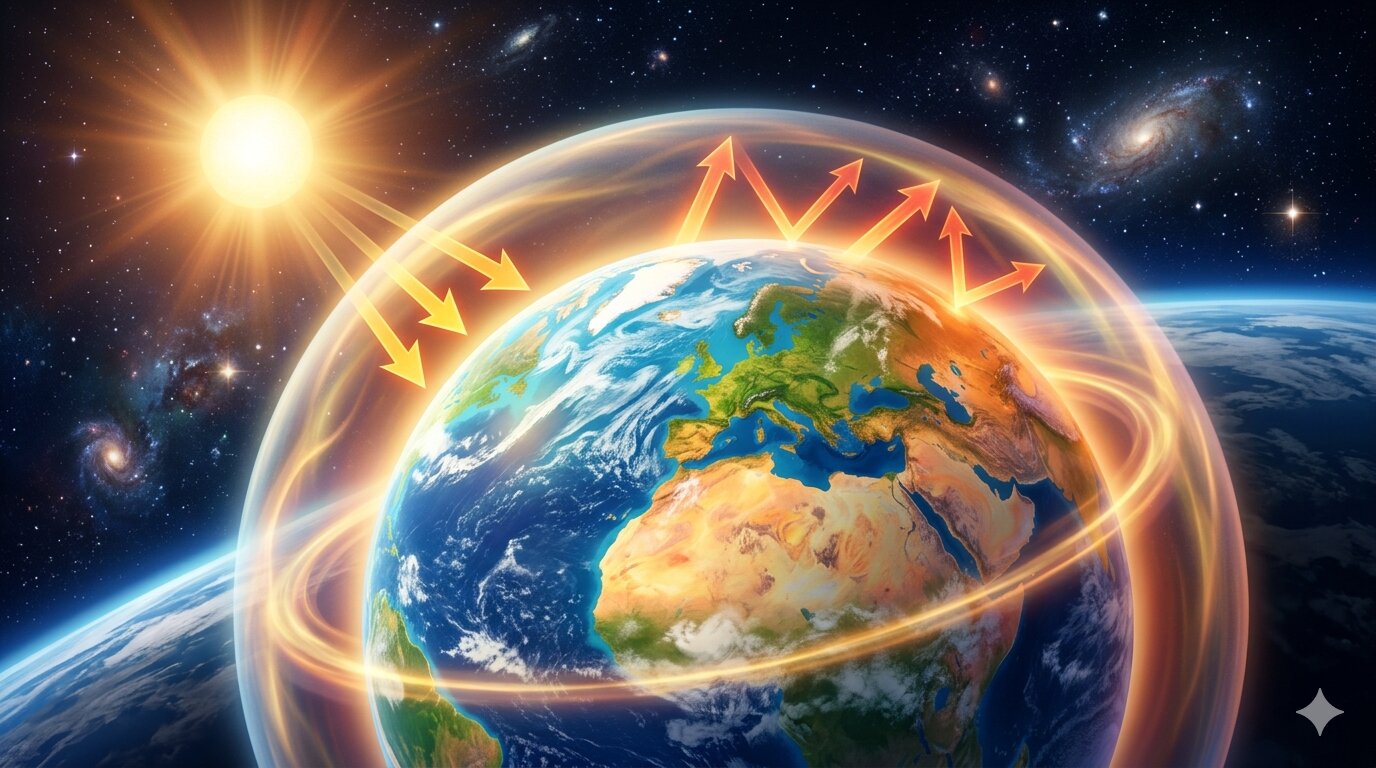
On July 21, 1969, Neil Armstrong, an American astronaut, made history by stepping out of the Apollo 11 lunar module onto the lunar surface, declaring, “This is one small step for a man, one giant leap for mankind.” This momentous event marked humanity’s first journey into space exploration.
However, have you ever paused to think about the temperature on the Moon where Armstrong first set foot? It’s not typically a detail that captures our attention, right? Initially, I imagined the moon’s surface to be quite chilly, considering it’s a celestial body suspended in the vast, icy void of space.
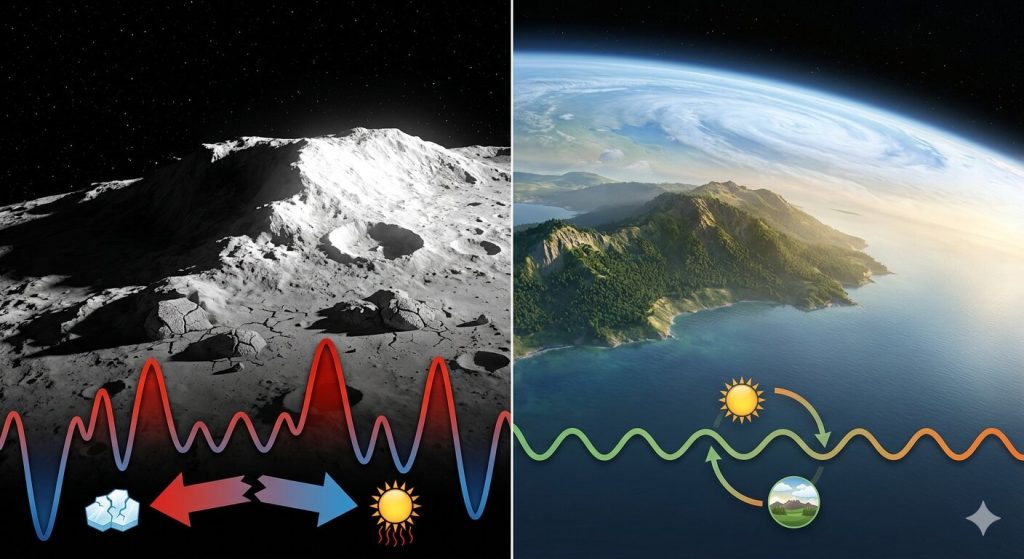
However, my guess was way off. Turns out, the lunar surface was more like a barbecue grill. During the lunar daytime, temperatures on the Moon’s surface can soar to approximately 127°C (260°F), whereas, at night, they plummet to a frigid -173°C (-280°F). These harsh temperature fluctuations render the Moon an inhospitable and desolate place.
But what’s the reason behind these extreme conditions?
The reason behind this stark temperature variance is the moon’s absence of an atmosphere. Without gaseous molecules to block some of the sun’s rays from scorching the surface during the day or to retain heat during the night, the moon experiences severe temperature extremes. This absence highlights a critical difference from Earth: the lack of the greenhouse effect.
The greenhouse effect, often misunderstood and occasionally misrepresented, is actually a crucial natural process that sustains life on Earth. It involves certain gases in our atmosphere capturing solar heat, which prevents it from escaping back into space. This process creates a natural blanket of warmth, maintaining the Earth’s average temperature at a comfortable 15°C (59°F) rather than the inhospitable -18°C (0°F) it would otherwise be.
Welcome to 1000what.com, where I chase strange questions and uncover surprisingly useful answers.
What is the greenhouse effect, really?
Here’s the part most people get wrong: the greenhouse effect is not a design flaw in Earth’s climate system.
It’s one of the main reasons life exists here at all.
Sunlight reaches Earth. Some of that energy is absorbed by land and oceans. The planet then sends part of that energy back upward as heat. Certain gases in the atmosphere absorb some of that outgoing heat and re-radiate it in different directions, including back toward the surface.
That is the greenhouse effect.
Without it, Earth would be brutally cold. With it, the planet stays warm enough for liquid water, functioning ecosystems, and life as we know it.
⚡ “The greenhouse effect is not the crisis. It’s the life-support system. The crisis begins when we overload it.”
In practice, the better question isn’t “Is the greenhouse effect bad?” It’s: How much greenhouse effect is too much?
Why does it exist?
Because physics says so.
Earth absorbs energy from the Sun and must eventually release energy back into space. But the atmosphere is not just empty air. It contains gases whose molecular structure allows them to interact with infrared radiation, which is the heat Earth emits after being warmed by sunlight.
That means the atmosphere is not a passive shell. It is an active filter.
What most people don’t see is that this makes Earth radically different from the Moon. The Moon gets blasted by sunlight during the day and loses heat fast at night. Earth, by contrast, has an atmospheric buffering system.
That buffer is the greenhouse effect.
How does the greenhouse effect work?
Let’s strip it down to the essentials.
Step-by-step
- Sunlight enters the atmosphere
- Earth’s surface absorbs part of that energy
- The warmed surface emits heat upward as infrared radiation
- Greenhouse gases absorb some of that infrared energy
- They re-emit that energy in multiple directions
- Some of it heads back toward the surface, warming the lower atmosphere and ground
This is why the phrase “heat-trapping gases” is useful, even if it oversimplifies what’s happening.
The gases are not building a solid wall in the sky. They are interacting with outgoing heat in a way that slows Earth’s cooling.
⚡ “Earth doesn’t stay warm because the Sun shines. It stays livable because the atmosphere doesn’t let all that heat leave at once.”
From a market perspective, this matters because climate stability underpins everything else: agriculture, infrastructure, insurance, energy demand, water systems, and public health. Climate is not some side issue. It is background operating software for civilization.
What are the main greenhouse gases?
Not all atmospheric gases behave the same way. The key greenhouse gases include:
- Water vapor — the most abundant greenhouse gas and a major amplifier of warming
- Carbon dioxide (CO₂) — the most discussed because human activity has pushed its concentration much higher
- Methane (CH₄) — less abundant than CO₂, but much more potent over shorter time periods
- Nitrous oxide (N₂O) — a powerful greenhouse gas linked heavily to agriculture
- Ozone (O₃) — helpful high in the atmosphere, harmful and warming closer to the ground
- Synthetic gases such as HFCs, PFCs, and SF₆ — rarer, but often extremely potent
Here’s the key distinction: abundance is not the same as impact.
Some gases are common but weaker molecule-for-molecule. Others are rare but incredibly powerful.
Is the greenhouse effect good or bad?
This is where the conversation gets messy.
The natural greenhouse effect is good. Essential, even.
The enhanced greenhouse effect—caused by rising greenhouse gas concentrations from human activity—is where the trouble begins.
Think of it like insulation in a house.
A little insulation keeps you comfortable in winter. Too much, combined with a furnace stuck on high, turns the place into a sauna.
That’s the problem. Not warmth itself. Excessive retained warmth.
The upside of the natural greenhouse effect
- Keeps Earth warm enough for liquid water
- Stabilizes temperatures between day and night
- Supports ecosystems, agriculture, and biodiversity
- Makes the planet habitable
The downside of an enhanced greenhouse effect
- Raises average temperatures
- Shifts rainfall patterns
- Increases the odds of extreme heat, drought, floods, and storms
- Melts ice and contributes to rising seas
- Puts stress on ecosystems, infrastructure, and food systems
⚡ “The same atmospheric blanket that protects life can become dangerous when we keep stuffing it with more heat-trapping gases.”
Has Earth’s greenhouse effect changed before?
Yes. Dramatically.
Long before humans were burning coal, oil, and gas, Earth’s climate moved through very different states. The greenhouse effect has never been frozen in time.
During the age of dinosaurs, for example, atmospheric conditions were much warmer than today. Higher concentrations of greenhouse gases helped create a world with no polar ice caps and much hotter global conditions.
Later, Earth cooled.
Why? Because climate is shaped by big, slow forces too:
- continental drift
- volcanic activity
- changing ocean circulation
- rock weathering
- evolving plant life that pulled more carbon from the atmosphere
In other words, climate has always changed.
The uncomfortable part is this: past natural climate change does not cancel out present human-driven change. It proves the opposite. It proves Earth’s climate is highly sensitive to shifts in atmospheric composition.
What are humans doing to the system?
We are turning up the dial.
Since the Industrial Revolution, human activity has increased greenhouse gas concentrations by:
- burning fossil fuels
- clearing forests
- expanding agriculture
- draining wetlands
- producing industrial chemicals
- building energy, transport, and industrial systems around combustion
In practice, CO₂ gets most of the attention because it’s tied directly to energy and industry, and because it lingers for a very long time.
But methane, nitrous oxide, and synthetic gases matter too. A lot.
What most people don’t see is that this is not just an “energy problem.” It’s a land-use problem, a food-system problem, an industrial problem, and a political problem wrapped into one.
What happens when the greenhouse effect gets stronger?
A stronger greenhouse effect does not just mean “nicer weather” or “a bit more warmth.”
It means more energy in the climate system.
And more energy means more disruption.
Real-world consequences
- Hotter average temperatures that push cities, grids, and agriculture under stress
- Sea level rise from warming oceans and melting ice
- More volatile weather including heatwaves, intense rainfall, floods, droughts, and stronger storms
- Biodiversity loss as species struggle to adapt fast enough
- Food and water risk in already vulnerable regions
- Higher economic costs through damage, insurance losses, supply chain disruption, and infrastructure failures
From an energy industry perspective, this is where the story gets brutally practical. Rising temperatures change electricity demand. Drought affects hydropower. Heat can reduce grid efficiency. Storms damage infrastructure. Climate is not just an environmental headline. It is an operational variable.
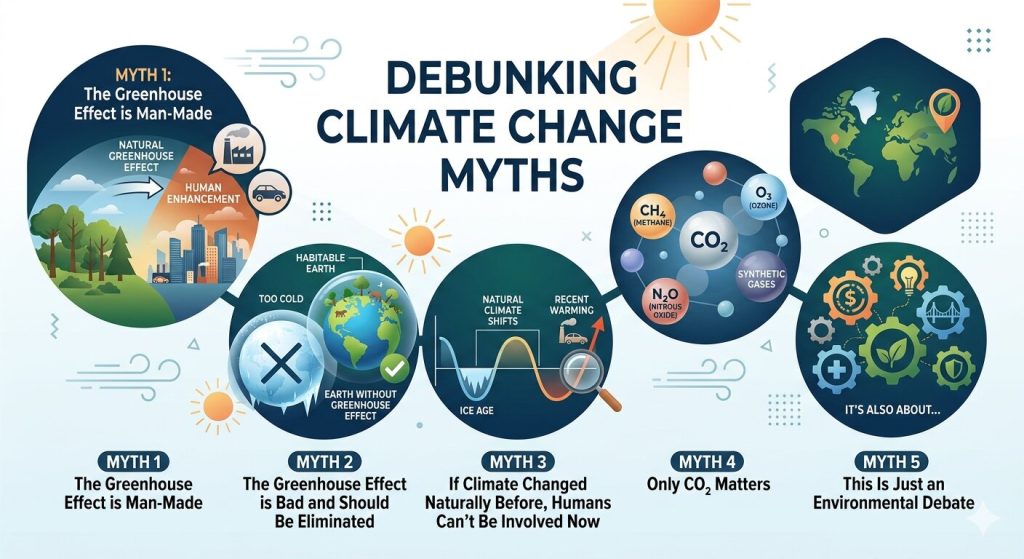
The myths that keep this topic confusing
Let’s clean up a few of the classics.
Myth 1: “The greenhouse effect is man-made.”
False. The natural greenhouse effect has existed for a very long time. Human activity is enhancing it.
Myth 2: “The greenhouse effect is bad and should be eliminated.”
False. Without it, Earth would be too cold for most life. The issue is imbalance, not existence.
Myth 3: “If climate changed naturally before, humans can’t be involved now.”
False. Natural climate shifts prove the system responds to greenhouse gases. That’s exactly why adding more of them matters.
Myth 4: “Only CO₂ matters.”
False. CO₂ is crucial, but methane, nitrous oxide, ozone, and synthetic gases also shape warming.
Myth 5: “This is just an environmental debate.”
False. It is also an economic, energy, infrastructure, health, and security issue.
So what can we actually do?
Two words: mitigation and adaptation.
You need both.
Mitigation means reducing the cause
This includes:
- switching to cleaner energy sources
- improving energy efficiency
- electrifying transport and heating
- protecting and restoring forests
- cutting methane leaks
- building lower-carbon industrial systems
- supporting better climate policy and regulation
Adaptation means preparing for what’s already changing
This includes:
- strengthening infrastructure
- improving flood and heat resilience
- redesigning cities and buildings
- protecting water systems
- improving emergency planning
- making agriculture more climate-resilient
In practice, mitigation is about avoiding more damage. Adaptation is about surviving the damage already locked in.
Both matter. Pretending one cancels out the other is how countries waste precious time.
Why this matters today
Because the greenhouse effect has gone from background science to front-page reality.
This is no longer just a classroom concept. It now shapes:
- energy policy
- investment decisions
- insurance risk
- food security
- migration pressures
- industrial strategy
- national resilience
From a market perspective, the biggest shift is this: climate stability used to be treated like a free service. Now we’re learning what happens when that service starts breaking down.
And the bill is ugly.
Real-world analogy that actually works
The greenhouse analogy is imperfect, but still useful.
A greenhouse lets sunlight in and helps retain warmth. Earth’s atmosphere works differently in the details, but similarly in outcome: it helps keep the planet warmer than it would otherwise be.
A better mental model might be this:
Earth is wrapped in a thermal management layer.
Too thin, and the planet freezes harder at night.
Too thick, and the system overheats.
That’s the balancing act.
Final thoughts
The greenhouse effect is not the enemy.
It is one of the quiet miracles that made Earth livable in the first place.
But like so many powerful systems, it works beautifully only within bounds. Push it too far, and the thing that once protected you starts working against you.
That’s the real story.
We are not fighting nature here. We are dealing with the consequences of interfering with one of nature’s most important balancing mechanisms.
So the next time someone says the greenhouse effect is “bad,” the smarter answer is this: the natural greenhouse effect is why we’re here; the enhanced greenhouse effect is why everyone’s suddenly paying attention.
What do you think is the most misunderstood part of the greenhouse effect: the science, the politics, or the human role in it?
Until next time, stay curious!
Discover more from 1000whats
Subscribe to get the latest posts sent to your email.
