“Knock, knock!”
You open the door, slightly puzzled, to find a man in a stiff suit, holding a clipboard.
“Good day, sir!” he says, tipping his hat politely.
“Uh, good day. Can I help you?”
“I’m from the electric company,” he declares. “I’ve come to count your lamps.”
“…My lamps?” you repeat, squinting.
“Yes, sir. We need to calculate your electricity usage.”
You blink, unsure whether to laugh or let him in. After a pause, you step aside. “Alright, sure… come on in?”
Yep, that’s how electricity billing worked in the late 19th and early 20th centuries. It didn’t matter how often you used those lamps or if they were even on. Your bill was based purely on how many you owned. Didn’t matter if you left your lamps off all month or threw a party lit brighter than the sun; your bill stayed the same. This system, creatively called flat-rate billing, had about as much precision as a toddler guessing your age.
Flat-rate billing charged households based on how many appliances they owned, not how much energy they used.
Accuracy? Let’s just say it wasn’t exactly a priority back then.
Out with the lamp man, in with the meter
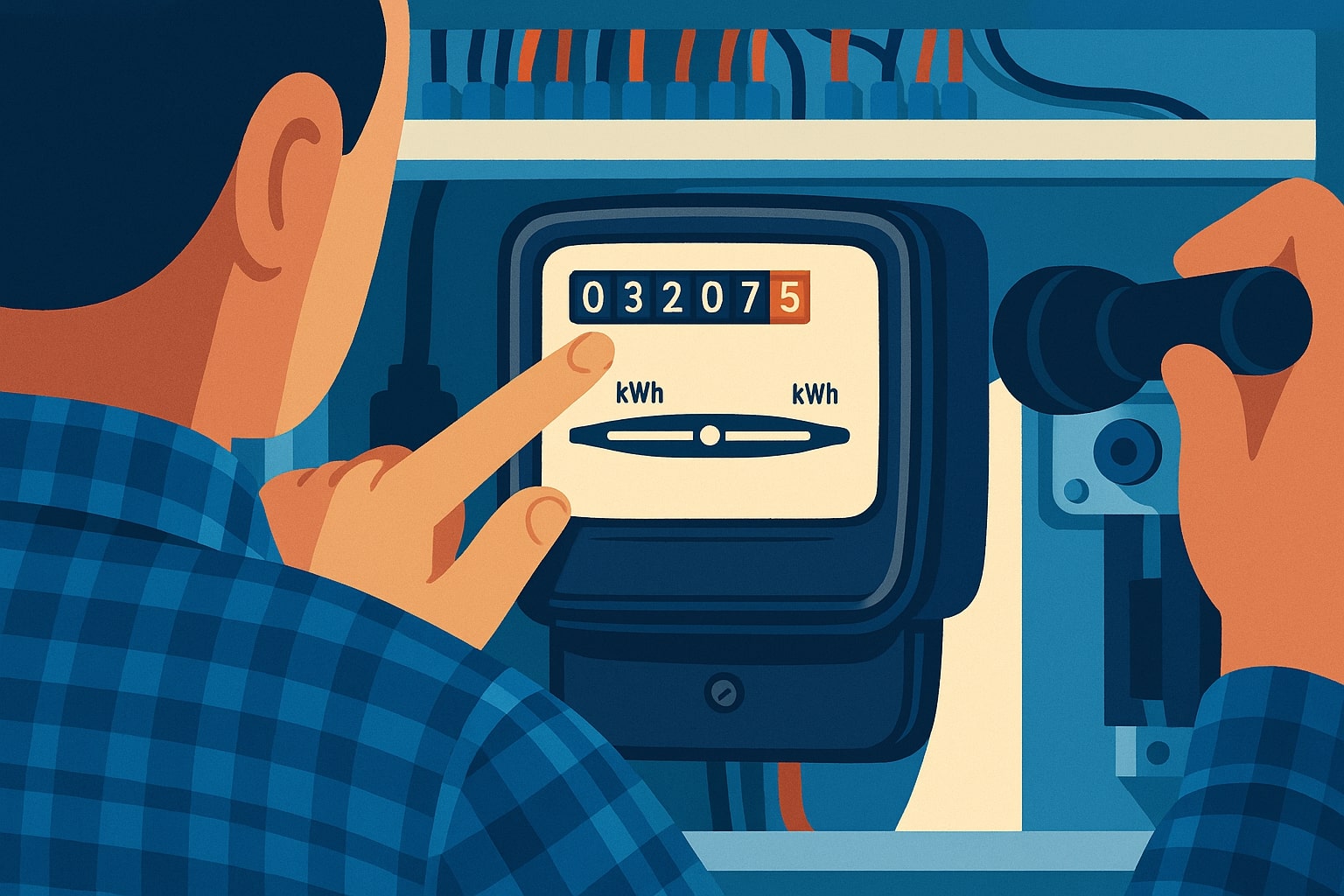
Thankfully, we’ve traded lamp-counting inspectors for something a little more… scientific: electricity meters. These humble gadgets—usually tucked in some corner of your home you never visit—are the unsung heroes of modern energy consumption. They track every watt you use with laser-like precision (well, not literal lasers, but you get the point). They’ve revolutionized how we measure, monitor, and manage electricity.
If you’re like most people, you probably haven’t given your electricity meter much thought. It’s quiet, it’s consistent, and it doesn’t demand attention—kind of like the introvert of household appliances. But this little box is far more important than you think. Without it, we’d still be arguing about lamp counts and paying flat fees for energy we might not even use. The electricity meter laid the foundation for how we power our world today.
Welcome to 1000whats! Where I am not just counting watts—I am counting on blowing your mind. 💥
In this post, I’ll break down how an electric energy meter works, step by step. Don’t worry, I’ll keep it simple and easy to follow—no electrical engineering degree required. Let’s shed some light on this remarkable (and often overlooked) invention!
What is an electricity meter?
An electricity meter is a device that… wait for it… measures electric energy.
Shocking, I know. 😉
But don’t let that simple definition fool you—it’s doing a lot more behind the scenes than just ticking away in a corner.
An electricity meter measures electric energy consumption or production, usually in kilowatt-hours (kWh).
You might have heard the classic explanation: “It measures how much electricity you use.” And while that’s technically true, it’s kind of like saying a pizza is just bread with toppings. It’s missing the bigger picture!
For instance, electricity meters can also measure how much energy a wind farm generates or how much power your neighbor’s solar panels are cranking out. These meters are the multitaskers of the electrical world—always keeping tabs, whether it’s consumption or production.
So how do they do it? Magic? No, just science.
Electricity meters work by constantly measuring two things: the voltage and current of the electricity passing through them. Then, they combine those values to calculate how much energy has been used—or generated—in units called kilowatt-hours (kWh).
Meters calculate energy use by multiplying voltage by current over time, resulting in kilowatt-hours.
Think of it as the “calories burned” counter for electricity.
Want the full story on Energy units?
I unpacked it on 1000whats → https://1000whats.com/energy-units/
What are the different types of electricity meters?
Electricity meters may sound complicated, but sorting them out is easier than organizing your sock drawer (well… slightly easier).
While the market offers a buffet of fancy features, the main categories boil down to just two:
1. Mechanical electricity meters
These are the classics. Think old-school, with moving parts and a kind of vintage charm. They operate using well-established physical principles and have been around for decades.
2. Digital electricity meters
These meters ditch the moving parts and go all-in on electronics. Sleek, modern, and much more versatile, they’re now the standard in many homes and businesses.
Electricity meters fall into two main categories: mechanical and digital—each based on how they record energy.
There are other specialized types that use different scientific principles, but they’re more niche—less common in everyday use.
Now, let’s zoom in a little…
A closer look at digital meters
Digital meters themselves come in a few flavors, mostly based on how well they can communicate. Some just quietly collect data. Others are chatty little things, constantly sending updates.
- Basic digital meters: They do the job—recording usage accurately—but keep to themselves.
- Smart meters: These meters have something to say! They can send your usage data to your energy provider in real time, often using wireless networks.
Smart meters are digital meters with communication abilities, enabling remote data transmission and real-time monitoring.
And then there are the specialists
In addition to the usual suspects, a few meters deserve special mention:
- Prepaid meters: Pay before you play. Load up credit, use electricity, reload when it runs out. Simple and budget-friendly.
- Net energy meters: Perfect for homes with solar panels, these track not just the energy you use but also the energy you produce and send back to the grid.
Prepaid and net energy meters offer tailored solutions for budgeting and renewable energy use.
Want the full story on Prepaid electricity?
I unpacked it on 1000whats → https://1000whats.com/prepaid-electricity/
How do mechanical electricity meters work?
You’ve probably seen one of these before.
The big giveaway? That hypnotic spinning disk inside.
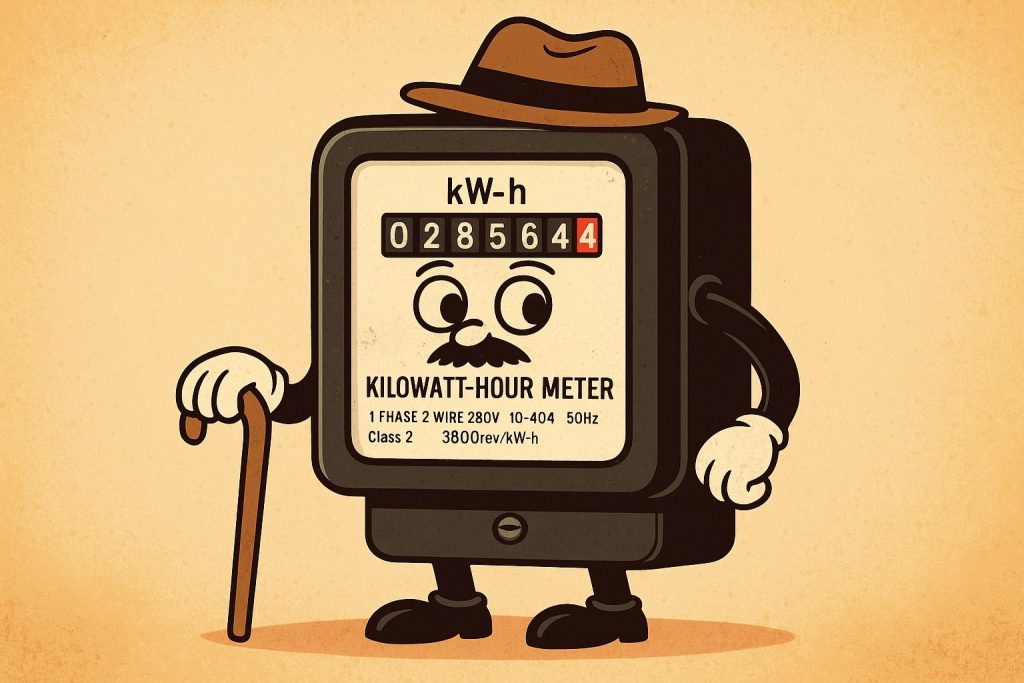
We like to call them old-fashioned, and for good reason. These relics of the power world have been around since the late 1800s. That’s right—these meters are basically the Victorian gentlemen of your utility box.
They’re called mechanical meters because, surprise: they’re all gears, magnets, and physics—no fancy digital brains here. Just a good old spinning disk telling you how much power you’re gobbling up.
Mechanical electricity meters rely on a spinning disk to track energy use through electromagnetic induction.
Let’s take a peek under the hood and see what makes that disk dance.
What makes the disk spin?
Here’s where it gets delightfully nerdy. The secret sauce behind this spin is something called electromagnetic induction.
Electromagnetic induction creates motion in the disk by generating a force from changing magnetic fields.
That’s just a fancy way of saying: if you move a conductor through a magnetic field—or change the magnetic field around it—you create electricity. And in the case of the meter, movement goes the other way: electricity creates movement.
Inside a mechanical meter, you’ll find a conductive metal disk, usually aluminum, chilling on a spindle. It’s surrounded by coils and magnets that generate a magnetic field. When your appliances start sipping electricity, current flows through those coils.
This current creates a new magnetic field that starts to tango with the existing one—and bam! The disk begins to spin.
The faster your appliances gobble up electricity, the faster the disk turns. It’s like watching your energy use come to life in real time.
What is disk rotation telling us?
Here’s the brilliant part: the speed of that spinning disk is directly related to how much current is flowing.
More current = faster spin.
And we don’t just sit there watching it spin like a fidget toy. Gears inside the meter count the rotations and display the numbers on a dial—like an old-fashioned odometer for your electricity.
Gears convert disk rotations into numerical readings displayed on the meter dial.
So does one full spin equal one kilowatt-hour (kWh)?
Not always. It depends on how the meter is built and calibrated.
But in many cases, yes—one full disco twirl of the disk equals one kWh of energy.
What are the downsides of mechanical electricity meters?
Now, as charming as these meters are, they’ve got a few wrinkles. Their main problem? Moving parts. Those gears and disks don’t age like fine wine. Dust, wear and tear, and time itself chip away at their accuracy.
Mechanical meters degrade over time and require regular maintenance and calibration.
Also, they need real human beings to walk up, squint at the numbers, write them down, and send them off for billing. That leaves room for mistakes. Maybe the meter’s in a spider-filled corner. Maybe someone reads a six as an eight. It happens.
And here’s the kicker—mechanical meters are way too trusting. Stick a magnet near one, and you can mess with the readings. That’s right: magnetic tampering is a real issue.
Want the full story on Electricity theft?
I unpacked it on 1000whats → https://1000whats.com/electricity-theft/
Mechanical meters can be tampered with using magnets, affecting their measurement accuracy.
In short, these sturdy old warriors did their job well for over a century. But they’re not exactly built for the Wi-Fi age.
Don’t worry, though—we’ve got some flashier, smarter cousins waiting in the wings.
How does a digital electricity meter work?
If the mechanical meter is your cranky but reliable grandpa, the digital meter is the slick, efficient cousin who wears smart glasses, and always knows the Wi-Fi password.
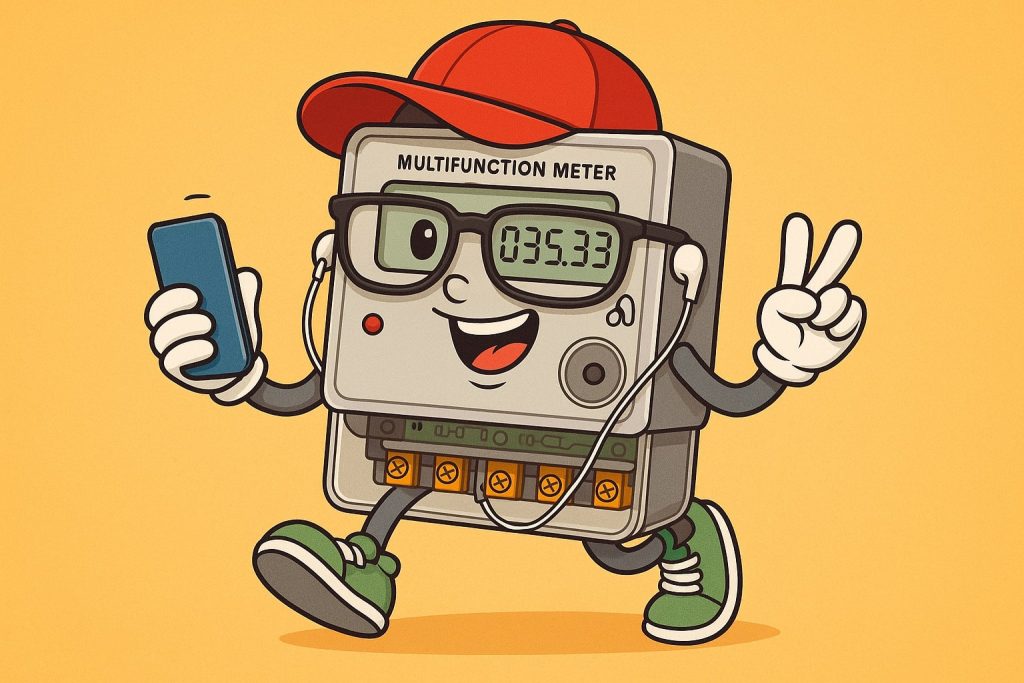
Digital electricity meters are a more modern take on measuring power. They still follow the same core physics—yep, electromagnetic induction is still doing the heavy lifting—but they ditch the spinning disk for something cooler: sensors and digital displays.
Digital meters measure electricity by detecting magnetic field changes and converting them into digital signals.
Instead of a mechanical ballet of gears and rotating parts, digital meters sense shifts in the magnetic field and translate them into neat, precise digital data. Think of it as switching from Morse code to text messages—same message, just faster and way easier to read.
Now, you might wonder: why all the buzz about digital meters?
Let’s break it down and compare the two side by side.
What makes digital electricity meters better than mechanical ones?
In the table below, we compare digital meters to mechanical meters:
| Feature | Digital electricity meter | Mechanical electricity meter |
| Display | Clear LCD/LED screen with readable numbers | Rotating dials that require squinting and guesswork |
| Precision | High accuracy, less error-prone | Accuracy drops with age and use |
| Maintenance | Low maintenance, no moving parts | Needs periodic checks due to wear and tear |
| Tamper detection | Built-in systems flag unauthorized access | More vulnerable to tampering, especially with magnets |
| Communication | Can send data remotely, perfect for real-time billing and monitoring | Needs a human to come read the numbers—yes, really |
| Cost | Higher upfront cost but cheaper long-term | Cheaper to install, but may cost more in the long run due to servicing |
Digital meters are more accurate, easier to read, and capable of remote communication—no dial squinting required!
So, while digital meters might come with a bigger price tag up front, they more than earn their keep. They’re smart, precise, and don’t mind working overtime—no oiling required.
Ready to unpack how smart meters take things even further? We’re just getting started!
How does a smart electricity meter work?
If digital meters are the nerdy cousin, smart meters are the nerdy cousin with a PhD, a smartwatch, and a habit of optimizing their own sleep cycle. These aren’t just meters—they’re power-conscious, data-driven, two-way-communicating wizards.
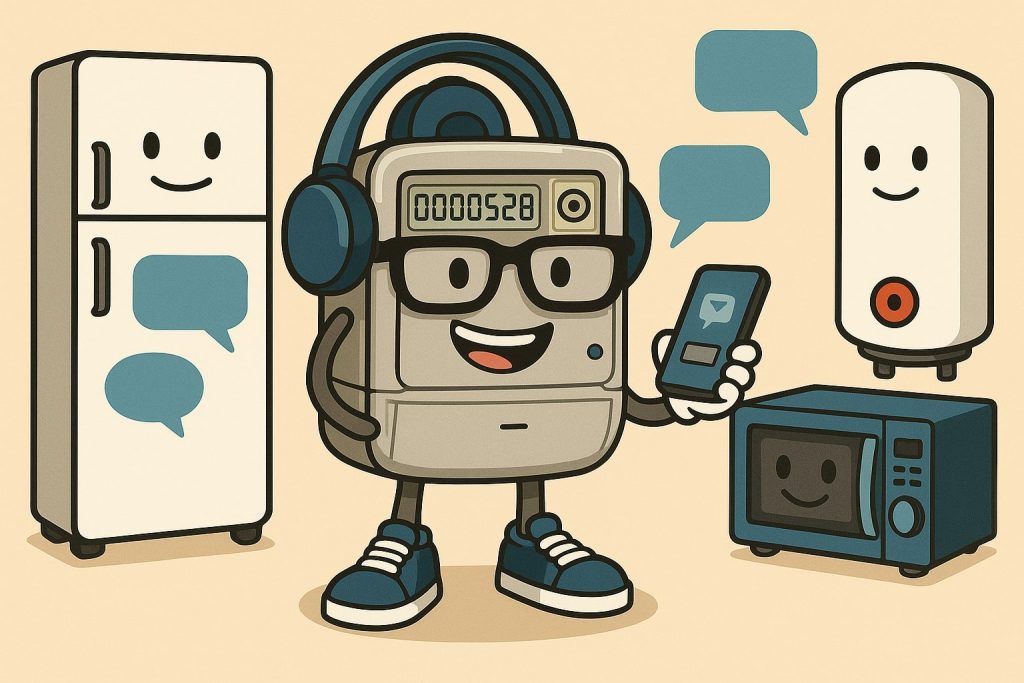
Smart meters do more than measure—they collect, communicate, and analyze energy data in near real-time.
So, what exactly makes a smart meter smart? Let’s plug in:
1. Data collection like a pro
Smart meters don’t just count kilowatt-hours—they track when and how you use electricity. Every few minutes, they record your consumption. This means no more guessing whether your dishwasher is a secret energy hog—it’s all there, timestamped and tidy.
2. Advanced analytics
All that juicy data doesn’t just sit around. It feeds into advanced analytics systems that can uncover usage patterns, demand spikes, and even grid hiccups. It’s like having an energy detective on call 24/7.
Smart meters unlock insights into consumption trends, helping both users and utilities make smarter decisions.
3. Remote monitoring and control
Gone are the days of meter readers trekking through rain and shrubbery. Utility companies can now check your meter, update firmware, or even disconnect service remotely (yikes—pay your bill on time!).
4. Time-of-use pricing
Smart meters can handle pricing that shifts based on the time of day. Electricity costs more during peak demand and less during off-peak hours. It’s like surge pricing, but for your toaster.
Time-of-use pricing encourages energy use during off-peak hours, reducing strain on the grid—and your wallet.
5. Grid optimization
Utility providers use smart meter data to improve grid efficiency. They can spot outages faster, predict demand more accurately, and plan smarter upgrades. It’s like giving the power grid a fitness tracker.
The best part? You benefit, too. Smart meters give you real-time feedback on how you’re using electricity. With this info, you can shrink your carbon footprint, trim your bills, and feel a little smug every time you turn off a light.
Smart meters empower consumers to monitor and manage energy use more efficiently than ever before.
Ready to peek behind the curtain and see exactly how they pull all this off? Next stop: the inner workings of a smart meter. 🛠️🔌
What are two-tariff electricity meters?
Ever noticed your electricity meter showing two sets of numbers? No, it’s not trying to confuse you. It’s probably a two-tariff electricity meter—a clever device designed to track your power use across two time zones: day and night.
Two-tariff meters apply different electricity rates depending on the time of day—typically a cheaper night rate.
These meters don’t just measure how much electricity you use—they also record when you use it. Why? Because not all hours are created equal when it comes to electricity pricing.
How it works
- Day rate: This covers the hours when demand is highest—generally from morning to evening. Expect this rate to be more expensive.
- Night rate: Starting around midnight, this rate kicks in during off-peak hours, when electricity is cheaper and demand is lower.
Your two-tariff meter keeps a separate tally for each period, which shows up on your electricity bill as two different usage values—each charged at its corresponding rate.
Using more electricity during off-peak hours can save you money with a two-tariff meter.
So, if your appliances run mostly while you sleep (hello, night-time laundry!), or you’re an off-peak power planner, this meter can cut your costs.
Not sure if you’re on a two-tariff plan? Check your bill—or your meter. Two rows of numbers are a solid hint.
How does a prepaid electricity meter work?
Prepaid electricity meters are like vending machines for power. Instead of waiting for a bill to land with a thud in your mailbox, you pay before you use the juice. Simple. Sensible. And surprisingly satisfying.
Prepaid meters let users pay for electricity in advance and use power from a credit balance.
These meters come in both digital and mechanical flavors. But the real magic is in their “pay-as-you-go” style. Here’s how it works:
- Buy credit: You purchase electricity units (credits) from your utility provider or a top-up location.
- Load it up: You transfer those credits to your meter using a prepaid token, smart card, mobile app, or an online system.
- Use electricity: Your home draws power straight from your prepaid balance.
- Run out? Power out!: If your balance hits zero, the meter automatically cuts the supply. No shocks—just silence.
- Top up, plug in: Add more credit, and voilà—your lights come back on faster than you can say “low balance.”
Run out of credit? The meter disconnects power until you top up—then it reconnects instantly.
Most prepaid meters come with a screen that shows:
- Your remaining credit
- How much electricity you’re using
- Voltage levels
- Past consumption
Some retro models even have a coin slot—because why not mix nostalgia with necessity?
Prepaid meters display usage, balance, and even voltage—helping users stay informed and in control.
Want the full story on Prepaid electricity?
I unpacked it on 1000whats → https://1000whats.com/prepaid-electricity/
How do net electricity meters work?
If your house has solar panels, you’re not just using electricity—you’re making it. And someone has to keep track of all that back-and-forth energy. Enter the net energy meter: the referee of the rooftop power game.
Net energy meters track both the electricity you use and the excess power your solar panels produce.
Here’s how it works:
Let’s say your solar panels are basking in the sun and producing more power than your fridge, lights, and phone chargers need. That extra electricity doesn’t go to waste—it flows back into the grid. 🌐⚡
Your net energy meter records that outgoing power. Later, when the sun dips and you pull electricity from the grid, the meter tracks that, too.
At the end of the billing period, your utility company compares the two:
- Used more than you produced? You get a bill.
- Produced more than you used? You earn a credit.
Net metering allows solar users to offset consumption with production—sometimes even earning credit.
This balancing act is known as net metering, and it’s the reason we call it a net energy meter. It’s not just measuring your usage—it’s calculating the net difference between what you take and what you give.
One important caveat: just because a meter can measure electricity in both directions doesn’t mean it’s part of a net metering program. Utilities decide that part, and it usually requires some paperwork.
Not all bidirectional meters qualify for net metering—eligibility depends on local utility policies.
So, if your roof is pulling double duty as a power plant, thank your net meter for doing the math—and saving you money. 🏡💸
Why are electricity meters important?
You don’t often hear someone say, “Thank goodness for my electricity meter.” But maybe you should.
Electricity meters have quietly powered the rise of modern civilization. Without them, electric utilities would still be guessing your usage—or worse, charging everyone a flat fee. Fair? Not even close.
Meters made it possible to measure, sell, and expand electricity access fairly and efficiently.
Imagine paying the same for electricity as your neighbor who hosts weekly disco parties lit up like a Vegas casino. That’s what life would be like without meters. And let’s be honest—no one wants to run a power company in a world where freeloading is built into the business model.
The backbone of the electricity market 🏗️📊
For energy providers, meters are lifelines. They ensure that every kilowatt-hour delivered gets counted and billed. This accurate billing keeps revenue flowing—revenue that powers not just homes, but the entire infrastructure behind them.
Meters generate the revenue utilities need to maintain and grow the power grid.
Thanks to meters, electricity could become a marketable, scalable service—something reliable, fair, and accessible. That’s what helped turn electricity from a luxury into a necessity.
Measuring more than just use 📏⚡
Modern meters do more than tally what you’ve used. They create a transparent, verifiable record of power flows—used, generated, or transferred. This transparency is the secret sauce that keeps electricity markets fair and functional.
Meters enable transparency, which is essential for a functioning energy market.
On the utility side, meter data feeds the brain of the grid. Operators analyze historical usage to decide where to expand, upgrade, or reinforce infrastructure. Without this data, grid planning would be like trying to build roads without traffic reports.
A tool for change: Meters and the environment 🌍💚
Meters don’t just help providers—they empower you. By monitoring your own energy use, you gain insight into habits, appliances, and potential savings. That awareness often leads to energy-efficient choices, which help the planet and your wallet.
Meters help consumers cut waste, save money, and reduce their environmental impact.
In short, electricity meters aren’t just about numbers—they’re about fairness, sustainability, and the shared infrastructure that lights up our world.
Who installs and maintains electricity meters?
You might already know the answer to this one—but hey, not everyone grew up with an electrician in the family.
Let’s clear this up: when it comes to electricity meters, there’s one top dog in charge—the distribution grid operator.
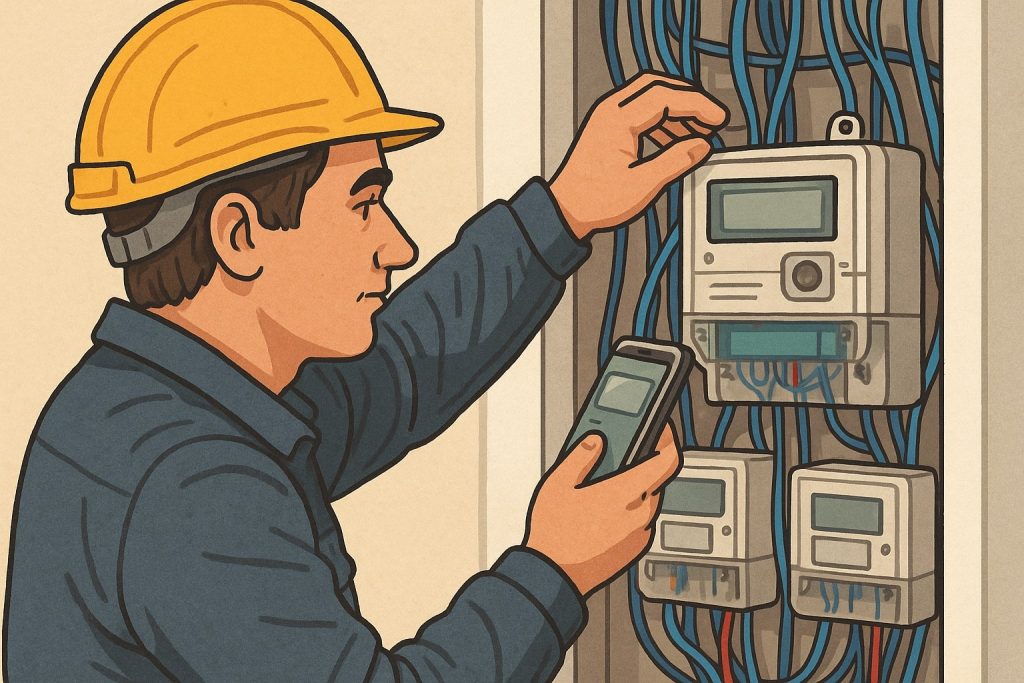
Your distribution grid operator is responsible for installing, reading, and maintaining electricity meters.
This isn’t a job for just any contractor. Grid operators are licensed entities that manage the infrastructure delivering power to homes and businesses. They employ trained technicians—or hire authorized service partners—who know how to install meters safely, correctly, and in line with legal standards.
Their responsibilities don’t stop after the meter is mounted on your wall. They also:
- Read your meter regularly (manually or remotely)
- Check its accuracy
- Calibrate it when needed
- Repair or replace it if it malfunctions
So if your meter looks off—maybe the screen’s blank, the numbers are jumping around, or something just seems fishy—don’t touch it. It might be tempting to give it a tap or twist, but resist the urge.
Never try to repair or tamper with your meter. Report any issues to your utility provider or grid operator.
Instead, contact your electricity provider, who will coordinate with the grid operator to handle the problem. This way, you stay safe—and your billing stays fair.
Where is your electricity meter located?
You might not think about it much, but electricity meters don’t just show up anywhere. Their placement is carefully planned based on regulations, utility rules, safety, and good old-fashioned common sense.
Electricity meter locations are determined by regulations, safety needs, and utility company guidelines.
Let’s break down the “who, what, and where” of meter placement:
Who decides where meters go?
- Government regulations: National or regional codes often lay down the law. These rules ensure that meters are safe, accessible, and easy to read.
- Utility company guidelines: These take the regulations and go a step further, offering detailed instructions tailored to local infrastructure.
So, while your utility company might install the meter, they follow strict rules that aren’t up for creative interpretation.
Residential installations
For homes, meters can pop up in a few familiar places:
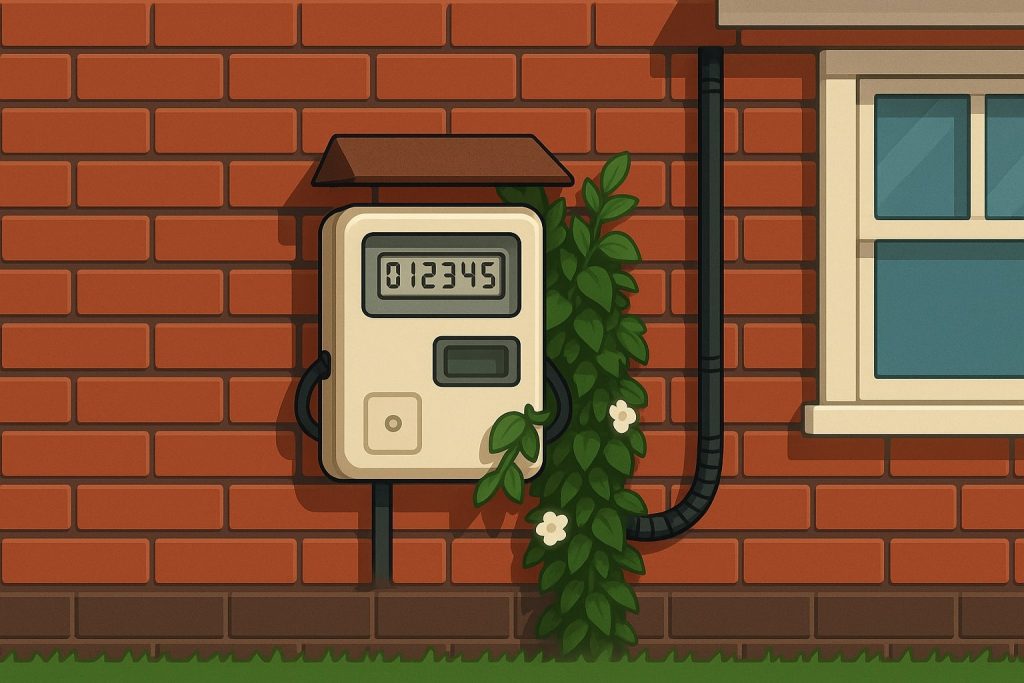
- Outside: This is the most common setup. You’ll usually find them on an exterior wall or on a meter pedestal near the property line—easy for meter readers to spot and safe from indoor hazards.
- Inside: In some older homes or cold-weather regions, meters might be tucked into a basement or hallway.
Most residential meters are placed outdoors for easy access and safety.
Commercial and industrial locations
Now we’re talking scale. For businesses and factories, meter placement depends on the building layout and energy demand. Options include:
- Indoors: Often in a dedicated metering or electrical room.
- Outdoors: In secured enclosures, sometimes with multiple meters lined up like well-behaved robots.
Here, placement is all about accessibility, safety, and keeping operations running smoothly.
Don’t forget the temporary setups!
Electricity doesn’t take a vacation. Meters can also be found in temporary setups—construction sites, outdoor festivals, even food truck parks. These temporary meters are mobile but still follow the same safety and access rules.
Temporary meters serve short-term power needs at construction sites, events, and other non-permanent setups.
Why accessibility matters
Whether your meter is in a box on the wall or in a steel cage behind a gate, it must be accessible. Meter readers (or smart meter signal receivers) need to collect data easily and safely. If they can’t reach the meter, you might end up with estimated bills—and no one wants a surprise there.
Final thoughts
We’ve come a long way since the days when some poor soul had to count your lamps to figure out your electric bill. Seriously—counting lamps? That’s less a billing system and more a plot twist from a steampunk sitcom.
Now, we’ve got meters that are smart enough to chat with utility companies, detect tampering, and track every kilowatt-hour like it’s on a fitness app. Whether it’s the satisfying spin of a mechanical disk or the silent precision of digital sensors, electricity meters have become the unsung heroes of the energy world.
From guesswork to gigabytes—meters now empower consumers with precision and control over their energy use.
But let’s not forget: the meter is only as good as its care. Installation, maintenance, and accurate readings aren’t just technicalities—they’re the backbone of fair billing and smart energy use.
Looking ahead: Watt’s next?
The evolution of meters reflects our broader leap in how we think about energy. With more data comes greater transparency, which leads to more control. And yes, probably more apps.
Still, it’s worth asking…
- Are there wild new tech ideas out there that might make today’s meters look like museum pieces?
- How do we design meters that won’t freeze in the Arctic or fry in the Sahara?
- Can meters become true allies in the fight against energy waste and climate change?
- And—let’s be honest—what’s the weirdest place you’ve ever seen a meter installed?
Curious minds make powerful progress—your experiences and ideas shape the energy conversation!
I’d love to hear your thoughts, stories, and genius insights. Did your meter ever surprise you? Have a theory about future grid tech? Don’t hold back—let’s get the sparks flying in the comments.
Until next time, stay curious, stay plugged in, and never trust a meter that tries to count your lamps. 😉⚙️🔌
Discover more from 1000whats
Subscribe to get the latest posts sent to your email.