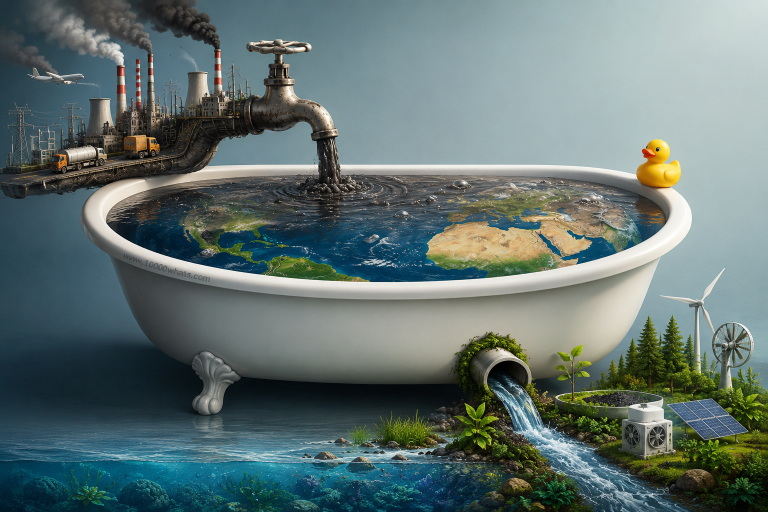
Steel is everywhere and almost nobody thinks about it.
You wake up in a building full of it, ride over bridges made from it, trust your car to it, and probably insult your frying pan for sticking to eggs while standing near some steel appliance. The strange part is that this ordinary material comes from a fairly dramatic process: we take iron ore, heat it brutally, and traditionally use coal to rip oxygen away from the ore so iron can become steel. Elegant? Sort of. Dirty? Very.
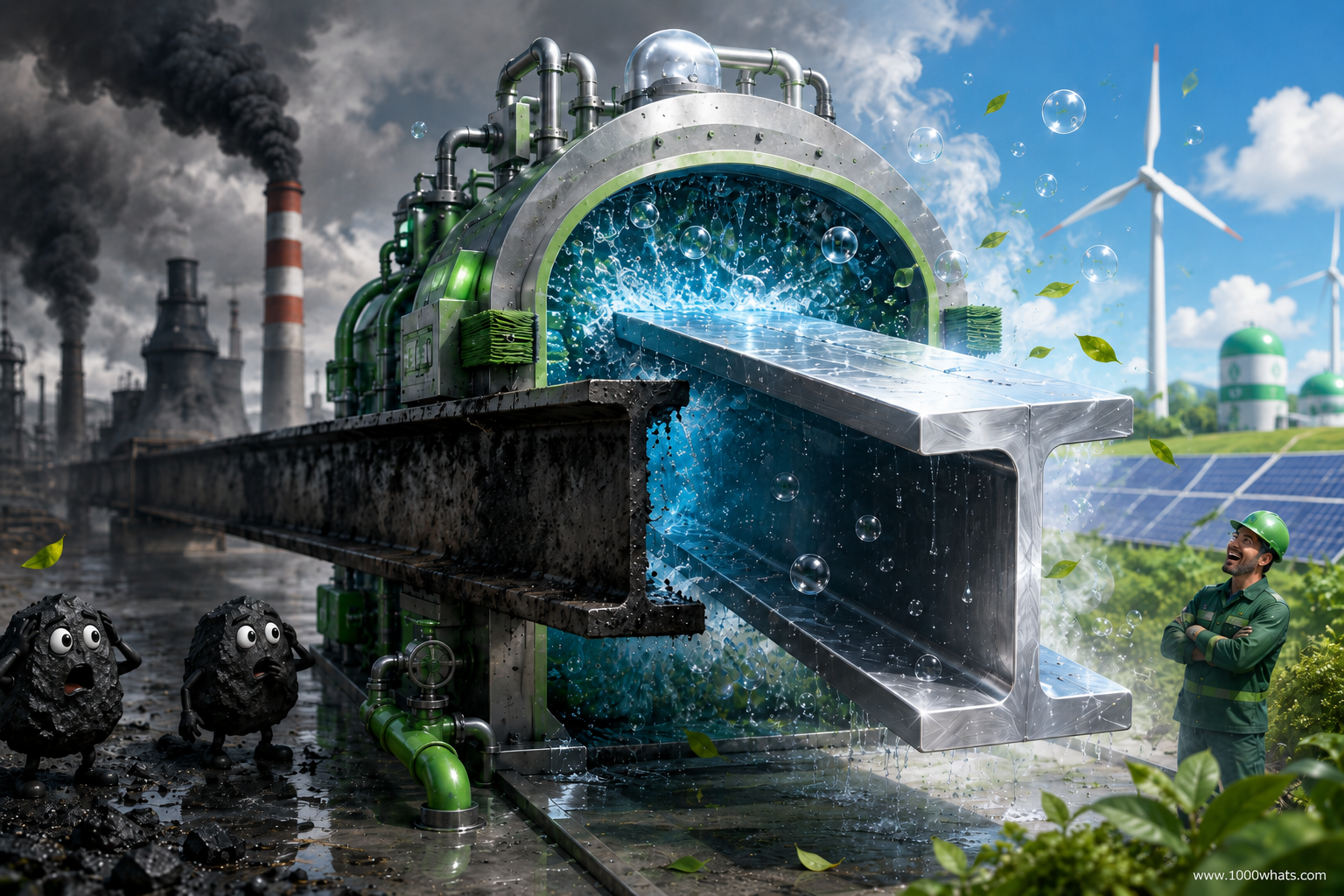
That’s why green steel exists.
Not because the world wanted a cute sustainability label. Because regular steel is one of the climate system’s favorite punching bags, and if you want cleaner cars, cleaner wind turbines, cleaner buildings, and cleaner grids, you eventually run smack into the same awkward question: who’s making the steel, and how?
⚡ “Green steel is what happens when metallurgy finally gets dragged into the climate conversation.”
Welcome to 1000whats — where even steel gets a personality crisis and asks, “Can I be green now?”
What is green steel?
At the simplest level, green steel is steel made with much lower emissions than conventional steel.
That sounds suspiciously vague because, frankly, it is. There still isn’t one universal global definition everybody salutes at sunrise. Industry groups and policymakers are working on near-zero and low-emissions thresholds, but the big idea is consistent: the steel must come with significantly less climate baggage than the old blast-furnace-and-coal routine.
So no, green steel is not steel painted green.
Not even slightly.
It’s about the process, not the color.
From a market perspective, the label usually points to steel made by one or more of these moves:
- Replacing coal with green hydrogen in ironmaking.
- Using recycled scrap in electric arc furnaces powered by low-carbon electricity.
- Cutting emissions from existing routes with cleaner energy, higher efficiency, and sometimes carbon capture.
What most people don’t see is that steel is not one single recipe. It’s more like cooking, except the chefs are giants and the oven wants to melt a railroad.
Why does green steel even exist?
Because conventional steelmaking is a climate menace in a hard hat.
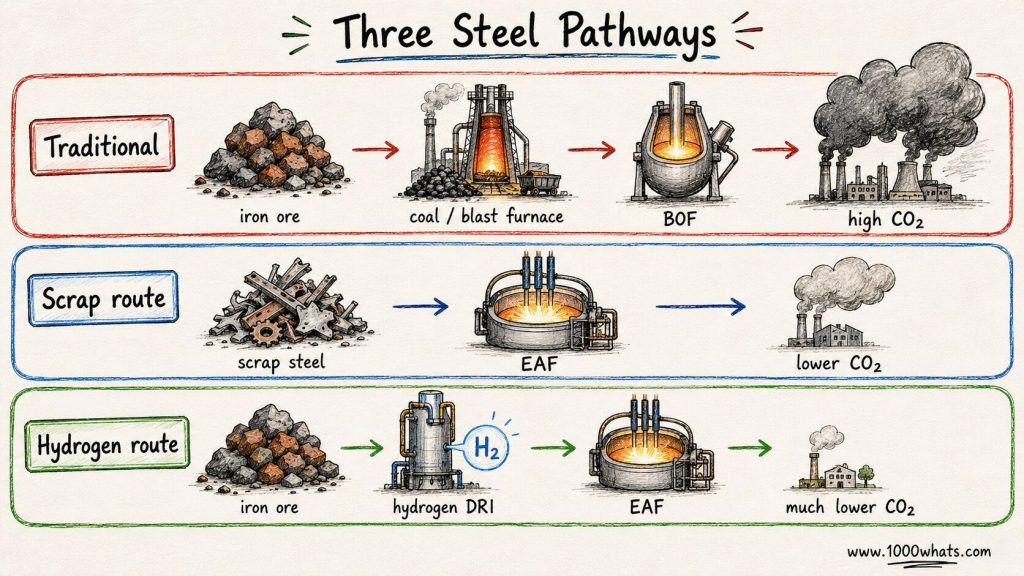
Today, about 70% of global steel production still comes from the classic blast furnace-basic oxygen furnace route. That route depends heavily on coal, especially coking coal, and the result is a lot of CO2. The IEA says hydrogen-based direct reduced iron with electric arc furnaces is emerging as a preferred low-emissions option in some regions precisely because the old route is so carbon-heavy.
Steel’s emissions problem is not a side effect. It’s baked into the chemistry.
Iron ore is iron chemically tied up with oxygen. To get the iron free, you need a reducing agent. Traditionally, that reducing agent is carbon from coal. Carbon grabs the oxygen, and a pile of CO2 comes along for the ride. So when someone says, “Why can’t steel plants just be a bit more efficient?”—well, sure, efficiency helps, but the deeper issue is that coal isn’t just heating the process; it’s part of the reaction itself.
⚡ “The dirty secret of steel is that the smoke isn’t an accident. In the old process, it’s part of the job description.”
How does green steel work?
Here’s the fun part. We can make cleaner steel by changing the chemistry, the electricity, the raw materials, or all three.
1. Scrap + electric arc furnace: the recycling ninja
This is the most mature low-emissions route. You take scrap steel, dump it into an electric arc furnace (EAF), and melt it using electricity instead of running fresh iron ore through a blast furnace.
If that electricity is low-carbon, the emissions can be much lower. In practice, this is the cleanest shortcut because you’re not reducing iron ore from scratch—you’re reusing metal that already exists. Very civilized. Very less-smoke-more-sparks.
There’s a catch, because of course there is.
Scrap is limited. ResponsibleSteel notes that scrap can meet only about a third of global steel demand today, and even by 2050 it is projected to supply less than half of the demand for new steel. So scrap matters a lot, but scrap alone won’t save the kingdom.
2. Hydrogen DRI + EAF: the headline act
This is the route most people mean when they say green steel.
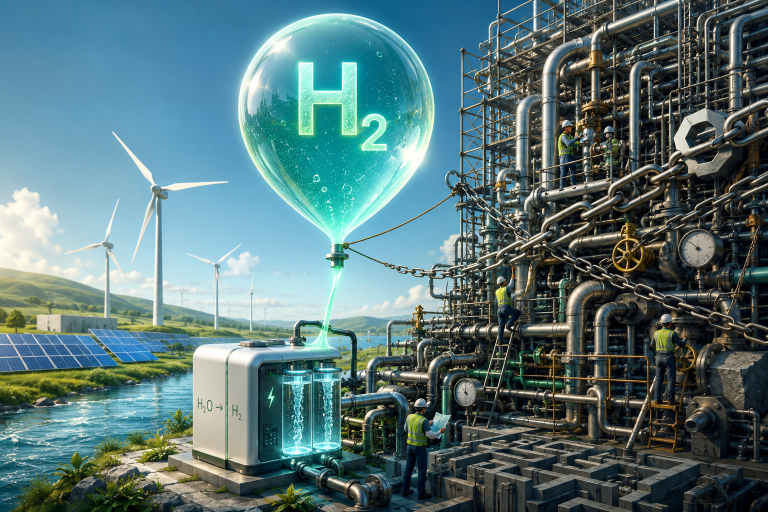
Instead of using coal to strip oxygen from iron ore, the plant uses hydrogen in a process called direct reduced iron (DRI). Then the resulting iron goes into an electric arc furnace to become steel. If the hydrogen is made with low-emissions electricity and the furnace also runs on clean power, emissions can fall dramatically. The Stegra project says its route can produce sponge iron with a 95% lower carbon footprint than blast furnaces, before melting it in an EAF using renewable electricity.
The neat little chemistry trick is this:
coal reduction tends to produce CO2;
hydrogen reduction tends to produce water.
That’s not magic. That’s just different atoms being rude in a more useful way.
3. Cleaner conventional steel: the transitional compromise
Some producers aim to lower emissions without throwing out the whole plant. That can mean:
- more efficiency,
- more scrap in the mix,
- cleaner electricity,
- and sometimes carbon capture.
Worldsteel explicitly includes low-carbon energy and abatement technologies such as CCUS in its low-carbon steel framing. So depending on who’s talking, “green steel” may include some upgraded conventional routes—not just hydrogen dreams and Scandinavian mood lighting.
4. Future route: steel by electrolysis
There’s also a more experimental path where electricity does the ore-to-metal job directly. Boston Metal’s molten oxide electrolysis is one example, using renewable electricity instead of coal and avoiding the need for hydrogen infrastructure. It’s promising, but it’s still the up-and-coming weird cousin, not yet the default family business.
Real-world examples of green steel
This is not theoretical anymore.
Back in 2021, the HYBRIT partnership announced the world’s first fossil-free steel delivery, with SSAB sending the material to a customer as an early commercial milestone. Volvo Group then unveiled the world’s first vehicle made with fossil-free steel from SSAB. So yes, green steel has already escaped the PowerPoint phase and touched actual metal things with wheels.
Another big example is Stegra in Sweden, which is developing a large-scale integrated green steel plant using hydrogen for direct reduction and renewable electricity in the EAF route, targeting a 95% lower carbon footprint than conventional blast furnaces. That’s a giant flashing sign saying: industry is trying to scale this, not just talk about it at conferences while eating sad pastries.
Demand is showing up too. Mercedes-Benz signed a deal for about 50,000 tonnes per year of almost CO2-free steel from H2 Green Steel for its European production, and BMW said agreements with low-carbon steel suppliers would cover more than 40% of steel demand at its European plants, including hydrogen-based supply from H2 Green Steel.
That last point matters.
A carmaker buying greener steel is attacking emissions before the car even turns a wheel. That’s sneaky. I approve.
⚡ “A lot of a product’s emissions happen before the customer ever touches it. Green steel goes hunting in that blind spot.”
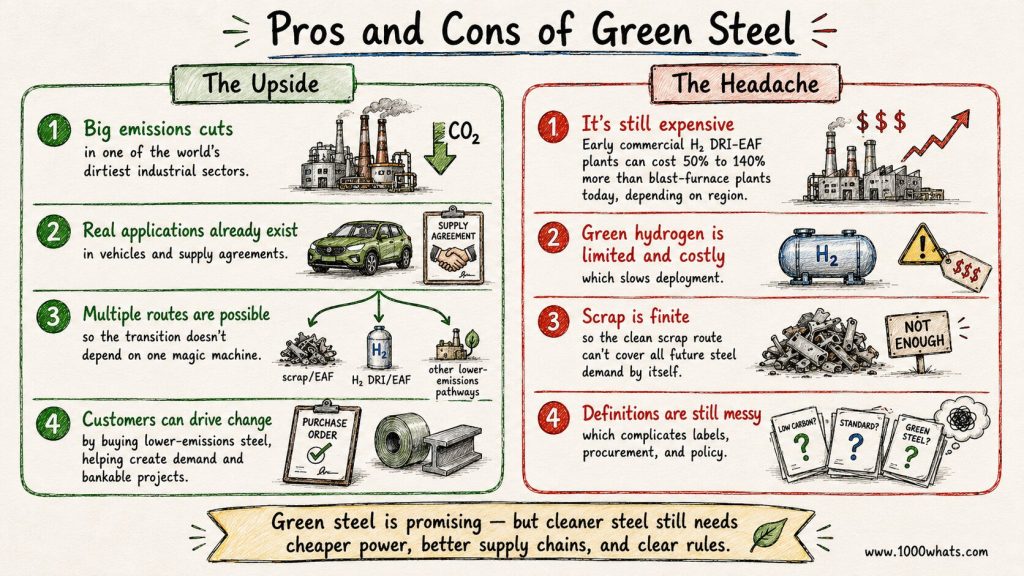
Pros and cons of green steel
Let’s not pretend this is all sunshine and heroic furnaces.
The upside
- Big emissions cuts in one of the world’s dirtiest industrial sectors.
- Real applications already exist in vehicles and supply agreements.
- Multiple routes are possible, so the transition doesn’t depend on one magic machine.
- Customers can drive change by buying lower-emissions steel, which helps create demand and bankable projects.
The headache
- It’s still expensive. The IEA says early commercial H2 DRI-EAF plants can cost 50% to 140% more than blast-furnace plants today, depending on region.
- Green hydrogen is still limited and costly, which slows deployment.
- Scrap is finite, so the clean scrap route can’t cover all future steel demand by itself.
- Definitions are still being sorted out, which makes labels, procurement, and policy messier than they should be.
In practice, green steel has the classic early-stage clean-tech problem: everyone loves the idea right up until somebody has to pay for the electrolyzer, the renewable power, the transmission upgrades, the hydrogen storage, the certification system, and the accountant’s therapy.
Why green steel matters today
Because the clean-energy transition is made of steel.
Wind turbines? Steel.
Transmission towers? Steel.
Rail lines? Steel.
Cars, factories, warehouses, ports, heat pumps, industrial machines? More steel.
So if we electrify the planet using dirty steel, we’re solving one problem while quietly feeding another. That’s not strategy. That’s just moving the mess from one room to the next and calling the house clean.
The IEA’s 2025 steel update says total CO2 emissions from steel have stayed largely unchanged in recent years, while direct emissions intensity has ticked up since 2021. It also says capacity for near-zero-emissions iron by 2030 is only about 10 million tonnes, with much more “near-zero capable” capacity still stuck in uncertainty. Translation: momentum exists, but the job is nowhere near done.
From a market perspective, this is the moment where steel stops being “just a materials issue” and becomes a procurement issue, a policy issue, a power-system issue, and a competitiveness issue all at once.
That’s when things get interesting.
Final thoughts
Green steel is not a miracle. It is something better: a real industrial fix for a real industrial problem.
Messy? Yep.
Expensive? For now.
Overhyped in some corners? Naturally—humans do love a shiny slogan.
Still, the underlying idea is solid. We already know how to make steel with much lower emissions. The challenge is scaling it without pretending that physics, infrastructure, and money are optional side quests. The steel industry is basically being told: “Please rebuild one of civilization’s foundational materials, only cleaner, cheaper, faster, and globally.” That is a rude assignment. It also happens to be necessary.
My take? Green steel will matter more than most people realize, because it sits upstream of everything. Clean up steel, and a whole lot of “clean” products become genuinely cleaner instead of cosmetically cleaner.
What do you think—does green steel feel like the future of industry, or does it still sound a little too expensive and a little too early?
Until next time, stay curious! 😎
Discover more from 1000whats
Subscribe to get the latest posts sent to your email.