Energy Prices

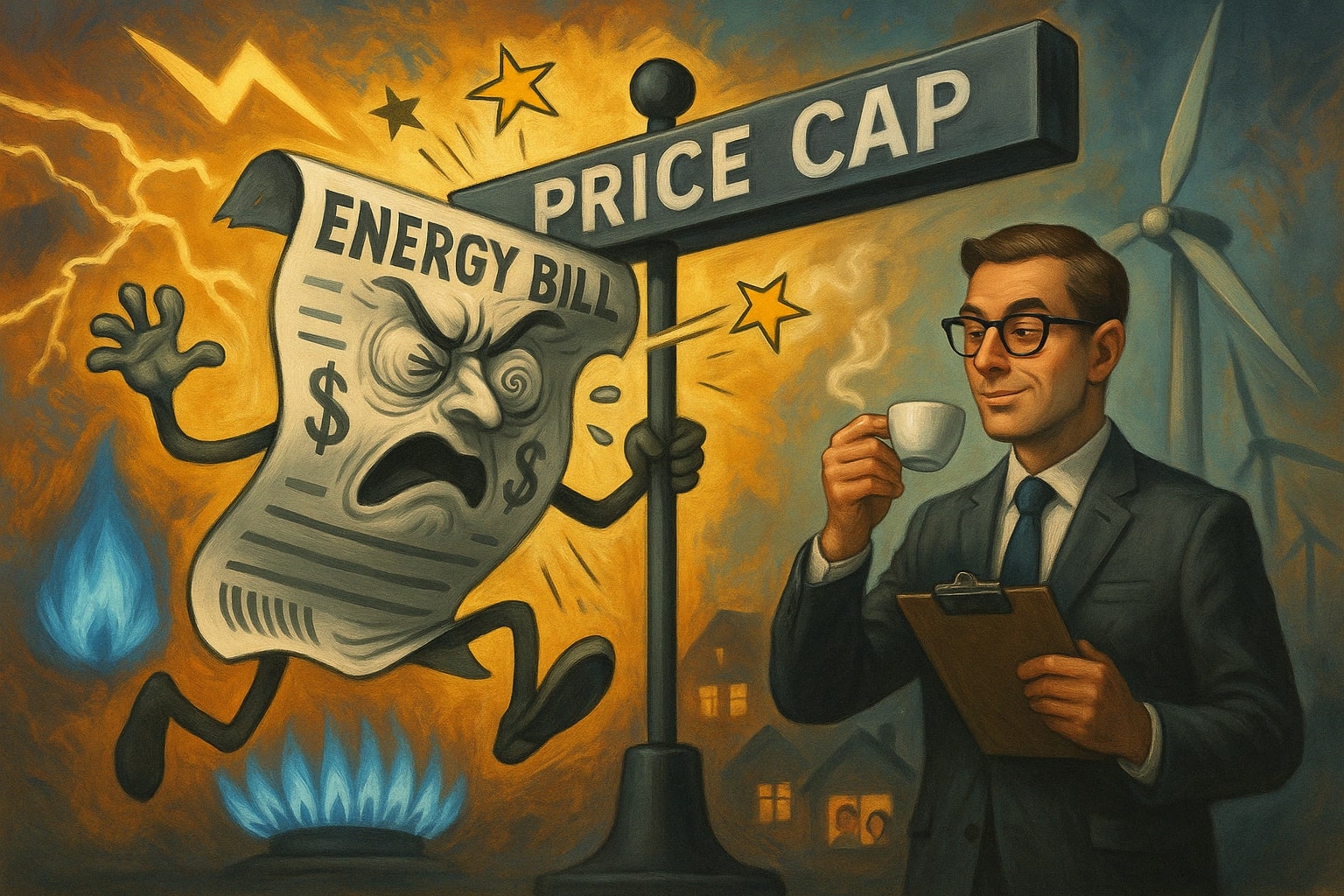
Energy prices shift with fuel costs, demand, and geopolitics 🌡️. Knowing how they work helps you manage your power bill.

Energy deregulation: Breaking free
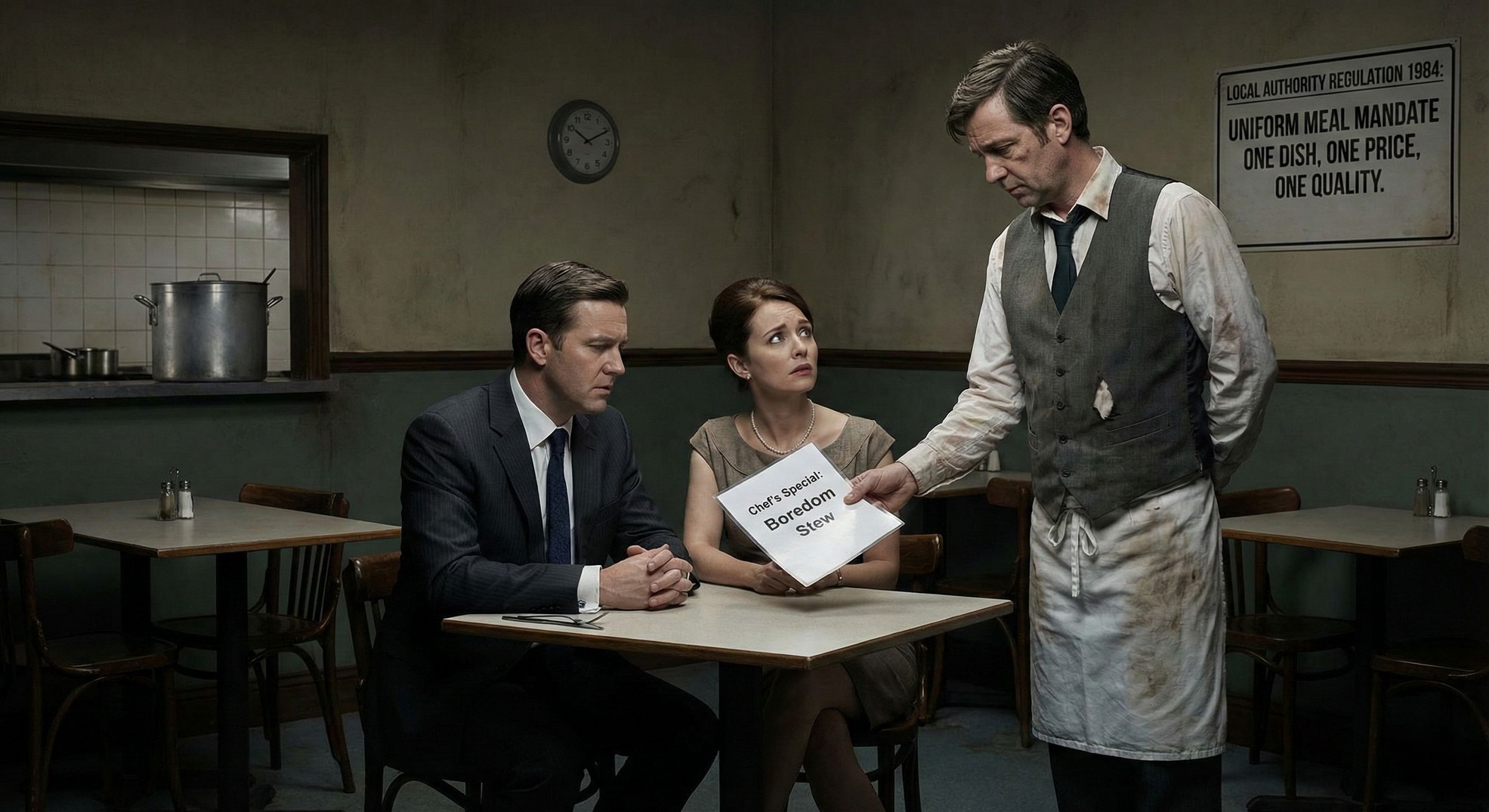
A waiter in a worn uniform presents a single-item menu labeled “Boredom Stew” to a well-dressed couple in a dull, outdated restaurant, symbolizing lack of choice before energy deregulation.

Energy deregulation blew the doors off the old monopoly model, turning a rigid system into a competitive arena where renewables, innovation, and consumer choice thrive. But with big gains come big controversies—and the debate is far from settled.
Energy regulation: The rules of power

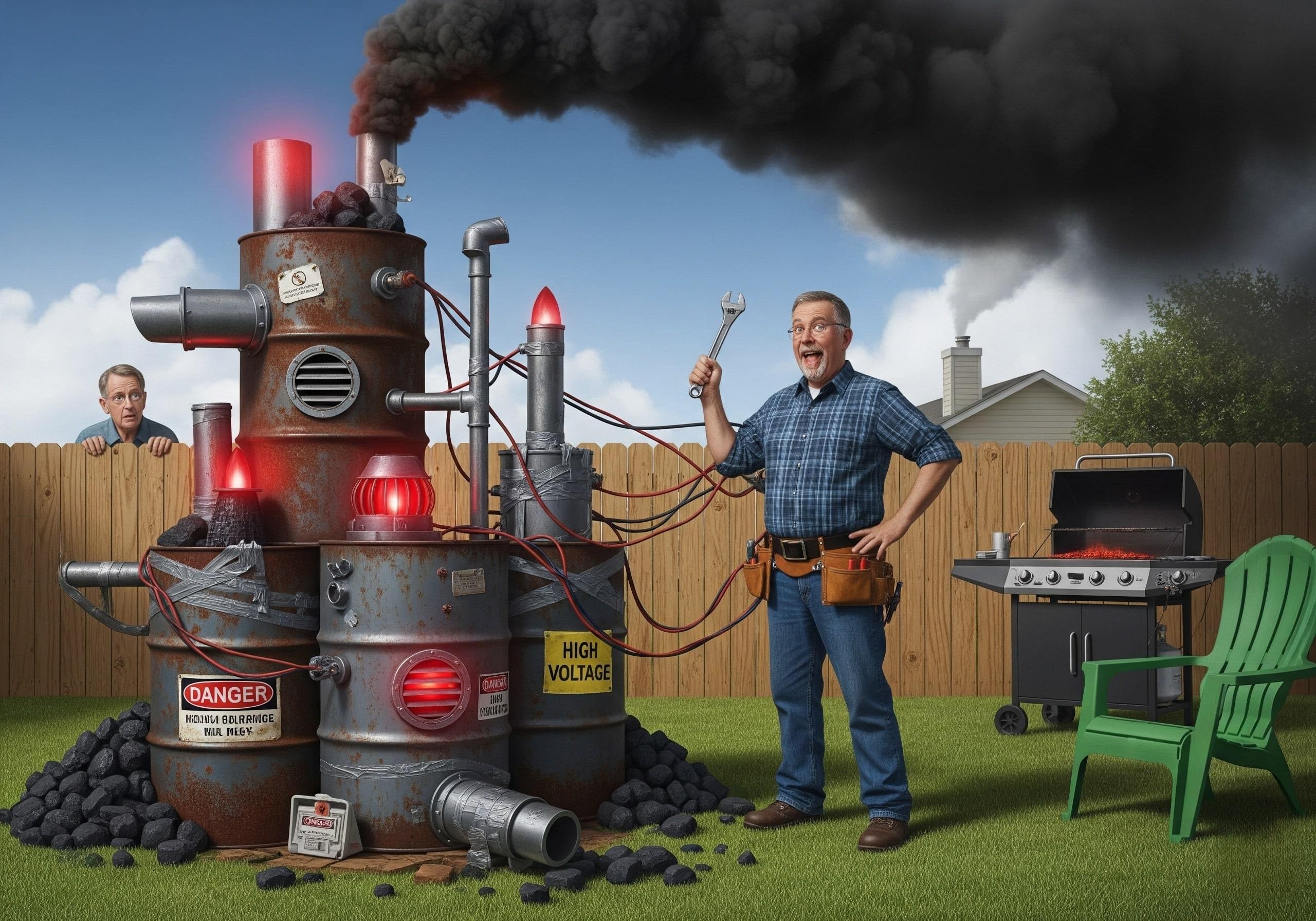
Man proudly holding a wrench next to a dangerous homemade coal-powered machine in his backyard, with smoke billowing and a neighbor peeking nervously over the fence—humorous illustration of life without energy regulation.

Energy regulation is the hidden system that keeps modern life running. It decides how much you pay for power, how safe plants are, and how much renewable energy reaches the grid. Without it? Chaos. With it? Stability—from your monthly bill to the backbone of entire economies.

LCOE: The true cost of electricity

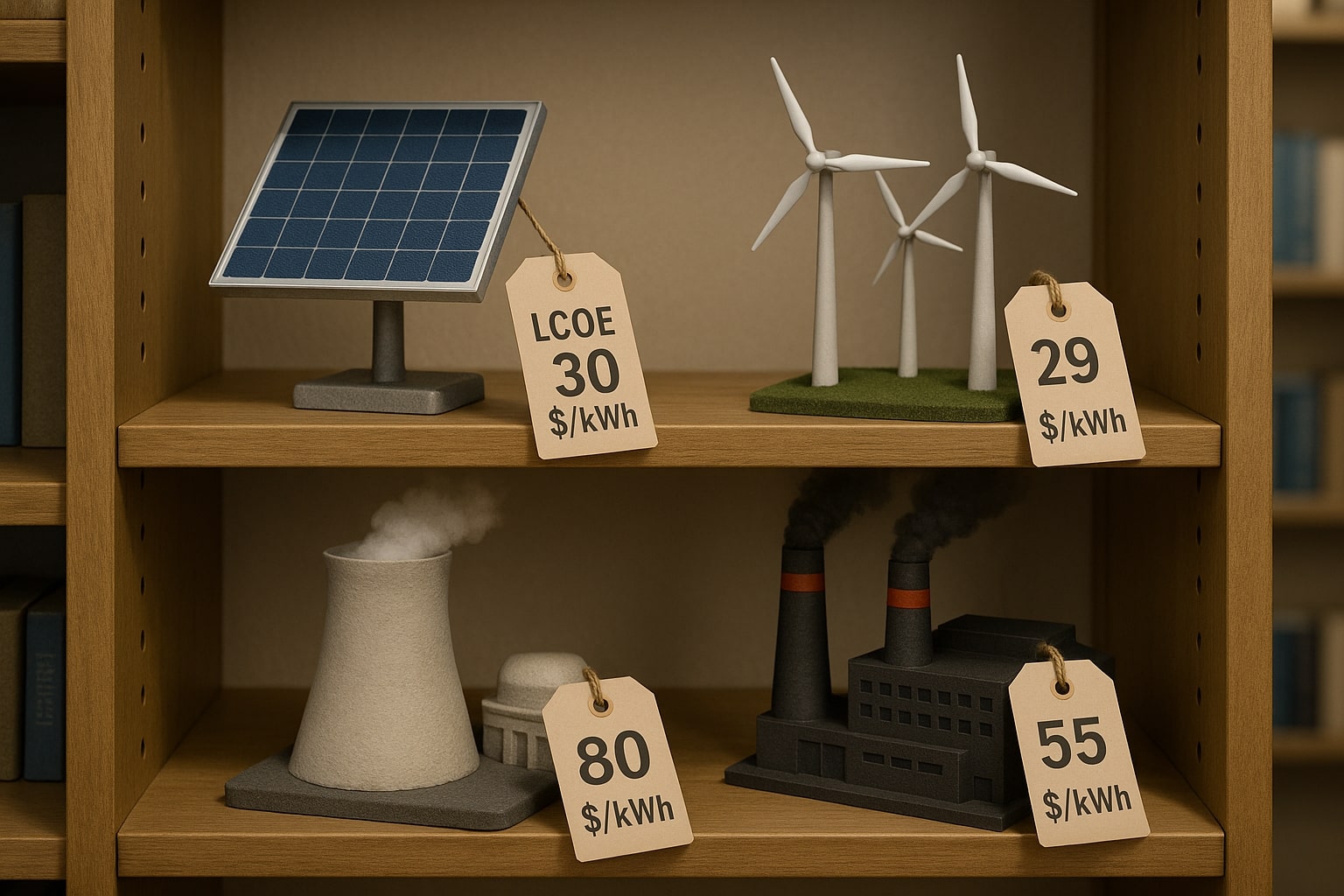
Realistic image of solar, wind, nuclear, and coal power models on shelves with LCOE price tags in dollars per kilowatt-hour.

LCOE (Levelized Cost of Electricity) is the go-to metric for comparing the true cost of energy—from solar and wind to nuclear and gas. It shows how much it really costs to generate power over a plant’s life. Simple, powerful, and essential for smart energy decisions. Here's what it means—and why it matters.