Most energy sources have dirt under their fingernails.
Coal comes out of the ground. Gas gets drilled out. Oil arrives with pipelines, tankers, and geopolitical drama. Solar? Solar falls out of the sky from a star.
That’s what makes it feel almost absurd. Almost sci-fi. Almost extra-terrestrial.
We built civilization by ripping energy out of Earth. Then along came solar and quietly said: What if the power source is off-planet?
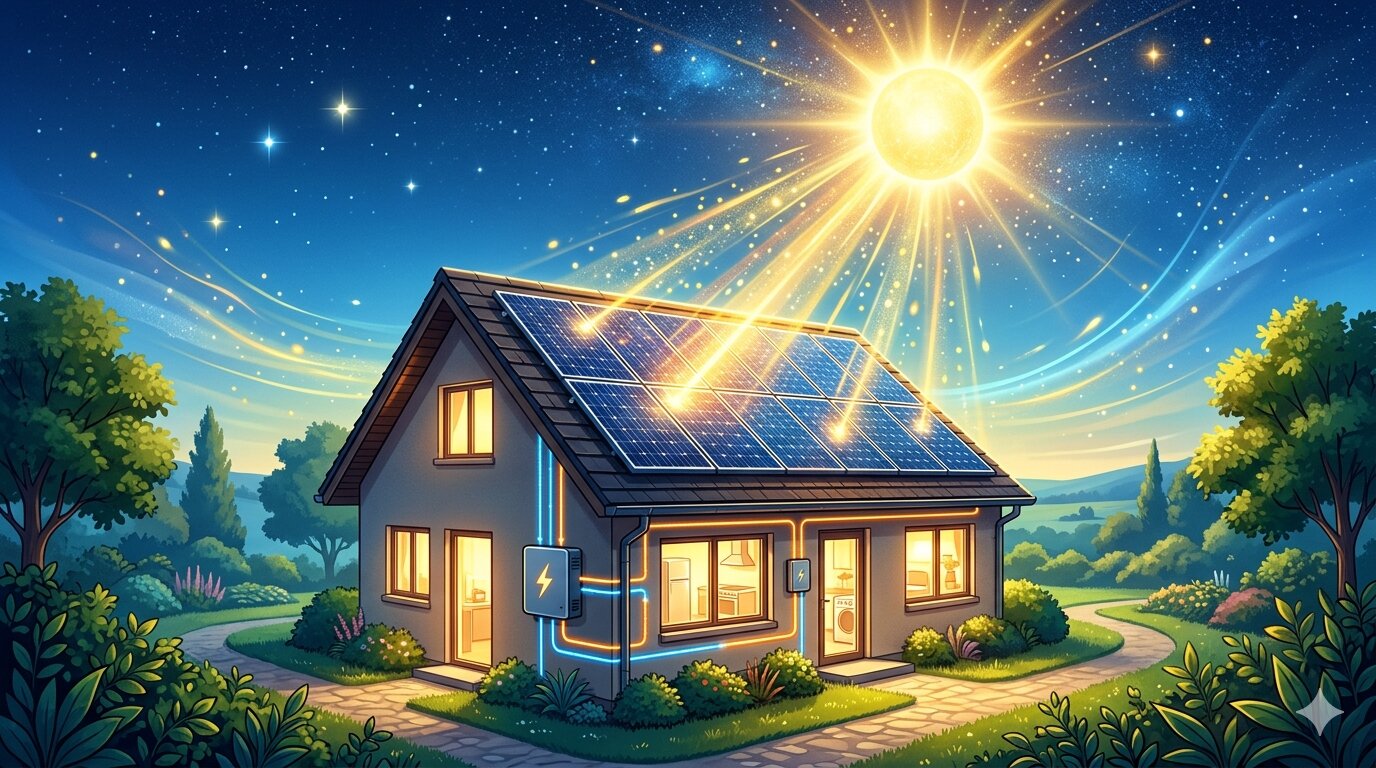
That’s not just poetic. It’s the real reason solar feels like the energy system of the future. It doesn’t begin in a mine, a well, or a combustion chamber. It begins with sunlight hitting a panel and triggering physics that feels a little like magic—until you see how elegant it really is.
Welcome to 1000what.com, where curiosity gets a front-row seat.
⚡ “Solar is the only mainstream power source that feels like it skipped the fossil era and landed here from the future.”
What is solar power?
Solar power is electricity or heat created by capturing energy from sunlight.
In everyday conversation, people usually mean solar photovoltaic (PV) systems—the familiar panels on rooftops and solar farms. These panels convert sunlight directly into electricity.
That directness is the real flex.
Coal needs combustion. Gas needs turbines. Nuclear needs fission and steam. Solar just needs photons, semiconductor material, and a system smart enough to collect the output.
Why does solar power exist?
Because the sun is dumping an outrageous amount of energy onto Earth every day, whether we use it or not.
For most of human history, we mostly ignored that gift. We built energy systems around fuels that were dense, portable, and profitable. That made sense in an industrial age built on combustion.
But in practice, those systems came with baggage:
- Fuel extraction
- Price volatility
- Pollution
- Carbon emissions
- Supply chain risk
- Geopolitical dependence
Solar exists because it solves a strangely modern problem: how do you power a high-tech world without setting fire to ancient buried carbon?
From a market perspective, solar also exists because it is modular. You can deploy it on a calculator, a warehouse roof, a suburban home, or a utility-scale desert project. Not many energy technologies stretch that far.
How does solar power work?
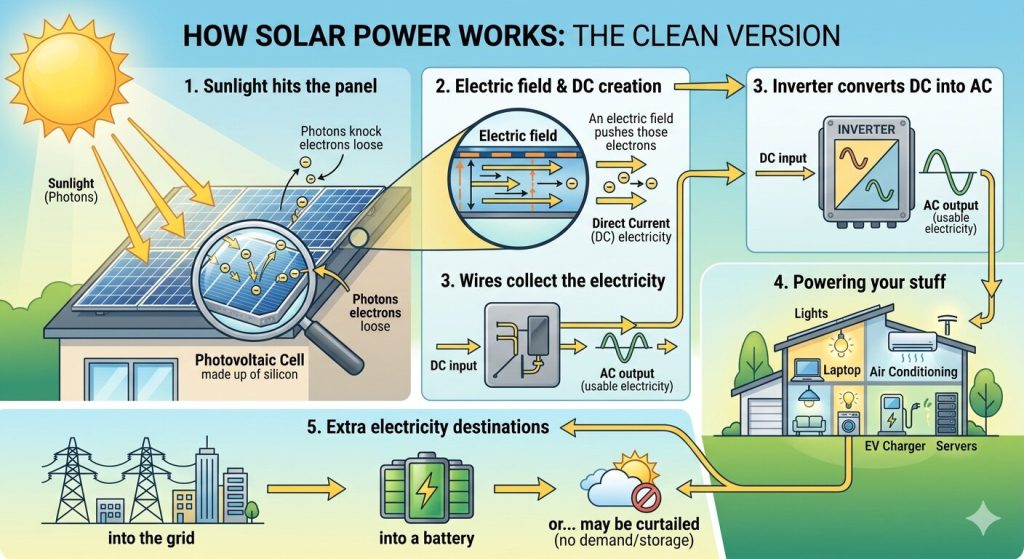
Here’s the clean version:
- Sunlight hits the solar panel
The panel contains photovoltaic cells, usually made from silicon. - Photons knock electrons loose
Sunlight carries energy. When that energy hits the cell, it excites electrons in the semiconductor material. - An electric field pushes those electrons
The cell is designed so electrons prefer to move in one direction. That movement creates direct current (DC) electricity. - Wires collect the electricity
The panel sends that DC electricity into the rest of the solar system. - An inverter converts DC into AC
Homes and grids usually run on alternating current (AC), so an inverter translates the panel’s output into usable electricity. - The electricity powers your stuff
Lights, laptops, air conditioning, EV chargers, servers—you name it. - Extra electricity goes somewhere
It can flow:- into the grid
- into a battery
- or, if there’s no demand and no storage, it may be curtailed
That’s the whole trick. Sunlight becomes electron flow. Electron flow becomes usable power.
If you want the deeper physics, it helps to understand that electricity is charge in motion, and voltage is the “push” that drives it through a circuit. That broader electrical foundation is explained well in these companion pieces on electric current and voltage.
⚡ “A solar panel is basically a machine for turning sunlight into organized electron behavior.”
What most people don’t see is the rest of the system
A solar panel is only the celebrity. The real performance needs a supporting cast.
A working solar setup usually includes:
- PV panels that capture sunlight
- Mounting systems that hold panels at the right angle
- Inverters that convert DC to AC
- Wiring and protection equipment for safe operation
- Meters that track production and consumption
- Optional batteries for storage
- Grid connection if the system is tied to the utility network
That last part matters.
A lot of people imagine solar as a panel powering a toaster directly like some kind of sunshine extension cord. Real systems are more coordinated than that. Electricity has to match voltage, frequency, and load requirements. Metering and conversion matter just as much as generation.
How do solar panels actually make electricity?
The magic word is photovoltaic.
“Photo” means light. “Voltaic” relates to electricity.
Inside each solar cell is a semiconductor—most commonly silicon. Engineers treat different layers of that silicon so one side has extra electrons and the other side has fewer. That creates an internal electric field.
When sunlight hits the cell, photons transfer energy to electrons. If enough energy is delivered, those electrons break free and start moving. Because of the electric field built into the cell, they move in a useful direction.
That flow becomes current.
This is why solar feels different from old-school energy. There is no spinning flame, no boiler, no combustion. Just light triggering charge movement in a carefully engineered material.
A real-world example
Imagine a family home with rooftop solar on a bright summer afternoon.
At noon, the system is producing more electricity than the house needs. The fridge is running, laptops are charging, and the AC is on—but the panels are still generating extra power.
What happens next?
- First, the house uses its own solar electricity
- Then any surplus may charge a home battery
- If the battery is full, the extra electricity can be exported to the grid
- At night, the house pulls electricity back from the grid or battery
That’s why solar isn’t just about generation. It’s about timing.
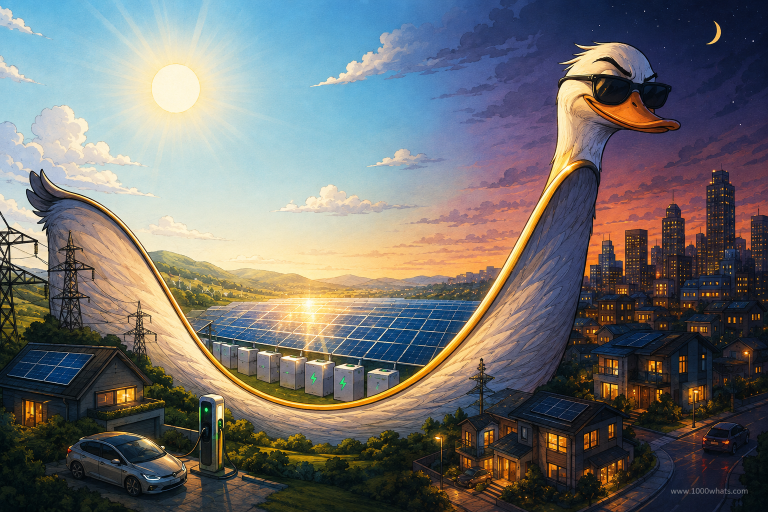
In practice, the biggest mismatch in solar is simple: the sun is strongest in the middle of the day, but electricity demand often spikes later. That is why batteries, flexible demand, and smarter grids matter so much.
Why solar power matters today
Because the energy system is changing fast, and solar sits right in the middle of that shift.
Here’s why it matters now:
- It cuts emissions without requiring fuel combustion
- It can lower electricity costs in the right conditions
- It improves energy security by reducing dependence on imported fuels
- It scales fast compared with many large infrastructure projects
- It works from rooftop to utility scale
- It pairs well with batteries, EVs, and smart grids
From a market perspective, solar’s biggest disruption is not that it exists. It’s that it turns millions of consumers into potential producers.
That changes the logic of the grid.
A coal plant is centralized. Solar can be deeply distributed. That means power no longer has to come only from giant remote facilities. It can come from homes, schools, warehouses, parking canopies, and factories.
⚡ “Solar doesn’t just decarbonize electricity. It democratizes where electricity can come from.”
Pros of solar power
Solar has real advantages, and some are bigger than most people realize.
- Fuel is free
Nobody sends the sun an invoice. - Low operating emissions
Once installed, solar generates power without burning fuel. - Scalable
Tiny rooftop array or giant solar farm—same core physics. - Low operating noise
Solar panels do their work quietly. - Useful in remote areas
Solar can bring electricity to places where grid extension is expensive. - Pairs well with modern electrification
EVs, heat pumps, batteries, and smart homes all benefit.
Cons of solar power
This is where the hype usually needs a reality check.
- It is intermittent
No sun at night. Reduced output in clouds, shade, and winter. - It needs space
Rooftops help, but large-scale solar needs land. - Upfront costs still matter
Even if lifetime economics look good, installation isn’t free. - Storage adds complexity and cost
Batteries help, but they are not magic. - Grid integration is a real challenge
Lots of solar can strain grids if planning lags behind deployment. - Manufacturing and materials matter
Solar is cleaner than fossil generation in use, but it still has supply-chain and lifecycle impacts.
What most people don’t see is that solar’s challenge is rarely the panel itself. It’s the system around it—permitting, interconnection, grid upgrades, financing, storage, and timing. That’s true across renewable energy development more broadly.
Is solar power enough on its own?
Usually, no.
And that’s fine.
The smartest way to think about solar is not as a lone hero. It’s as part of a broader energy mix with:
- batteries
- transmission upgrades
- demand response
- hydro
- wind
- geothermal
- flexible backup generation
- smarter market design
Solar is powerful, but it works best inside a system designed for variability.
That doesn’t weaken the case for solar. It strengthens it. Mature energy thinking is not about choosing one magic technology. It’s about combining the right ones.
Common misconceptions about solar power
“Solar panels store energy”
Not by themselves. Panels generate electricity. Batteries store it.
“Solar doesn’t work on cloudy days”
It does. Just less efficiently.
“Solar is only for hot countries”
Wrong. Solar needs light, not just heat. Cool, sunny climates can perform very well.
“Solar means going off-grid”
Not usually. Most systems are still connected to the grid.
“Once installed, solar is effortless”
Mostly low-maintenance, yes. But not frictionless. Inverters, monitoring, cleaning, and system design still matter.
Final Thoughts
Solar power feels radical because, in a way, it is.
It asks us to stop thinking of energy as something we must always extract and start thinking of it as something we can harvest. That is a profound shift. It moves us from digging up the past to capturing a real-time stream of off-planet energy.
That’s why the opening idea matters so much: solar is almost extra-terrestrial. Not in the UFO sense. In the literal sense that its energy source is not from this planet at all.
And maybe that’s the most beautiful part of the whole story.
The future of power may not come from deeper holes in the Earth. It may come from getting better at catching what has been falling on us all along.
What’s your take: is solar the smartest energy source we’ve ever built around—or the most overhyped?
Until next time, stay curious!
Discover more from 1000whats
Subscribe to get the latest posts sent to your email.