Physics of Energy

Physics of energy explores how energy moves, changes, and powers everything—from atoms to engines to the entire universe. ⚡🌍🔬

What is hydropower?

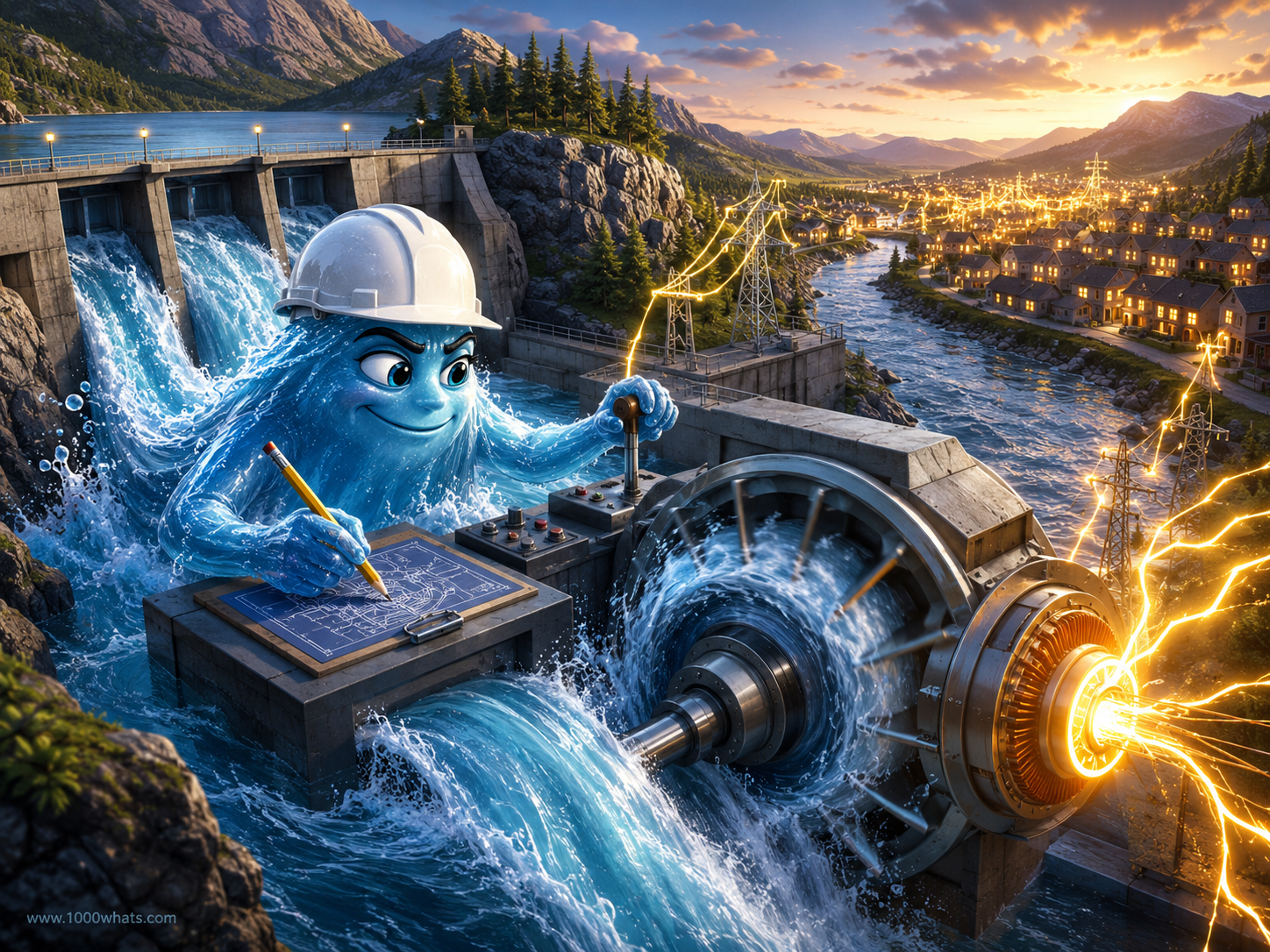
Witty hydropower illustration with a cartoon water character spinning a turbine and sending electricity through power lines to a town.

Hydropower is what happens when a river stops being “just water” and starts doing electrical engineering. It takes the motion of flowing water, turns it into spinning machinery, and then turns that motion into electricity through electromagnetic induction. Old idea. Massive impact.

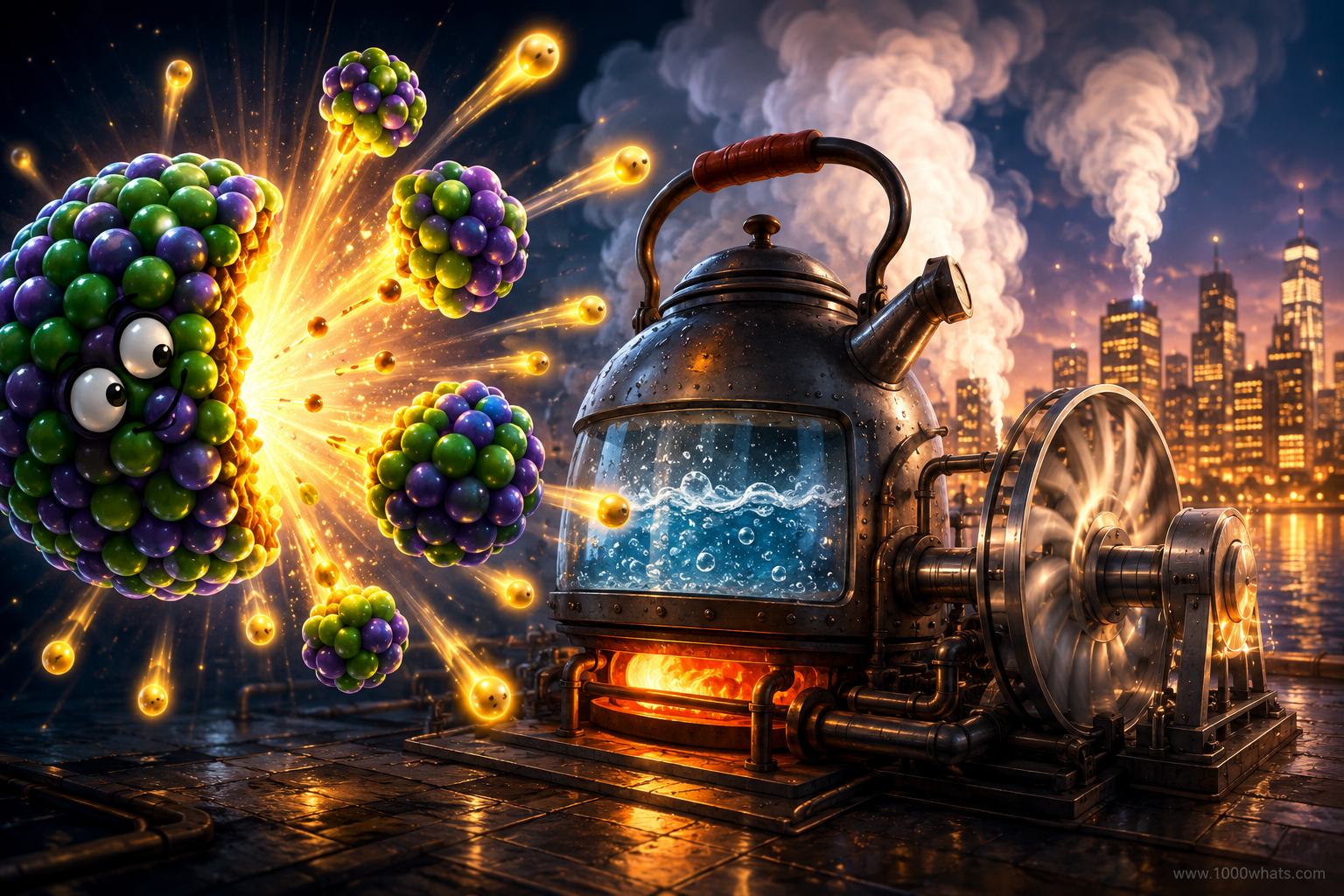
What is nuclear fission? The weird atomic trick that boils water and powers cities

Featured illustration of nuclear fision showing an atom splitting and releasing energy next to a boiler, steam system, and turbine generator producing electricity.

Nuclear fission sounds like the kind of thing you should only discuss in a bunker with three physicists and a lockbox. It is actually much simpler than that. Split a heavy atom, collect the heat, boil water, spin a turbine, make electricity. Here’s what nuclear fission is, why it exists, how it works, where it shows up in real life, and why it matters more right now than a lot of people realize.

What is green hydrogen — the simple explanation most articles skip

Green hydrogen illustration showing wind and solar power producing H₂ through electrolysis for use in heavy industry.

What is green hydrogen, really? It is hydrogen made with renewable electricity—but the part most articles miss is this: hydrogen does two very different jobs. Sometimes it is a chemical ingredient used in fertilizer and industry. Other times it is an energy carrier used to store clean electricity for later. Once you see that split, green hydrogen stops sounding like futuristic jargon and starts making sense.

What is nuclear fusion — and are we finally close?

A glowing artificial sun inside a futuristic reactor, representing nuclear fusion and the attempt to create star-like energy on Earth.

Nuclear fusion is the dream machine of energy: no smokestack, no coal train, no ordinary reactor fuel rods, just light atoms squeezed so hard they snap together and spill out astonishing energy. The twist is that fusion is both real and not ready. Scientists have crossed major milestones, but a lab triumph is not the same thing as cheap electricity on your wall socket. Here’s the simple version, without the fog.

What is electrical resistance? Current’s adversary

Graffiti wall with the phrase “Electrical Resistance!” in red letters and an electrified blue fist symbol under a surveillance camera, representing the concept of electrical resistance and defiance.

Electrical resistance isn’t just a nuisance—it’s a force that shapes every circuit, every spark, every surge of power. It slows electrons, sure, but it also protects, directs, and transforms. From heating your coffee to lighting entire cities, resistance is the silent architect behind how energy flows. In this post, we explore how resistance works, what factors influence it, and how it quietly balances power and precision in our electrified world.