Natural Gas

Explainers about natural gas, from production and transport to power generation, gas markets, energy security, emissions and its changing role in the energy transition.

What is a spark spread? The number that decides whether a gas plant wants to run
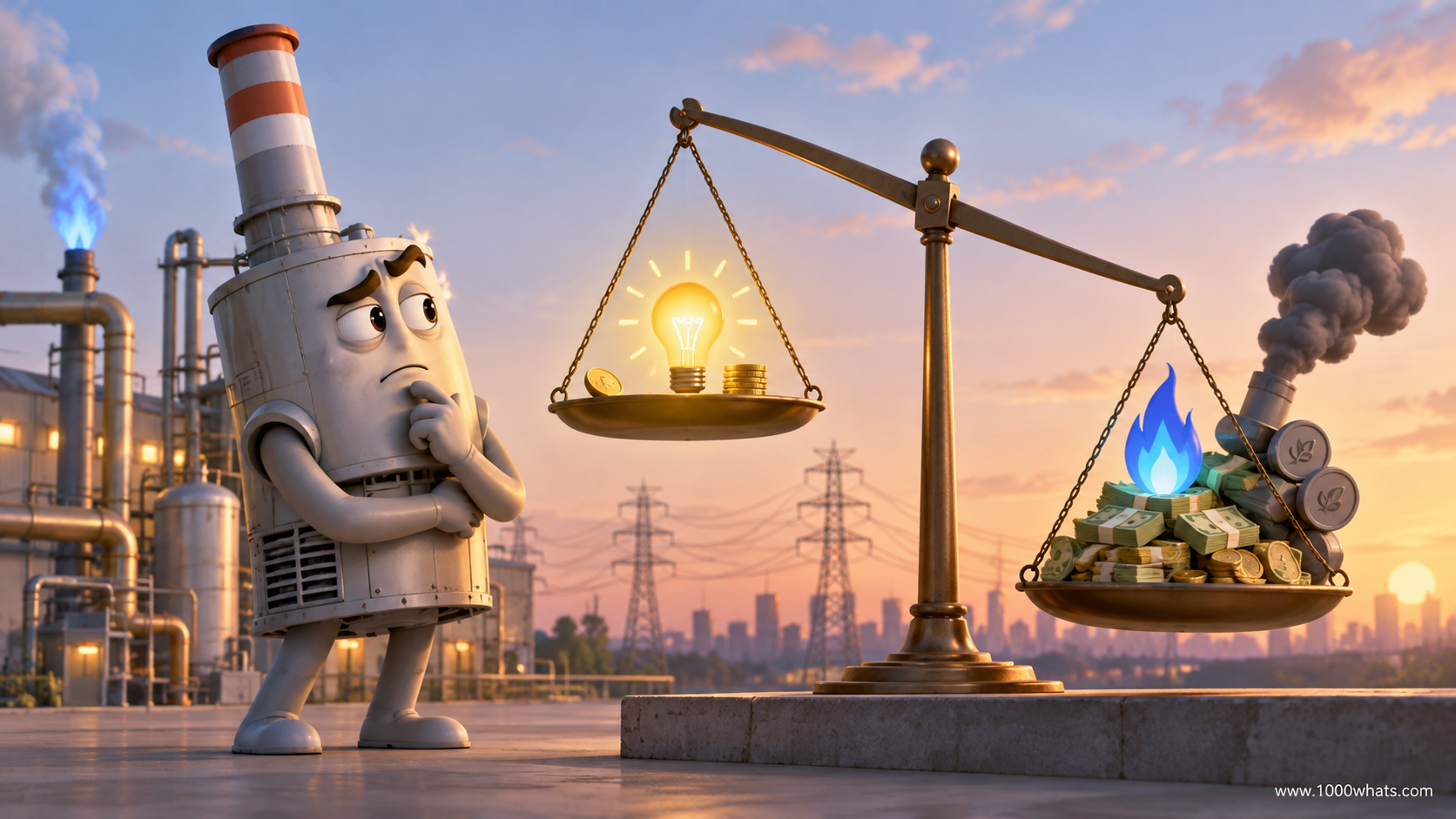
Gas-fired power plant beside a balance scale comparing electricity revenue with gas costs to illustrate spark spread economics.

A gas-fired power plant can be technically available, connected to the grid, fully fueled—and still have no economic reason to generate electricity. The spark spread explains why. It compares the value of the electricity a gas plant can sell with the cost of the gas it must burn to produce it. Add carbon costs and you get the clean spark spread: one deceptively simple number connecting electricity, gas, plant efficiency, carbon markets, dispatch, and power prices.
What is methane leakage? When natural gas escapes before anyone burns it

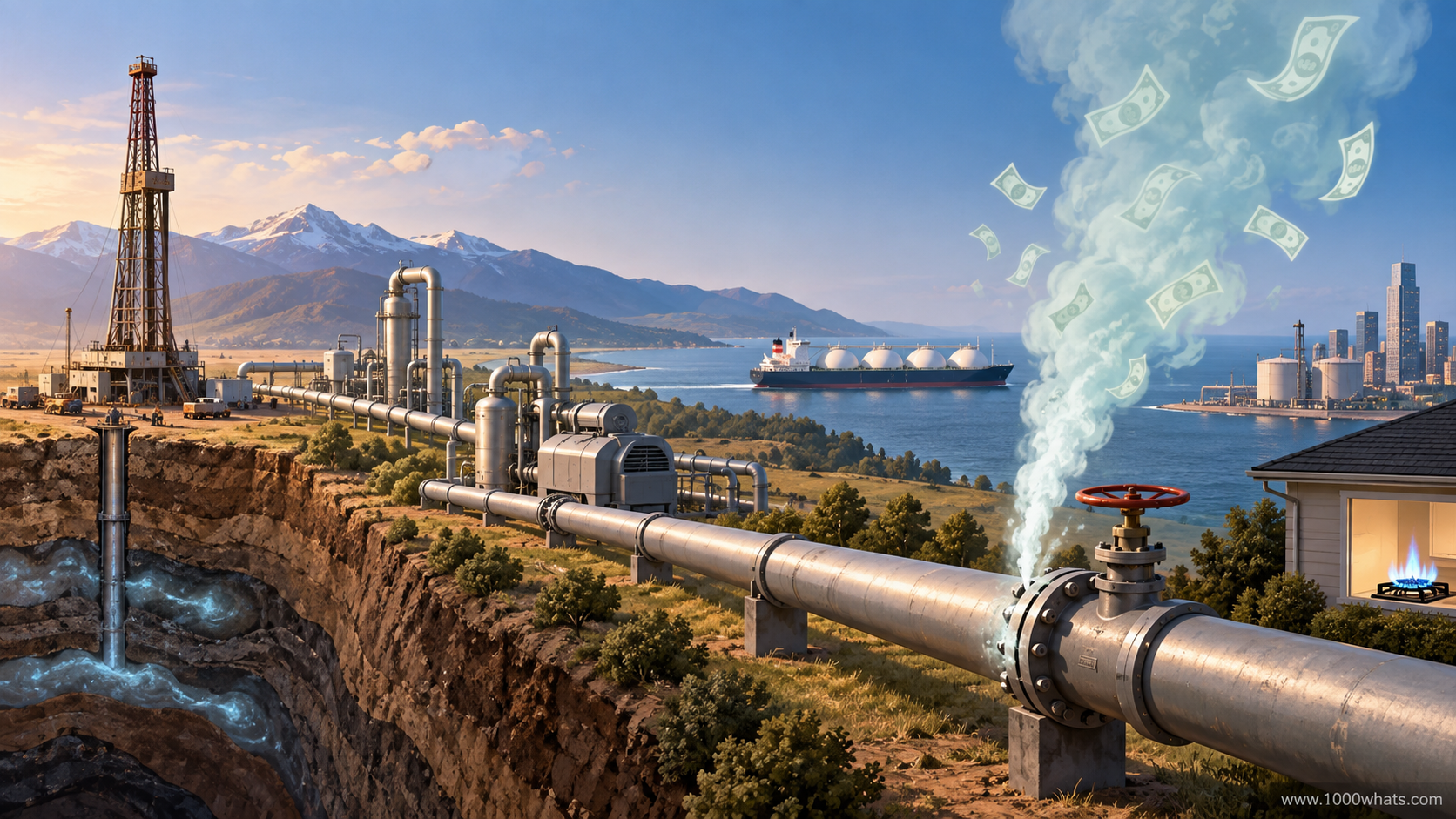
Natural gas infrastructure with a pipeline methane leak, LNG ship and gas production facilities illustrating methane leakage across the gas supply chain.

Natural gas is mostly methane. Burn it, and the main climate problem is CO₂. Let it escape before combustion, and you release methane itself—a greenhouse gas far more powerful over the near term. That means a leaking valve, an open vent, a badly performing flare, or an abandoned well can change the climate footprint of gas before the fuel has produced a single useful kilowatt-hour.

What is LNG? How natural gas learned to cross an ocean

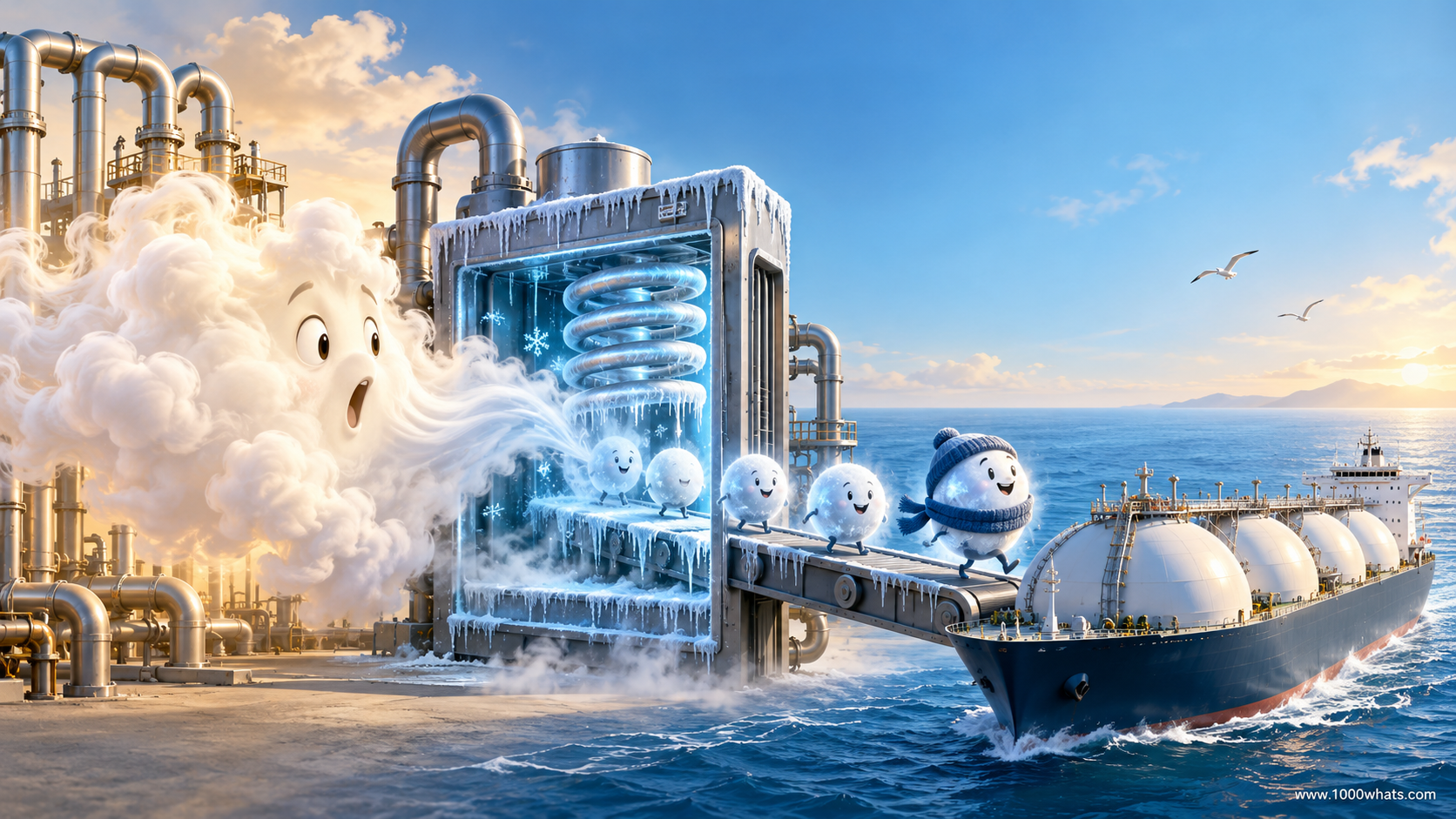
Featured image showing natural gas being cooled into LNG and transported by an LNG carrier across the sea.

Natural gas has one awkward physical problem: as a gas, it takes up an enormous amount of space. LNG solves that by cooling natural gas to around −162°C, shrinking its volume roughly 600 times and turning a pipeline-bound fuel into something that can cross oceans on ships. That simple phase change quietly transformed natural gas from a regional commodity into a global one.

What is a Combined-Cycle Gas Turbine? Two turbines, one flame

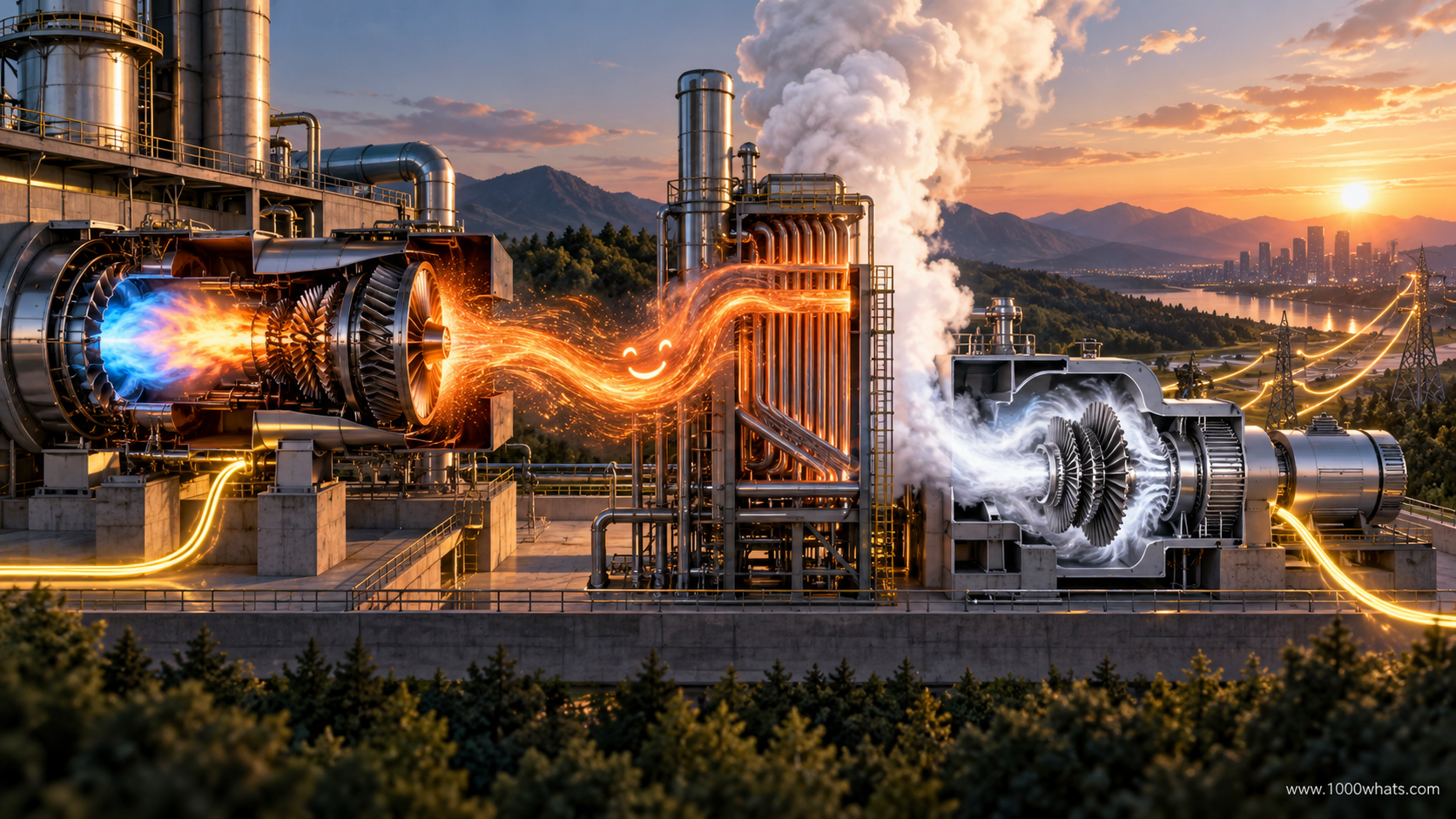
Illustrated Combined-Cycle Gas Turbine plant with glowing hot exhaust moving from a gas turbine through heat recovery equipment to a steam turbine producing electricity.

A combined-cycle gas turbine burns natural gas once but extracts electricity in two stages: first from a gas turbine, then from a steam turbine powered by the hot exhaust the first turbine was about to throw away. That simple act of refusing to waste heat is why CCGTs can reach efficiencies around 60%—and why they still matter in a power system filling up with wind, solar, and batteries.