
Heat

Explore heat as energy in motion—how it transfers, where it comes from, how we measure it, and why it matters across everyday life and energy systems.

What is waste heat? The energy we already paid for and then threw away

Waste heat featured image showing captured industrial heat flowing from a factory toward buildings, heating systems, and a greenhouse.

Factories, power plants, engines, data centers, furnaces, compressors, and even supermarket refrigerators constantly reject heat into the environment. Some of that loss is unavoidable. Some is simply energy leaving the system before we found another useful job for it. Waste heat recovery asks an almost embarrassingly sensible question: if we already paid to create that energy, can we use it again before letting it escape?
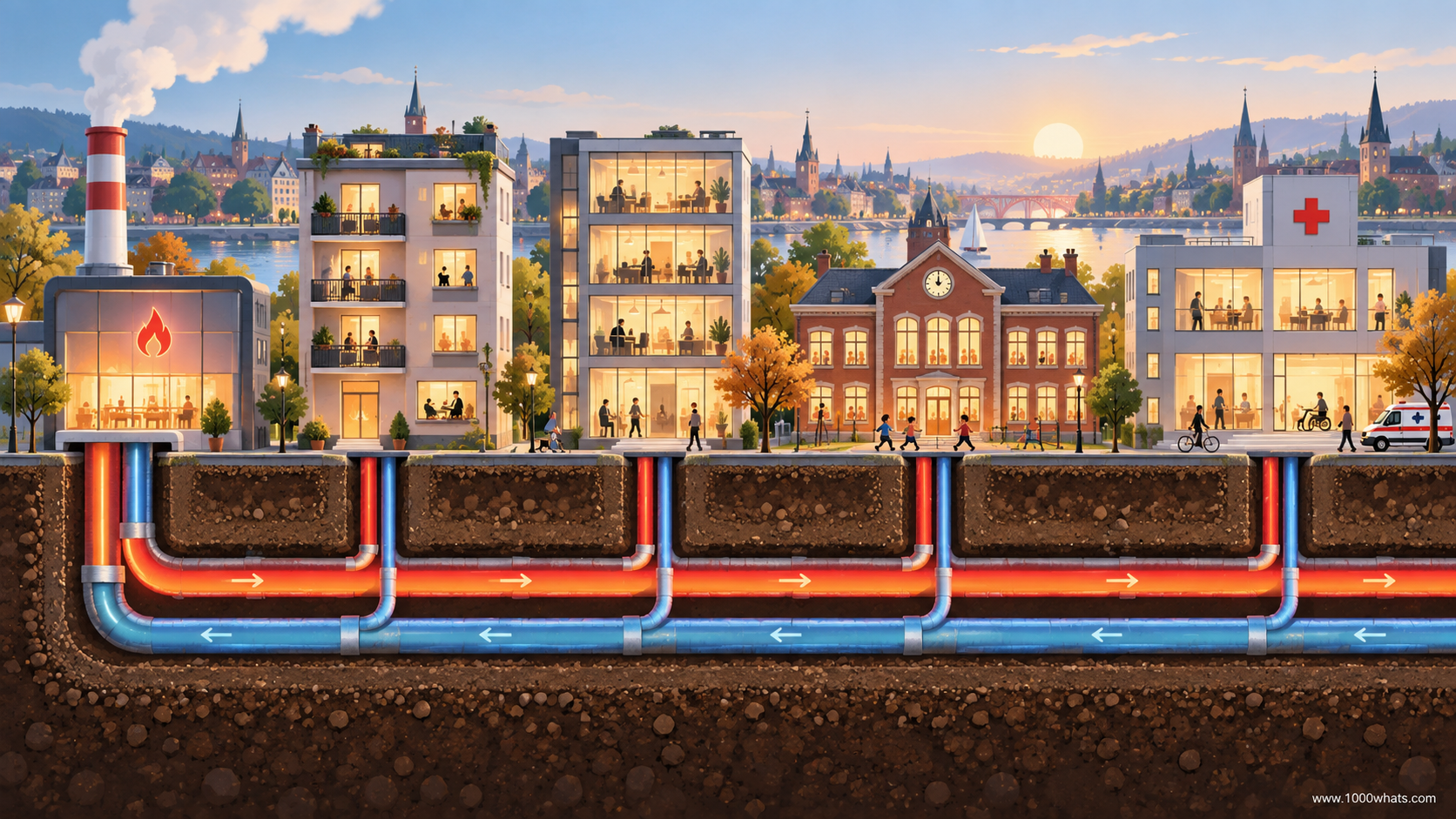

What is district heating? One heating system for an entire city

Cross-section illustration of a district heating network with red and blue underground pipes supplying heat to city buildings.

Most buildings have their own boiler, furnace, or heat pump. District heating asks a very different question: why should every building make heat separately? Produce heat centrally, recover it from places already throwing it away, move it through insulated pipes, and an entire neighborhood—or city—can share one thermal system. The idea is old. What we can feed into those pipes is becoming much more interesting.

What is heat? The energy that refuses to sit still

Digital heat illustration showing a steaming mug transferring heat toward a cold ice cube, demonstrating heat flow from hot to cold.

Heat is everywhere—from your morning coffee and electric kettle to power plants, weather systems, factories, and the warming planet. But here’s the twist: heat isn’t actually something an object “contains.” It’s energy on the move. Let’s unpack what heat really is, how it travels, why temperature isn’t the same thing, and why this invisible energy transfer sits at the center of the modern energy system.